Nighttime Agitation and Restless Legs Syndrome in Persons With Alzheimer's Disease: Study Protocol for a Double-Blind, Placebo-Controlled, Randomized Trial (NightRest)
- PMID: 32966585
- PMCID: PMC9112187
- DOI: 10.3928/19404921-20200918-01
Nighttime Agitation and Restless Legs Syndrome in Persons With Alzheimer's Disease: Study Protocol for a Double-Blind, Placebo-Controlled, Randomized Trial (NightRest)
Abstract
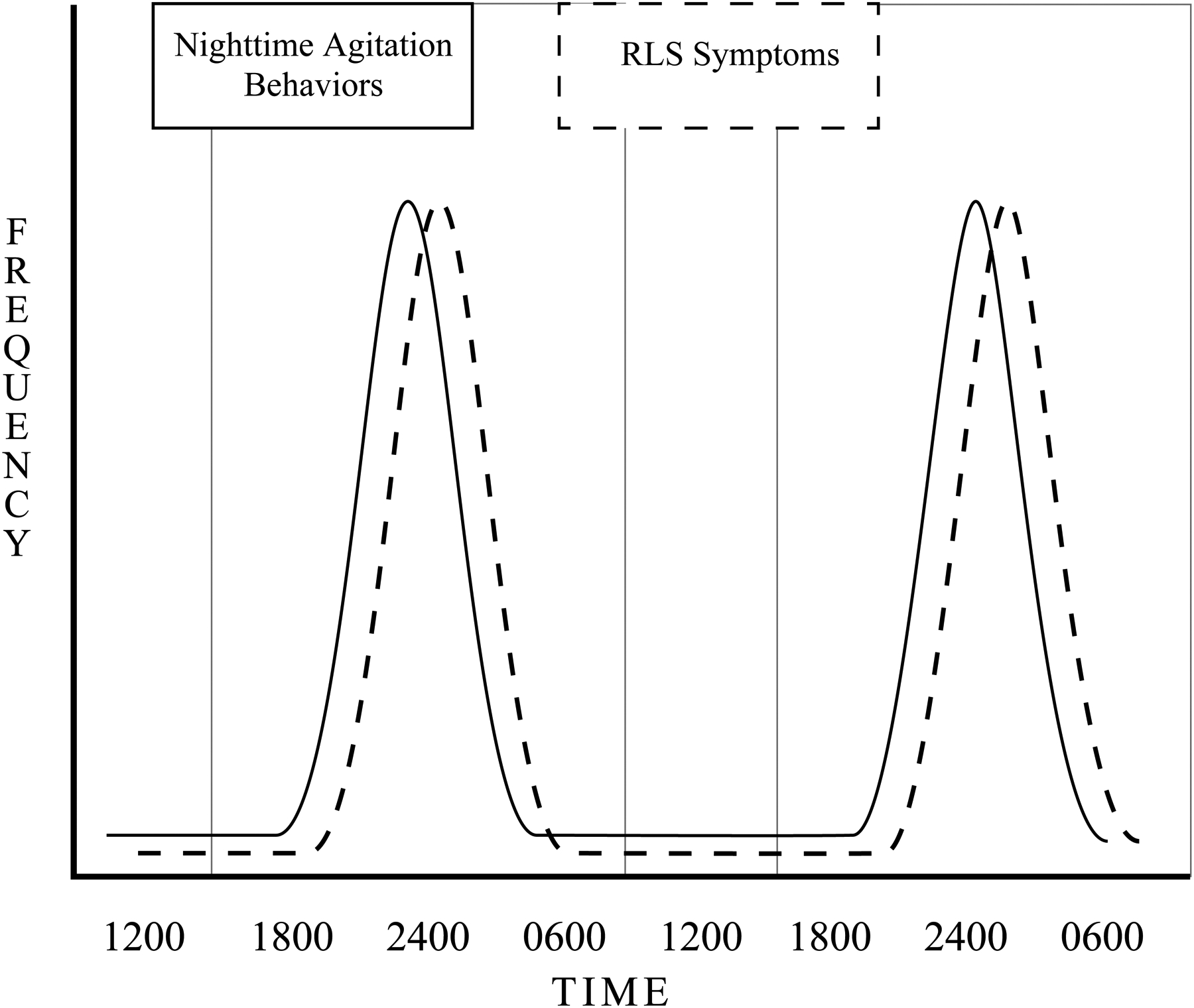
Nighttime agitation is a prevalent symptom in persons with Alzheimer's disease (AD). Effective treatments are absent due to our limited knowledge of its etiology. We hypothesized that restless legs syndrome (RLS), a common neurological sensorimotor disorder of uncomfortable leg sensations that appear at night and interfere with sleep, might be a cause for nighttime agitation in persons with AD. RLS is infrequently identified in persons with AD because traditional diagnosis is dependent on patients answering complex questions about their symptoms. With a validated observational tool for RLS diagnosis, the Behavioral Indicators Test-Restless Legs, we aim to diagnose RLS and determine the effect of gabapentin enacarbil (GEn) compared to placebo on nighttime agitation, sleep, antipsychotic medications, and the mechanism for these effects. We hypothesize that frequency of RLS behaviors will mediate the relationship between GEn and nighttime agitation. This study is an 8-week, double-blind, placebo-controlled, randomized pilot clinical trial, followed by an 8-week open-label trial, that is being conducted in long-term care settings and private homes. The results of this study may shift, personalize, and improve standards of care for treatment of nighttime agitation; reduce aggression and other nighttime agitation behaviors; and improve sleep.
Targets: Persons with AD with nighttime agitation potentially caused by RLS.
Intervention description: Diagnose RLS and determine the effect of GEn.
Mechanisms of action: The frequency of RLS behaviors will mediate the relationship between GEn and nighttime agitation.
Outcomes: Determine the effect of GEn on nighttime agitation, sleep, and antipsychotic medications.
Trial registration: ClinicalTrials.gov Identifier: NCT03082755 (Date of registration March 6, 2017). [Research in Gerontological Nursing, 13(6), 280-288.].
Copyright 2020, SLACK Incorporated.
Figures
References
-
- American Academy of Sleep Medicine. (2014). International classification of sleep disorders. American Academy of Sleep Medicine. https://j2vjt3dnbra3ps7ll1clb4q2-wpengine.netdna-ssl.com/wp-content/uplo...
-
- Appelbaum PS, & Grisso T (2001). MacArthur competence assessment tool for clinical research (MacCAT-CR). Professional Resource Press/Professional Resource Exchange.
-
- Aurora RN, Kristo DA, Bista SR, Rowley JA, Zak RS, Casey KR, Lamm CI, Tracy SL, Rosenberg RS & American Academy of Sleep Medicine. (2012). The treatment of restless legs syndrome and periodic limb movement disorder in adults--an update for 2012: practice parameters with an evidence-based systematic review and meta-analyses: an American Academy of Sleep Medicine Clinical Practice Guideline. Sleep, 35(8), 1039–1062. 10.5665/sleep.1988 - DOI - PMC - PubMed
Publication types
MeSH terms
Substances
Associated data
Grants and funding
LinkOut - more resources
Full Text Sources
Medical
Research Materials