


Effect of intersphincteric fistula tract ligation versus anal fistulectomy on pain scores and serum levels of vascular endothelial growth factor and interleukin-2 in patients with simple anal fistulas
- PMID: 32967495
- PMCID: PMC7521059
- DOI: 10.1177/0300060520949072
Effect of intersphincteric fistula tract ligation versus anal fistulectomy on pain scores and serum levels of vascular endothelial growth factor and interleukin-2 in patients with simple anal fistulas
Retraction in
-
Retraction Notice.J Int Med Res. 2024 Jan;52(1):3000605241228165. doi: 10.1177/03000605241228165. J Int Med Res. 2024. PMID: 38217421 Free PMC article. No abstract available.
Abstract
Objective: This study was performed to explore the effects of ligation of the intersphincteric fistula tract (LIFT) on pain scores and serum levels of vascular endothelial growth factor (VEGF) and interleukin (IL)-2 in patients with simple anal fistulas.
Methods: Ninety patients with simple anal fistulas were evenly randomized into a study group (treated with LIFT) and a control group (treated with traditional anal fistulectomy) according to a random number table. The surgical outcomes, basic operation conditions (operation time, hospital stay, and anal continence), and postoperative wound healing rates were compared between the two groups.
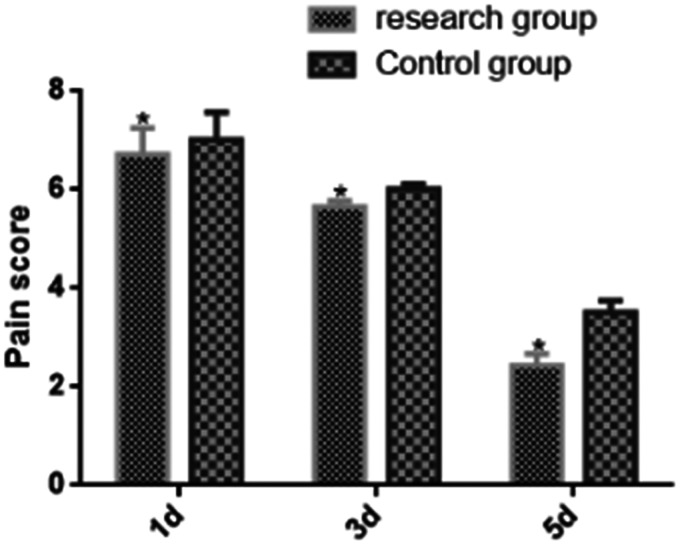
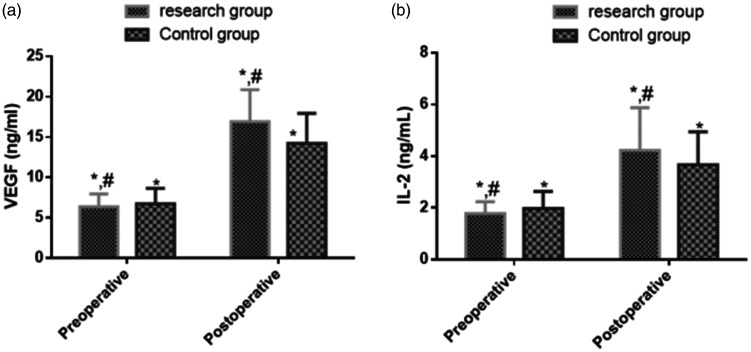
Results: The study group had significantly better operation conditions (better anal continence and shorter length of hospital stay), a higher postoperative wound healing rate, lower pain scores, higher VEGF and IL-2 levels, and higher overall efficacy rate than the control group. However, the incidence of postoperative complications was not significantly different between the two groups.
Conclusions: Patients who underwent LIFT had better surgical outcomes, higher wound healing rates, better anal continence, a shorter length of hospital stay, and less severe postoperative pain than those who underwent simple anal fistulectomy. Increased levels of VEGF and IL-2 after surgery may promote wound healing.
Keywords: Simple anal fistula; anal fistulectomy; interleukin-2; ligation of the intersphincteric fistula tract; vascular endothelial growth factor; wound healing.
Figures
References
-
- Lange EO, Ferrari L, Krane M, et al. Ligation of intersphincteric fistula tract: a sphincter-sparing option for complex fistula-in-ano. J Gastrointest Surg 2016; 20: 439–444. DOI: 10.1007/s11605-015-2947-4. - PubMed
-
- Bobkiewicz A, Krokowicz Ł, Borejsza-Wysocki M, et al. A novel model of acellular dermal matrix plug for anal fistula treatment. Report of a case and surgical consideration based on first utility in Poland. Pol Przegl Chir 2017; 89: 52–55. DOI: 10.5604/01.3001.0010.3912. - PubMed
-
- Rojanasakul A, Pattanaarun J, Sahakitrungruang C, et al. Total anal sphincter saving technique for fistula-in-ano; the ligation of intersphincteric fistula tract. J Med Assoc Thai 2007; 90: 581–586. - PubMed
-
- Wallin UG, Mellgren AF, Madoff RD, et al. Does ligation of the intersphincteric fistula tract raise the bar in fistula surgery? Dis Colon Rectum 2012; 55: 1173–1178. - PubMed
Publication types
MeSH terms
Substances
LinkOut - more resources
Full Text Sources
