Review
. 2020 Dec;9(1):2222-2235.
doi: 10.1080/22221751.2020.1827984.

Zoonotic and reverse zoonotic events of SARS-CoV-2 and their impact on global health

Affiliations
Review

Zoonotic and reverse zoonotic events of SARS-CoV-2 and their impact on global health

Khalid Munir et al. Emerg Microbes Infect. 2020 Dec.

Abstract

Coronaviruses (CoVs) are enveloped, positive sense, single-stranded RNA viruses. The viruses have adapted to infect a large number of animal species, ranging from bats to camels. At present, seven CoVs infect humans, of which Severe Acute Respiratory Syndrome Coronavirus-2 (SARS-CoV-2) is responsible for causing the Coronavirus Disease 2019 (COVID-19) in humans. Since its emergence in late 2019, SARS-CoV-2 has spread rapidly across the globe. Healthcare systems around the globe have been stretched beyond their limits posing new challenges to emergency healthcare services and critical care. The outbreak continues to jeopardize human health, social life and economy. All known human CoVs have zoonotic origins. Recent detection of SARS-CoV-2 in pet, zoo and certain farm animals has highlighted its potential for reverse zoonosis. This scenario is particularly alarming, since these animals could be potential reservoirs for secondary zoonotic infections. In this article, we highlight interspecies SARS-CoV-2 infections and focus on the reverse zoonotic potential of this virus. We also emphasize the importance of potential secondary zoonotic events and the One-Health and One-World approach to tackle such future pandemics.

Keywords: COVID-19; Coronavirus; One-Health One-World; SARS-CoV-2; reverse zoonosis; secondary zoonosis; zoonosis.


Conflict of interest statement

No potential conflict of interest was reported by the author(s).

Figures
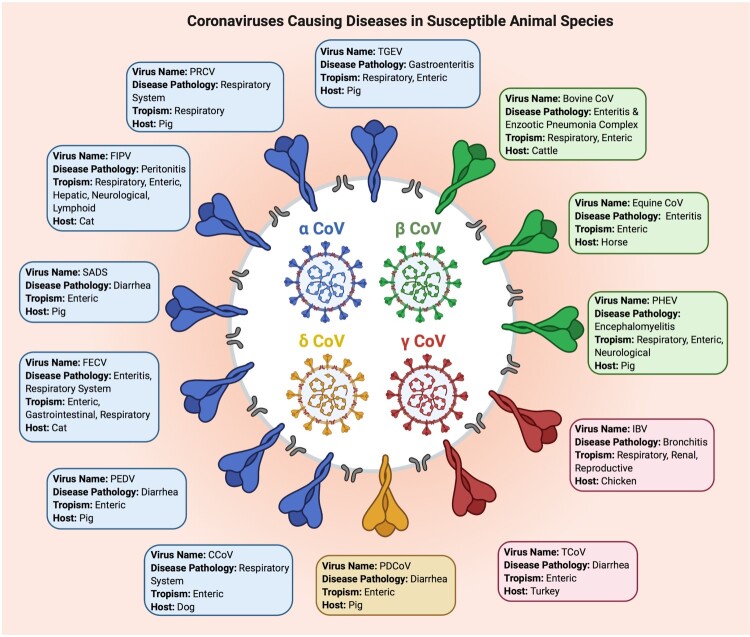
Figure 1.
Figure 1.
Selected important coronaviruses causing diseases in animal species. The figure shows different coronaviruses, their genera, main clinical symptoms, host species, and tissue/organ tropism. PEDV: Porcine Epidemic Diarrhea Virus; TGEV: Transmissible Gastroenteritis Virus; PRCV: Porcine Respiratory Coronavirus; FIPV: Feline Infectious Peritonitis Virus; FECoV: Feline Enteric Coronavirus; CCoV: Canine Coronavirus; PDCoV: Porcine Delta Coronavirus; TCoV: Turkey Coronavirus; IBV: Infectious Bronchitis Virus; PHEV: Porcine Hemagglutinating & Encephalomyelitis Virus; Equine CoV: Equine Coronavirus; BCoV: Bovine Coronavirus; Severe Acute Diarrhea Syndrome Coronavirus: SADS-CoV.
Figure 2.
Figure 2.
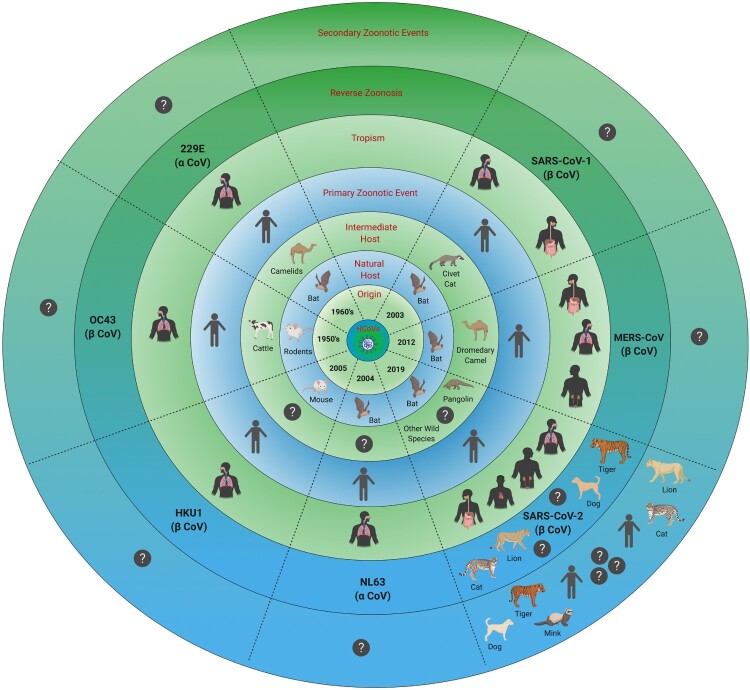
Human coronaviruses. The figure shows seven human coronaviruses, their origins, natural reservoirs, intermediate hosts, tissue/organ tropism and reverse zoonosis along with primary and potential secondary and tertiary zoonotic events. An interrogative sign (?) indicates unknown or unidentified.
Figure 3.
Figure 3.
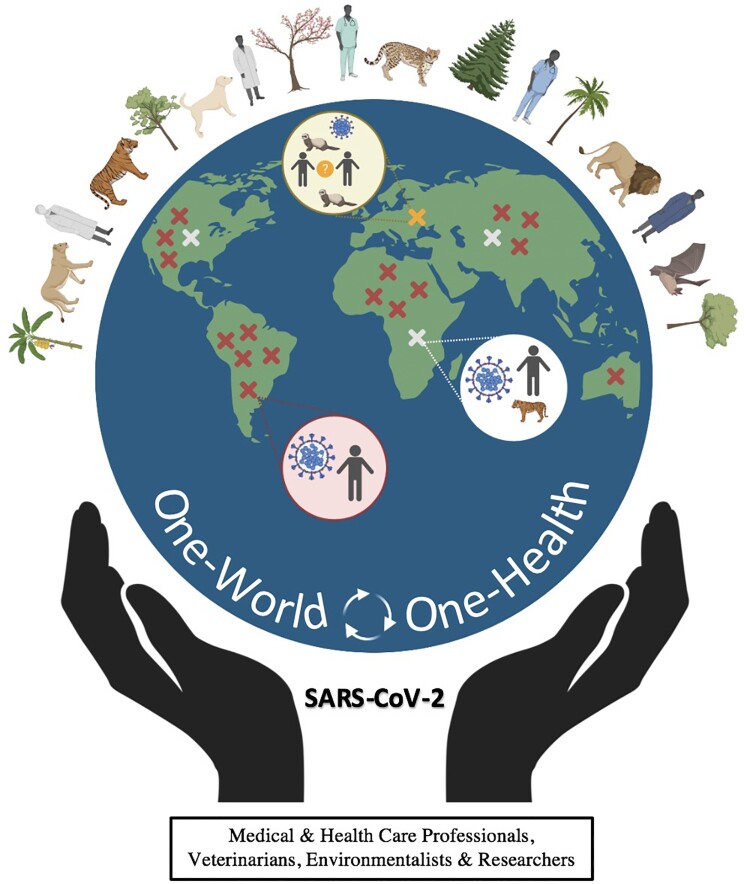
SARS-CoV-2 and the One-World – One-Health concept. It emphasizes that human health is dependent and intricately connected with that of animals (domestic and wild), birds and plants. A disturbance in the ecosystem results in human diseases (zoonotic or reverse-zoonotic). The letter X denotes a zoonotic event; the color red, white and yellow depict potential primary, secondary and tertiary zoonotic events, respectively.

References

    1. Lu H, Stratton CW, Tang YW.. Outbreak of pneumonia of unknown etiology in Wuhan, China: the mystery and the miracle. J Med Virol. 2020;92(4):401–402. - PMC - PubMed
    1. WHO . WHO director-general’s opening remarks at the media briefing on covid-19-11 March 2020. 2020. Available from: https://www who int/dg/speeches/detail/who-director-general-s-opening-remarks-at-the-media-briefing-on-covid-19—11-March-2020.
    1. Hui DS, Azhar EI, Madani TA, et al. . The continuing 2019-nCoV epidemic threat of novel coronaviruses to global health - the latest 2019 novel coronavirus outbreak in Wuhan, China. Int J Infect Dis; 2020;91:264–266. - PMC - PubMed
    1. Coronaviridae Study Group of the International Committee on Taxonomy of Viruses . The species severe acute respiratory syndrome-related coronavirus: classifying 2019-nCoV and naming it SARS-CoV-2. Version 2. Nat Microbiol. 2020;5(4):536–544. - PMC - PubMed
    1. Ye ZW, Yuan S, Yuen KS, et al. . Zoonotic origins of human coronaviruses. Int J Biol Sci. 2020;16(10):1686–1697. - PMC - PubMed