


Resistance to natural and synthetic gene drive systems
- PMID: 32969551
- PMCID: PMC7796552
- DOI: 10.1111/jeb.13693
Resistance to natural and synthetic gene drive systems
Abstract
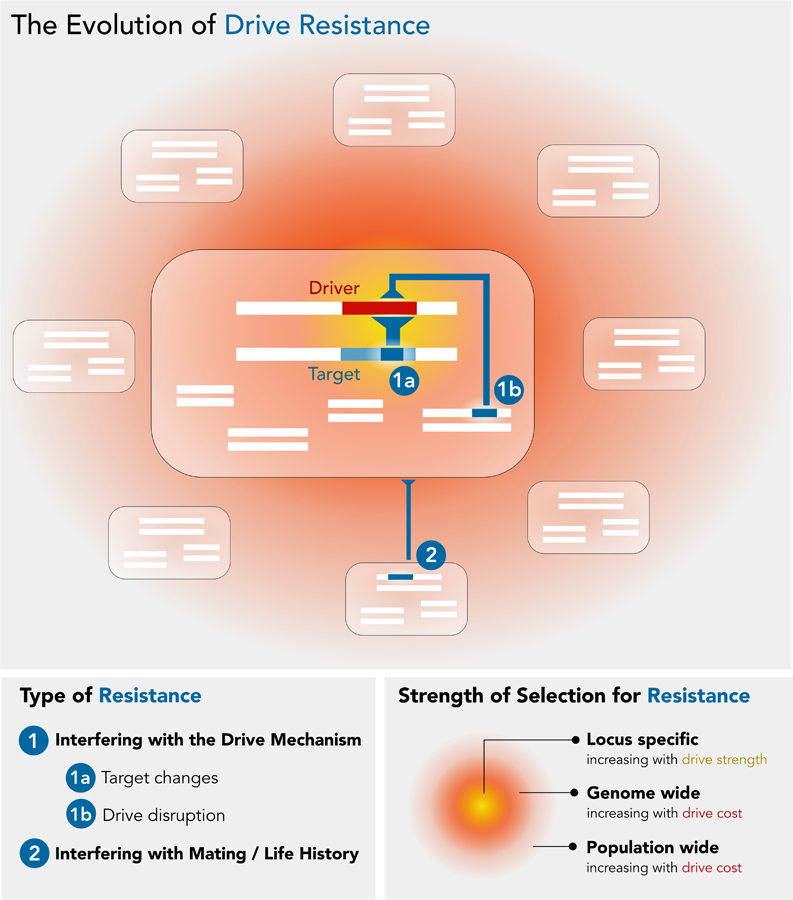
Scientists are rapidly developing synthetic gene drive elements intended for release into natural populations. These are intended to control or eradicate disease vectors and pests, or to spread useful traits through wild populations for disease control or conservation purposes. However, a crucial problem for gene drives is the evolution of resistance against them, preventing their spread. Understanding the mechanisms by which populations might evolve resistance is essential for engineering effective gene drive systems. This review summarizes our current knowledge of drive resistance in both natural and synthetic gene drives. We explore how insights from naturally occurring and synthetic drive systems can be integrated to improve the design of gene drives, better predict the outcome of releases and understand genomic conflict in general.
Keywords: Wolbachia; CRISPR-Cas9; fitness costs; meiotic drive; population suppression; selfish genetic elements; sex ratio distorter; transposable element.
© 2020 The Authors. Journal of Evolutionary Biology published by John Wiley & Sons Ltd on behalf of European Society for Evolutionary Biology.
Conflict of interest statement
Conflicts of Interest Statement
The authors state they have no conflicts of interest to declare.
Figures
References
-
- Abbott J (2014). Self-medication in insects: current evidence and future perspectives. Ecological Entomology, 39(3), 273–280. doi: 10.1111/een.12110 - DOI
-
- Anxolabéhère D, Kidwell MG, & Periquet G (1988). Molecular characteristics of diverse populations are consistent with the hypothesis of a recent invasion of Drosophila melanogaster by mobile P elements. Molecular Biology and Evolution, 5(3), 252–269. doi: 10.1093/oxfordjournals.molbev.a040491 - DOI - PubMed
Publication types
MeSH terms
Grants and funding
- NIH R35GM119515/NH/NIH HHS/United States
- P300PA_177906/SNSF_/Swiss National Science Foundation/Switzerland
- P300PA_177830/SNSF_/Swiss National Science Foundation/Switzerland
- ZSEZ0_180460/SNSF_/Swiss National Science Foundation/Switzerland
- 31003A_160328/Schweizerischer Nationalfonds zur Förderung der Wissenschaftlichen Forschung
