


Bio-activating ultrafine grain titanium: RNA sequencing reveals enhanced mechano-activation of osteoconduction on nanostructured substrates
- PMID: 32970688
- PMCID: PMC7514099
- DOI: 10.1371/journal.pone.0237463
Bio-activating ultrafine grain titanium: RNA sequencing reveals enhanced mechano-activation of osteoconduction on nanostructured substrates
Abstract
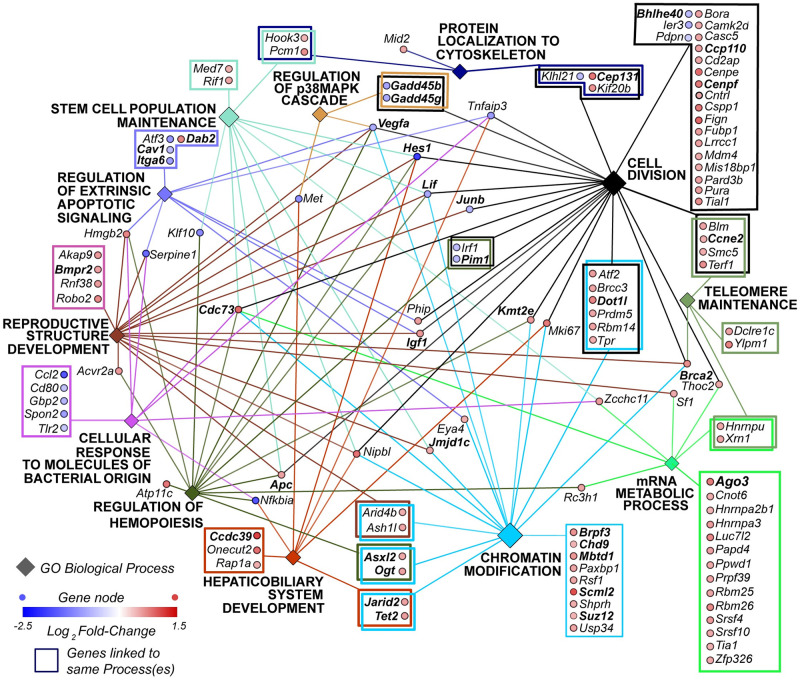
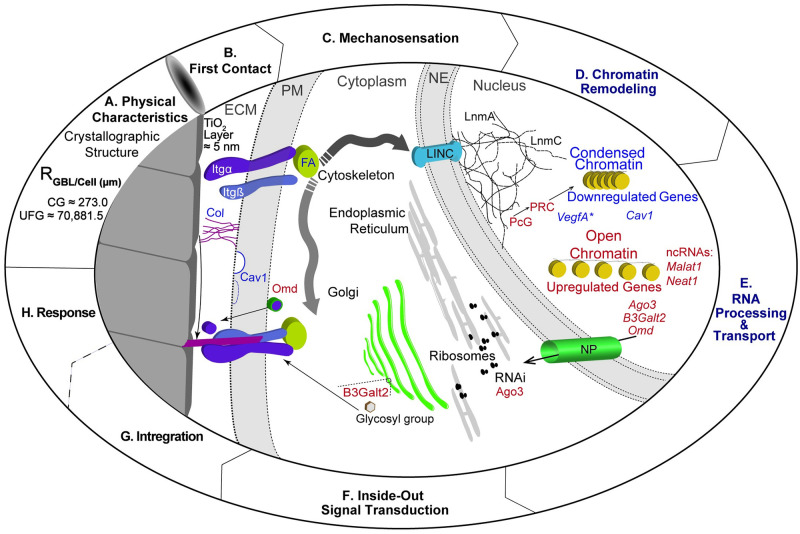
Titanium is essentially absent from biological systems yet reliably integrates into bone. To achieve osseointegration, titanium must activate biological processes without entering cells, defining it as a bio-activating material. Nanostructuring bulk titanium reduces grain size, increases strength, and improves other quantifiable physical properties, including cytocompatibility. The biological processes activated by increasing grain boundary availability were detected with total RNA-sequencing in mouse pre-osteoblasts grown for 72 hours on nanometrically smooth substrates of either coarse grain or nanostructured ultrafine grain titanium. The average grain boundary length under cells on the conventional coarse grain substrates is 273.0 μm, compared to 70,881.5 μm for cells adhered to the nanostructured ultrafine grain substrates; a 260-fold difference. Cells on both substrates exhibit similar expression profiles for genes whose products are critical for mechanosensation and transduction of cues that trigger osteoconduction. Biological process Gene Ontology term enrichment analysis of differentially expressed genes reveals that cell cycle, chromatin modification, telomere maintenance, and RNA metabolism processes are upregulated on ultrafine grain titanium. Processes related to immune response, including apoptosis, are downregulated. Tumor-suppressor genes are upregulated while tumor-promoting genes are downregulated. Upregulation of genes involved in chromatin remodeling and downregulation of genes under the control of the peripheral circadian clock implicate both processes in the transduction of mechanosensory information. Non-coding RNAs may also play a role in the response. Merging transcriptomics with well-established mechanobiology principles generates a unified model to explain the bio-activating properties of titanium. The modulation of processes is accomplished through chromatin remodeling in which the nucleus responds like a rheostat to grain boundary concentration. This convergence of biological and materials science reveals a pathway toward understanding the biotic-abiotic interface and will inform the development of effective bio-activating and bio-inactivating materials.
Conflict of interest statement
Dr. Lowe received the donation of titanium from Carpenter Technology Corporation. However, Carpenter did not provide any financial support for this project, nor did they have any influence on the experiment, analysis, decision to publish, or preparation of the manuscript. This does not alter our adherence to PLOS ONE policies on sharing data and materials. All data are publicly available and samples of the materials tested may be obtained by contacting Dr. Lowe.
Figures


References
-
- Valiev RZ, Estrin YS, Horita A, Langdon TG, Zehetbaur MJ, Zhu Y. Producing bulk ultrafine-grained materials by severe plastic deformation: Ten years later. JOM. 2016;68:1216–26.
-
- Lowe TC, Reiss RA. Understanding the biological responses of nanostructured metals and surfaces. IOP Conference Series: Mater Sci and Eng 2014;63(1):012172.
Publication types
MeSH terms
Substances
Grants and funding
LinkOut - more resources
Full Text Sources
Molecular Biology Databases
