


Umbilical cord characteristics and their association with adverse pregnancy outcomes: A systematic review and meta-analysis
- PMID: 32970750
- PMCID: PMC7514048
- DOI: 10.1371/journal.pone.0239630
Umbilical cord characteristics and their association with adverse pregnancy outcomes: A systematic review and meta-analysis
Abstract
Objective: Current data on the role of the umbilical cord in pregnancy complications are conflicting; estimates of the proportion of stillbirths due to cord problems range from 3.4 to 26.7%. A systematic review and meta-analysis were undertaken to determine which umbilical cord abnormalities are associated with stillbirth and related adverse pregnancy outcomes.
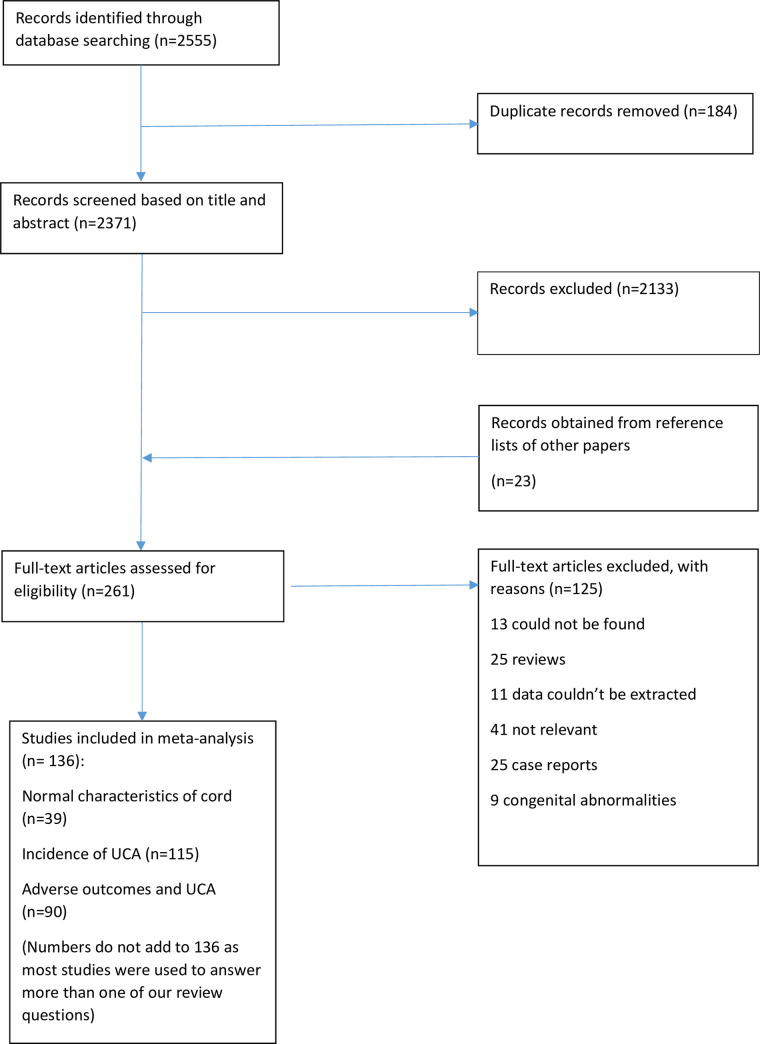
Methods: MEDLINE, EMBASE, CINAHL and Google Scholar were searched from 1960 to present day. Reference lists of included studies and grey literature were also searched. Cohort, cross-sectional, or case-control studies of singleton pregnancies after 20 weeks' gestation that reported the frequency of umbilical cord characteristics or cord abnormalities and their relationship to stillbirth or other adverse outcomes were included. Quality of included studies was assessed using NIH quality assessment tools. Analyses were performed in STATA.
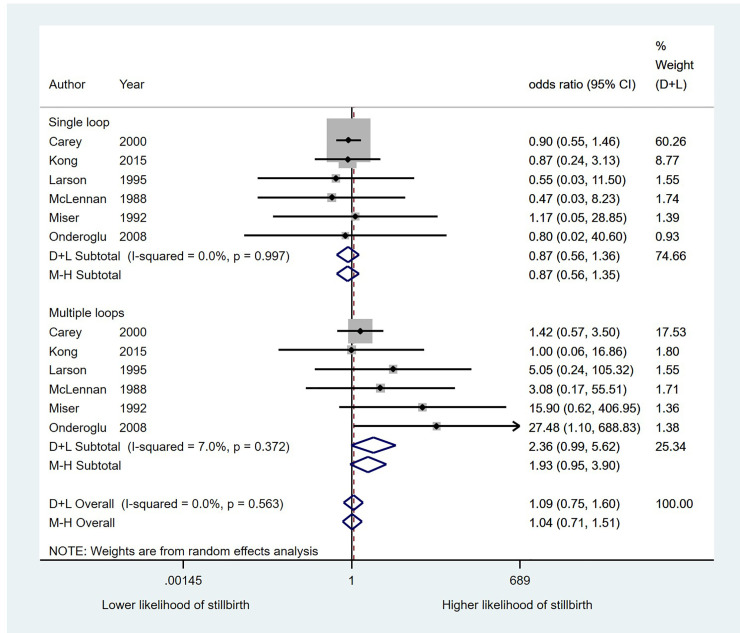
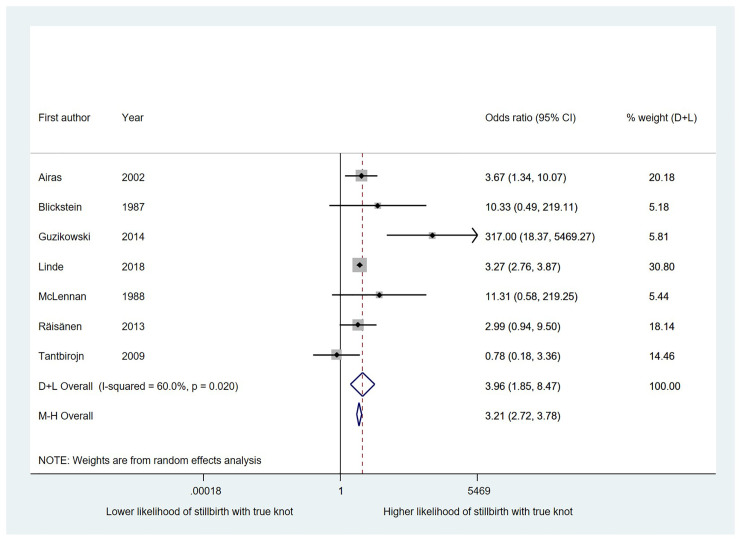
Results: This review included 145 studies. Nuchal cords were present in 22% of births (95% CI 19, 25); multiple loops of cord were present in 4% (95% CI 3, 5) and true knots of the cord in 1% (95% CI 0, 1) of births. There was no evidence for an association between stillbirth and any nuchal cord (OR 1.11, 95% CI 0.62, 1.98). Comparing multiple loops of nuchal cord to single loops or no loop gave an OR of 2.36 (95% CI 0.99, 5.62). We were not able to look at the effect of tight or loose nuchal loops. The likelihood of stillbirth was significantly higher with a true cord knot (OR 4.65, 95% CI 2.09, 10.37).
Conclusions: True umbilical cord knots are associated with increased risk of stillbirth; the incidence of stillbirth is higher with multiple nuchal loops compared to single nuchal cords. No studies reported the combined effects of multiple umbilical cord abnormalities. Our analyses suggest specific avenues for future research.
Conflict of interest statement
The authors have declared that no competing interests exist.
Figures
References
-
- Collins J. The human umbilical cord. RCOG Press; 2000.
