


IL-21 in Homeostasis of Resident Memory and Exhausted CD8 T Cells during Persistent Infection
- PMID: 32971931
- PMCID: PMC7554897
- DOI: 10.3390/ijms21186966
IL-21 in Homeostasis of Resident Memory and Exhausted CD8 T Cells during Persistent Infection
Abstract
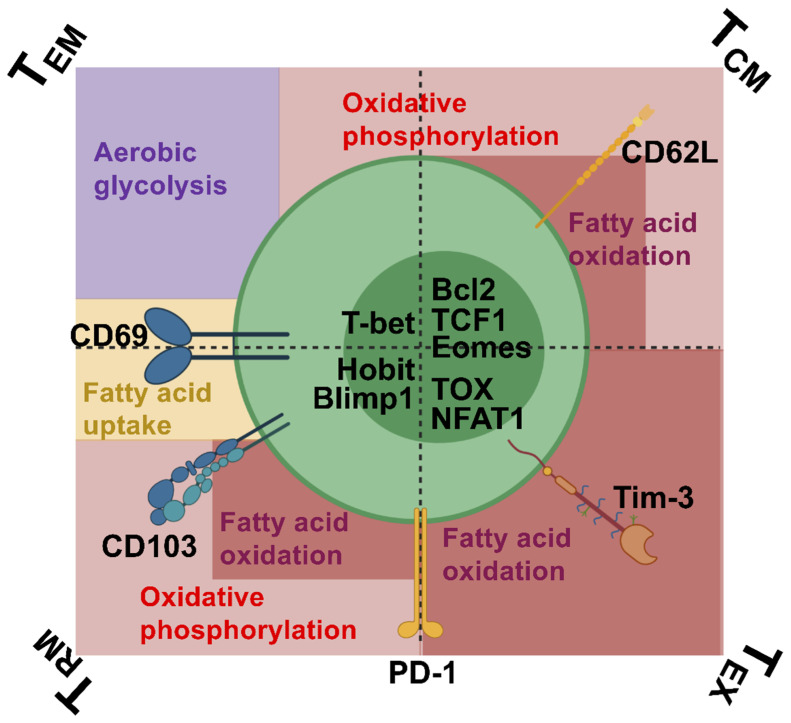
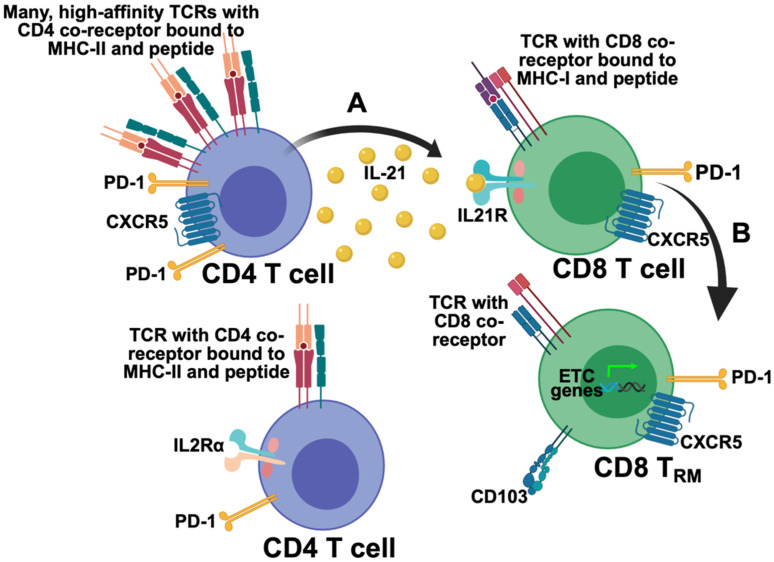
CD4 T cells guide the development of CD8 T cells into memory by elaborating mitogenic and differentiation factors and by licensing professional antigen-presenting cells. CD4 T cells also act to stave off CD8 T cell dysfunction during repetitive antigen stimulation in persistent infection and cancer by mitigating generation of exhausted T cells (TEX). CD4 T cell help is also required for establishing and maintaining tissue-resident memory T cells (TRM), the nonrecirculating memory T cell subset parked in nonlymphoid tissues to provide frontline defense against reinvading pathogens. Interleukin (IL)-21 is the signature cytokine secreted by follicular helper CD4 T cells (TFH) to drive B cell expansion and differentiation in germinal centers to mount high-affinity, isotype class-switched antibodies. In several infection models, IL-21 has been identified as the CD4 T help needed for formation and survival of TRM and TEX. In this review, we will explore the different memory subsets of CD8 T cells in persistent infections, the metabolic profiles associated with each, and evidence documenting the importance of CD4 T cell-derived IL-21 in regulating CD8 TRM and TEX development, homeostasis, and function.
Keywords: CD4 T cells; CD8 T cells; exhaustion; interleukin (IL)-21; persistent infection; resident memory.
Conflict of interest statement
The authors declare no conflict of interest.
Figures
References
Publication types
MeSH terms
Substances
Grants and funding
LinkOut - more resources
Full Text Sources
Other Literature Sources
Research Materials
Miscellaneous
