


Modeling the predictors of stunting in Ethiopia: analysis of 2016 Ethiopian demographic health survey data (EDHS)
- PMID: 32974038
- PMCID: PMC7507682
- DOI: 10.1186/s40795-020-00378-z
Modeling the predictors of stunting in Ethiopia: analysis of 2016 Ethiopian demographic health survey data (EDHS)
Abstract
Background: Despite continued efforts to address malnutrition, there is minimal reduction in the prevalence rates of stunting in developing countries, including Ethiopia. The association between nutritional and socioeconomic factors collected from a national survey in Ethiopia and stunting have not been rigorously analyzed. Therefore, this study aims to model the effect of nutritional and socioeconomic predictors using 2016 Ethiopian Demographic Health Survey (EDHS) data.
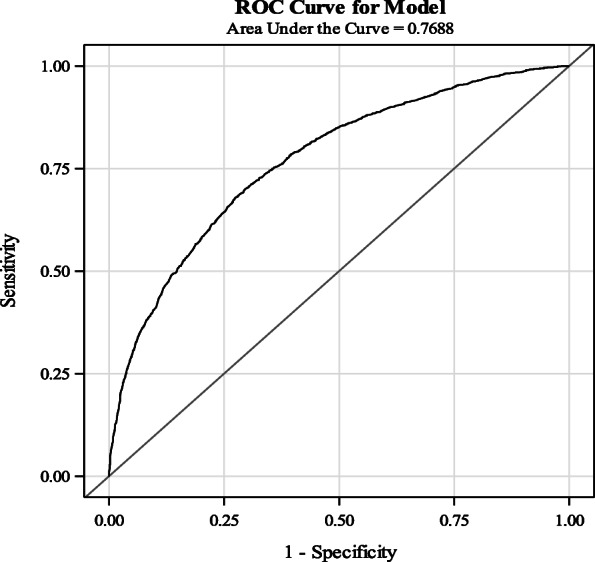
Methods: This study is a secondary data analysis of the 2016 EDHS survey, which included 7909 children aged 6 to59 months. Descriptive statistics using frequency and percentage for categorical data and mean and standard deviation for metric data were conducted. Linearity, confounding, and multicollinearity were checked. Bivariable and multivariable logistic regression were carried out. The adjusted odds ratio (AOR) and 95% confidence interval (CI) were calculated. A receiver operative curve was built to estimate the sensitivity and specificity of the model.
Results: The study identified that 39.2% of children included in this analysis were stunted. Furthermore, 76.47, 84.27, and 92.62% of the children did not consume fruits and vegetables, legumes and lentils, or meat and its products, respectively. Children aged 24 months to 59 months were found to be at 9.71 times higher risk of being stunted compared to their younger counterparts aged 6-24 months (AOR: 9.71; CI: 8.07, 11.6 children). Those children weighing below 9.1 kg were at 27.86 odds of being stunted compared to those weighing 23.3 kg and above. Moreover, mothers with a height below 150 cm (AOR: 2.01; CI: 1.76, 2.5), living in a rural area (AOR: 1.3, CI: 1.09, 1.54), and being male (AOR: 1.4; CI: 1.26, 1.56) were factors associated with stunting. The predictive ability of the model was 77%: if a pair of observations with stunted and non-stunted children were taken, the model correctly ranks 77% of such pair of observations.
Conclusion: The model indicates that being born male, being from a mother of short stature, living in rural areas, small child size, mother with mild anemia, father having no formal education or primary education only, having low child weight, and being 24-59 months of age increases the likelihood of stunting. On the other hand, being born of an overweight or obese mother decreases the likelihood of stunting.
Keywords: EDHS; Ethiopia; Modeling; Nutrition; Stunting.
© The Author(s) 2020.
Conflict of interest statement
Competing interestsThe authors declared that there are no any competing interests.
Figures
References
LinkOut - more resources
Full Text Sources