


Blocking intruders: inducible physico-chemical barriers against plant vascular wilt pathogens
- PMID: 32976552
- PMCID: PMC7853604
- DOI: 10.1093/jxb/eraa444
Blocking intruders: inducible physico-chemical barriers against plant vascular wilt pathogens
Abstract
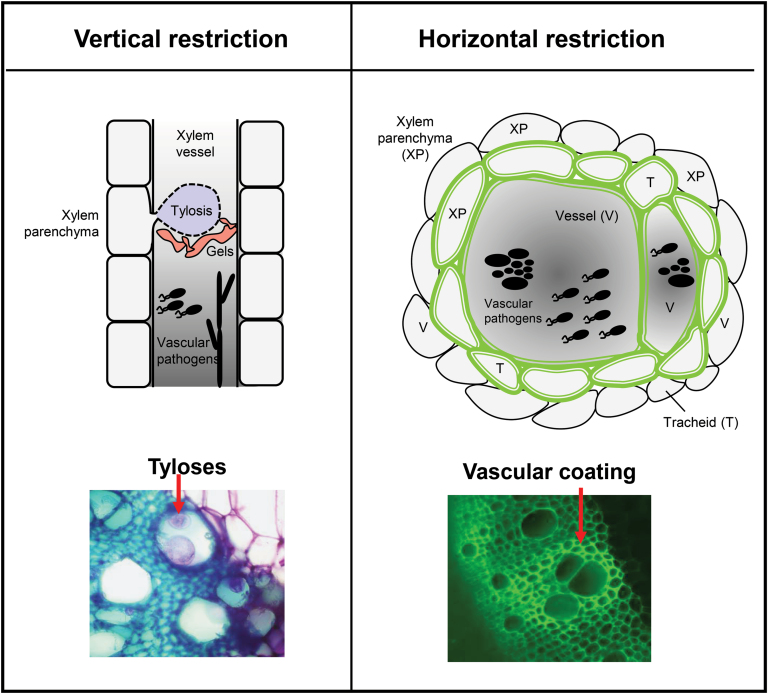
Xylem vascular wilt pathogens cause devastating diseases in plants. Proliferation of these pathogens in the xylem causes massive disruption of water and mineral transport, resulting in severe wilting and death of the infected plants. Upon reaching the xylem vascular tissue, these pathogens multiply profusely, spreading vertically within the xylem sap, and horizontally between vessels and to the surrounding tissues. Plant resistance to these pathogens is very complex. One of the most effective defense responses in resistant plants is the formation of physico-chemical barriers in the xylem tissue. Vertical spread within the vessel lumen is restricted by structural barriers, namely, tyloses and gels. Horizontal spread to the apoplast and surrounding healthy vessels and tissues is prevented by vascular coating of the colonized vessels with lignin and suberin. Both vertical and horizontal barriers compartmentalize the pathogen at the infection site and contribute to their elimination. Induction of these defenses are tightly coordinated, both temporally and spatially, to avoid detrimental consequences such as cavitation and embolism. We discuss current knowledge on mechanisms underlying plant-inducible structural barriers against major xylem-colonizing pathogens. This knowledge may be applied to engineer metabolic pathways of vascular coating compounds in specific cells, to produce plants resistant towards xylem colonizers.
Keywords: Gels; inducible defenses; lignin; physico-chemical barriers; plant-pathogen interactions; structural defenses; suberin; tyloses; vascular pathogens; wilt.
© The Author(s) 2020. Published by Oxford University Press on behalf of the Society for Experimental Biology.
Figures

References
-
- Alassimone J, Fujita S, Doblas VG, et al. . 2016. Polarly localized kinase SGN1 is required for Casparian strip integrity and positioning. Nature Plants 2, 16113. - PubMed
-
- Álvarez B, Biosca EG, López MM. 2010. On the life of Ralstonia solanacearum, a destructive bacterial plant pathogen. In: Méndez-Vilas A, ed. Technology and education topics in applied microbiology and microbial biotechnology. Current Research, Technology and Education Topics in Applied Microbiology. Badajoz: Formatex, 267–279.
-
- Araujo L, Bispo WM, Cacique IS, Moreira WR, Rodrigues FÁ. 2014. Resistance in mango against infection by Ceratocystis fimbriata. Phytopathology 104, 820–833. - PubMed
-
- Baayen RP, Elgersma DM. 1985. Colonization and histopathology of susceptible and resistant carnation cultivars infected with Fusarium oxysporum f. sp. dianthi. Netherlands Journal of Plant Pathology 91, 119–135.
Publication types
MeSH terms
LinkOut - more resources
Full Text Sources
Miscellaneous
