


After providing end of life care to relatives, what care options do family caregivers prefer for themselves?
- PMID: 32977327
- PMCID: PMC7518928
- DOI: 10.1371/journal.pone.0239423
After providing end of life care to relatives, what care options do family caregivers prefer for themselves?
Abstract
Objectives: We examined how caregivers who had cared for a relative at end of life (EoL) wished to be cared for in the event that they experienced advanced dementia or physical disability in the future, and what factors influenced their preferences for EoL care.
Methods: In this mixed-methods study, 83 participants, recruited from multiple sources in Israel, were interviewed concerning socio-demographic factors, health status, past experience with EoL, preference for extension of life vs. quality of life (QoL), willingness to be dependent on others, and preferences for EoL care.
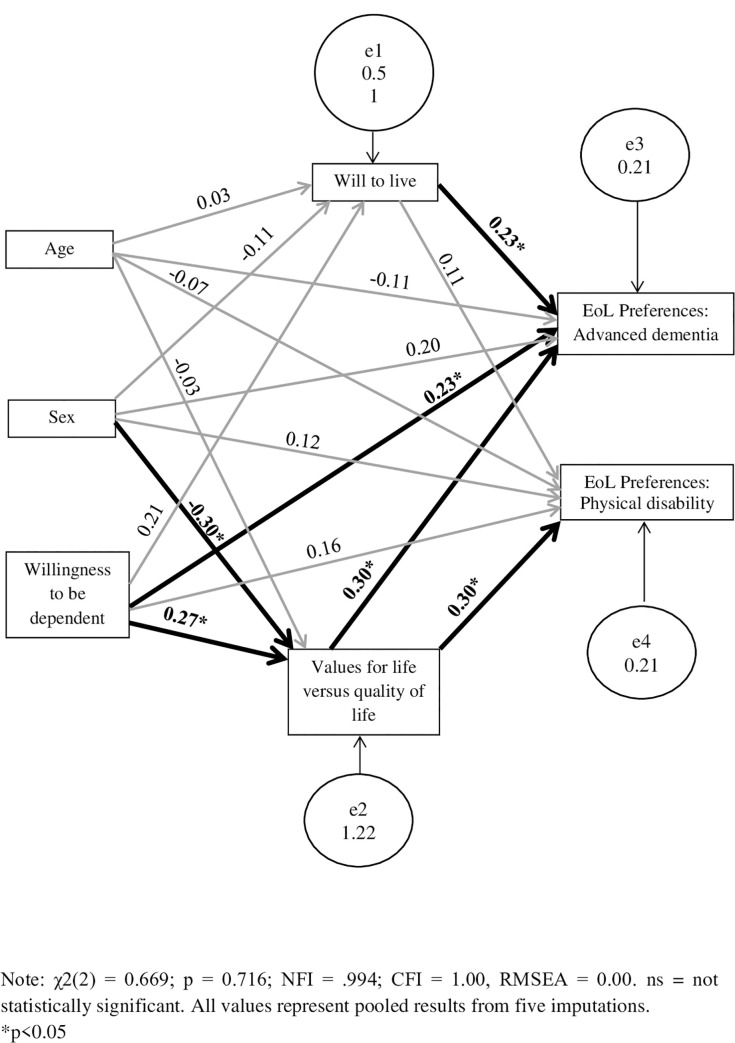
Results: In case of advanced dementia, 58% preferred euthanasia or suicide; around a third chose those for physical disability. Care by family members was the least desired form of care in the advanced dementia scenario, although more desirable than institutional care in the physical disability scenario. QoL was rated as the highest factor impacting preferences for EoL care. Men demonstrated a higher preference than women for extension of life over QoL.
Conclusion: Our study points to the need for society to consider solutions to the request of participants to reject the type of EoL experienced by their relatives. Those solutions include investing in improving the quality of life at the end of life, and offering alternatives such as euthanasia, which a large proportion of our participants found ethically and medically appropriate within the current system of care in the event of severe physical disability, and more so in the event of advanced dementia.
Conflict of interest statement
The authors have declared that no competing interests exist.
Figures

References
-
- Vanderveken L, Schoenmakers B, De Lepeleire J. A Better Understanding of the Concept “A Good Death”: How Do Healthcare Providers Define a Good Death? Amercian Journal of Geriatric Psychiatry 2019;27(5):463–71. - PubMed
-
- Chau PH, Kwok T, Woo J, Chan F, Hui E, Chan C. Disagreement in preference for residential care between family caregivers and elders is greater among cognitively impaired elders group than cognitively intact elders group. International Journal of Geriatric Psychiatry. 2010;25(1):46–54. 10.1002/gps.2296 - DOI - PubMed
Publication types
MeSH terms
LinkOut - more resources
Full Text Sources
Medical
Miscellaneous
