


Cohort profile: the PHARMO Perinatal Research Network (PPRN) in the Netherlands: a population-based mother-child linked cohort
- PMID: 32978198
- PMCID: PMC7520848
- DOI: 10.1136/bmjopen-2020-037837
Cohort profile: the PHARMO Perinatal Research Network (PPRN) in the Netherlands: a population-based mother-child linked cohort
Abstract
Purpose: Observational population-based research is a very suitable non-invasive method for studies in the vulnerable populations of pregnant women and children. Therefore, the PHARMO Perinatal Research Network (PPRN) was set up as a resource for life course perinatal and paediatric research by linking population-based data from existing registrations.
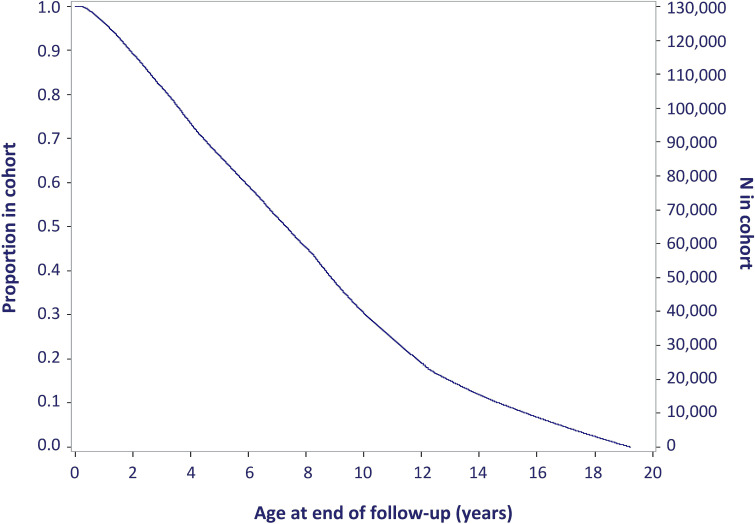
Participants: From 1999 to 2017, the PPRN captures approximately 542 900 pregnancies of 387 100 mothers ('Pregnancy Cohort'). Additionally, mother-child linkage is currently available for a quarter of these pregnancies ('Child Cohort'). The PPRN contains preconceptional information on maternal healthcare, as well as detailed pregnancy and neonatal data, extending into long-term follow-up and outcomes after birth for both mother and child up to nearly 20 years. It includes linked data from different primary and secondary healthcare settings.
Findings to date: Through record linkage of the Netherlands Perinatal Registry and the PHARMO Database Network, we have established a large population-based research network including data on demographics, medication use, medical conditions and details concerning labour, birth and neonatal outcomes. Here, we provide an overview of record types available from the PPRN, available database follow-up and pregnancy characteristics of the PPRN cohorts. The PPRN has been used for a number of different pharmacoepidemiological studies, for example, to confirm that preterm-born infants were more likely than full-term infants to be hospitalised or use medication. Similar long-term comparisons showed that children born following spontaneous preterm labour were at increased risk of neurodevelopmental and respiratory conditions. Most recently, the PPRN provided important evidence on the trends in use of potentially harmful medication during pregnancy.
Future plans: The PPRN provides a unique and rich data set facilitating large-scale observational pharmacoepidemiological perinatal research. The patient-level linkage of many different healthcare data sources allows for long-term follow-up of mother and child, with ongoing annual updates.
Keywords: clinical pharmacology; epidemiology; gynaecology; neonatology; obstetrics; paediatrics.
© Author(s) (or their employer(s)) 2020. Re-use permitted under CC BY. Published by BMJ.
Conflict of interest statement
Competing interests: None declared.
Figures


Similar articles
-
Increased risk of morbidities and health-care utilisation in children born following preterm labour compared with full-term labour: A population-based study.J Paediatr Child Health. 2019 Apr;55(4):446-453. doi: 10.1111/jpc.14225. Epub 2018 Oct 4. J Paediatr Child Health. 2019. PMID: 30288825
-
Existing Data Sources for Clinical Epidemiology: The PHARMO Database Network.Clin Epidemiol. 2020 Apr 29;12:415-422. doi: 10.2147/CLEP.S247575. eCollection 2020. Clin Epidemiol. 2020. PMID: 32425609 Free PMC article.
-
Obstetric and perinatal risks in 4601 singletons and 884 twins conceived after fresh blastocyst transfers: a Nordic study from the CoNARTaS group.Hum Reprod. 2020 Apr 28;35(4):805-815. doi: 10.1093/humrep/deaa032. Hum Reprod. 2020. PMID: 32294185
-
Developing Methods to Link Patient Records across Data Sets That Preserve Patient Privacy [Internet].Washington (DC): Patient-Centered Outcomes Research Institute (PCORI); 2020 Jun. Washington (DC): Patient-Centered Outcomes Research Institute (PCORI); 2020 Jun. PMID: 37535796 Free Books & Documents. Review.
-
Three biomarker tests to help diagnose preterm labour: a systematic review and economic evaluation.Health Technol Assess. 2019 Mar;23(13):1-226. doi: 10.3310/hta23130. Health Technol Assess. 2019. PMID: 30917097 Free PMC article.
Cited by
-
Enhancing Value and Uptake for Whole-Population Cohorts of Children and Parents: Methods to Integrate Registries into the Generation Victoria Cohort.Children (Basel). 2021 Apr 7;8(4):285. doi: 10.3390/children8040285. Children (Basel). 2021. PMID: 33917154 Free PMC article.
-
GPs' awareness of pregnancy: trends and association with hazardous medication use.Br J Gen Pract. 2023 Jun 29;73(732):e493-e501. doi: 10.3399/BJGP.2022.0193. Print 2023 Jul. Br J Gen Pract. 2023. PMID: 37385759 Free PMC article.
References
-
- Grote Lijnen 1999-2012 Stichting perinatale registratie Nederland, 2013.
-
- Herings R, Pedersen L. Pharmacy-based medical record linkage systems : Strom B, Kimmel S, Hennessy S, Pharmacoepidemiology. 5th edn John Wiley & Sons, Ltd, 2012: 270–86.
MeSH terms
LinkOut - more resources
Full Text Sources
