


Morphine and ethanol pretreatment effects on expression and extinction of ethanol-induced conditioned place preference and aversion in mice
- PMID: 32980910
- PMCID: PMC7796927
- DOI: 10.1007/s00213-020-05658-x
Morphine and ethanol pretreatment effects on expression and extinction of ethanol-induced conditioned place preference and aversion in mice
Abstract
Rationale: Opioid receptor antagonists reliably alter the expression or extinction of ethanol's conditioned motivational effects as indexed by the place conditioning procedure, suggesting endogenous opioids are normally involved. These studies examined how exogenous stimulation of opioid receptors alters ethanol's conditioned rewarding and aversive effects.
Objectives: Drugs that either directly (morphine) or indirectly (ethanol) stimulate opioid receptors were tested for their effects on the expression and extinction of ethanol-induced conditioned place preference (CPP) and conditioned place aversion (CPA).
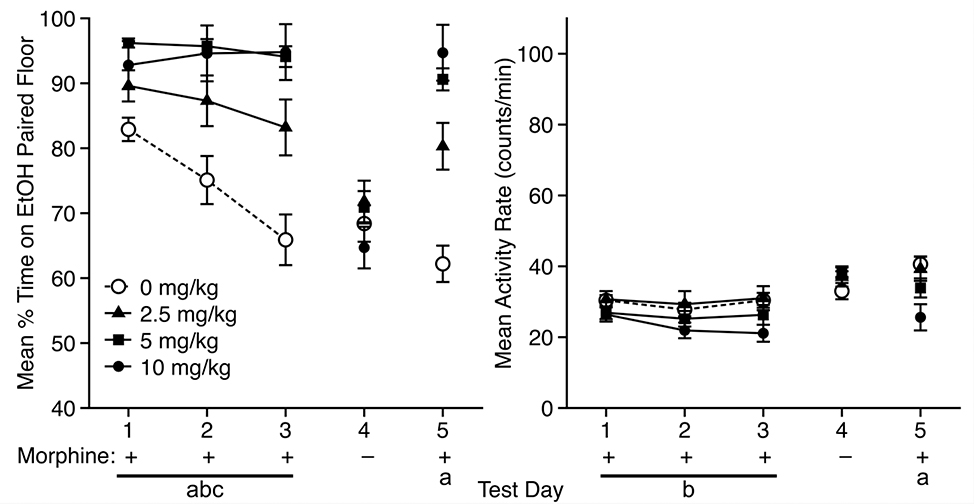
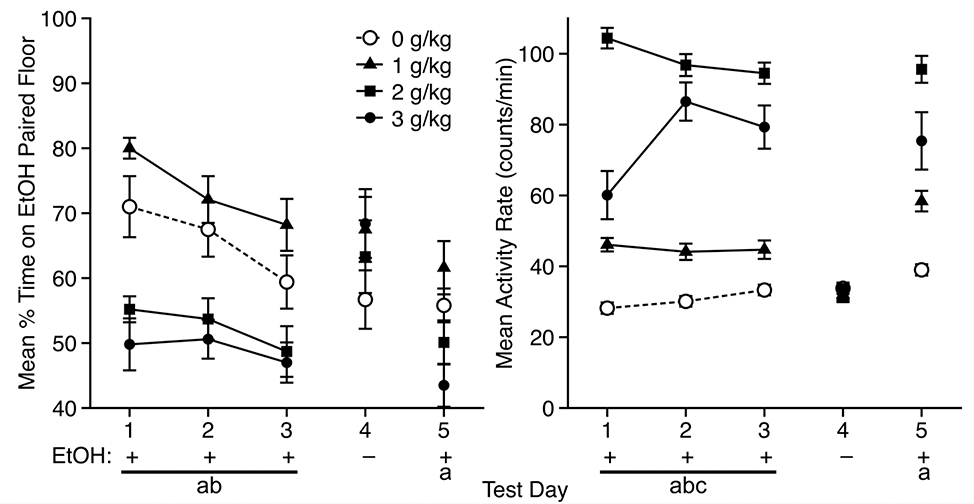
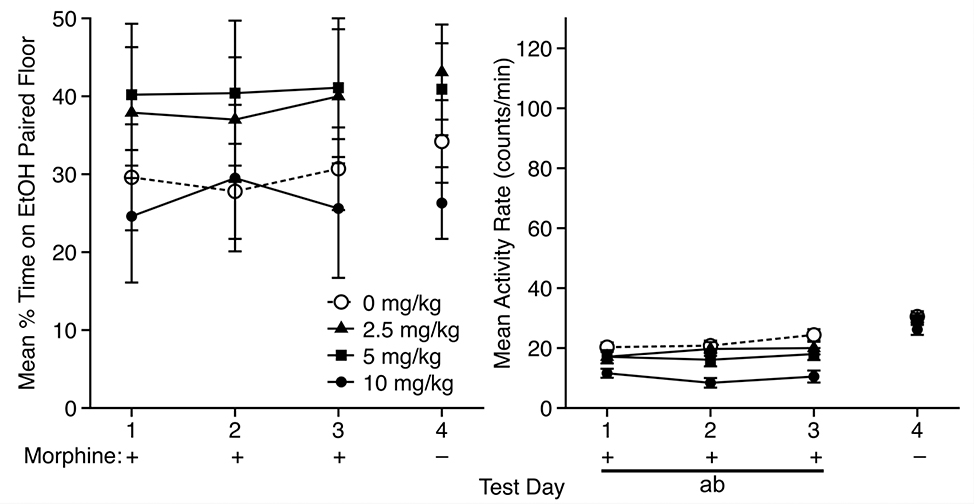
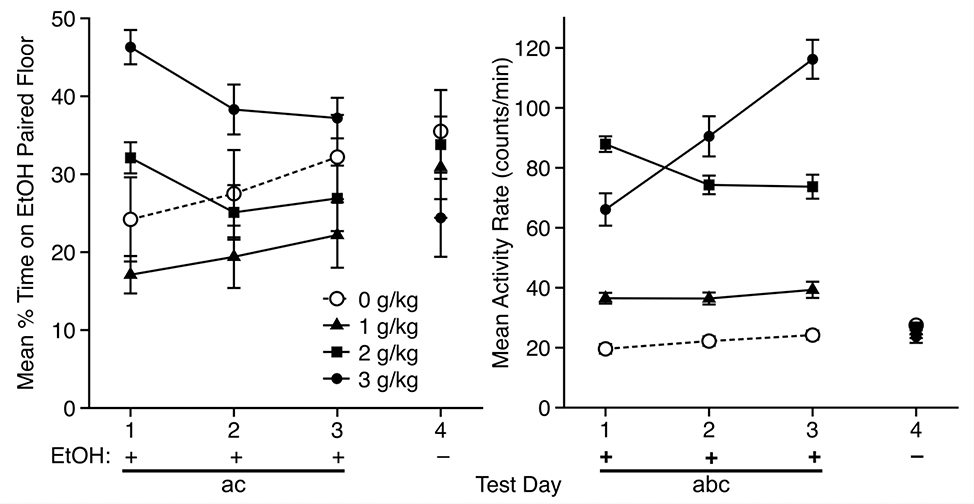
Methods: Male DBA/2J mice were exposed to unbiased ethanol (2 g/kg) conditioning procedures that produced either CPP (experiments 1-2) or CPA (experiments 3-4). Morphine (0, 2.5, 5, or 10 mg/kg) was injected before three post-conditioning tests in experiments 1 and 3, whereas ethanol (0, 1, 2, or 3 g/kg) was injected before tests in experiments 2 and 4. All groups received vehicle on test 4 to determine whether the drug pretreatments altered the course of extinction.
Results: Morphine dose-dependently enhanced CPP expression (experiment 1), but ethanol dose-dependently reduced CPP expression (experiment 2). Test 4 showed no differences between drug-treated mice and mice given vehicle on all tests. Morphine had no effect on expression or extinction of ethanol-induced CPA (experiment 3). The highest ethanol dose (3 g/kg) interfered with CPA expression, but not extinction (experiment 4).
Conclusions: Pretreatment drug effects on ethanol CPP and CPA expression were most likely a byproduct of their activity altering effects rather than opioid-receptor mediated modulation of ethanol's conditioned motivational effects. Neither drug affected the course of extinction.
Keywords: Aversion; Conditioned place aversion; Conditioned place preference; Conditioning; Ethanol; Inbred mice (DBA/2J); Locomotor activity; Morphine; Opioid; Reward.
Conflict of interest statement
Figures
References
-
- Altshuler HL, Phillips PE, Feinhandler DA (1980) Alteration of ethanol self-administration by naltrexone. Life Sci 26:679–688 - PubMed
-
- Bespalov AY, Tokarz ME, Bowen SE, Balster RL, Beardsley PM (1999) Effects of test conditions on the outcome of place conditioning with morphine and naltrexone in mice. Psychopharmacology 141:118–122 - PubMed
-
- Blum K, Payne JE (1991) Alcohol and the addictive brain: New hope for alcoholics from biogenetic research. Free Press, New York
-
- Ciccocioppo R, Martin-Fardon R, Weiss F (2002) Effect of selective blockade of mu(1) or delta opioid receptors on reinstatement of alcohol-seeking behavior by drug-associated stimuli in rats. Neuropsychopharmacology 27:391–399 - PubMed
MeSH terms
Substances
Grants and funding
LinkOut - more resources
Full Text Sources
