Comparing Inhaler Use Technique Based on Inhaler Type in Elderly Patients with Respiratory Disease
- PMID: 32981292
- PMCID: PMC7801805
- DOI: 10.4046/trd.2020.0021
Comparing Inhaler Use Technique Based on Inhaler Type in Elderly Patients with Respiratory Disease
Abstract
Background: The aim of this study was to investigate inhaler device handling in elderly patients. Inhaler devices with respect to misuse and error correction were also compared.
Methods: Inhaler use technique was assessed using standardized checklists at the first visit and 3-month follow-up visit after retraining. The primary outcome was difference in the acceptable use ratio among inhaler devices. Secondary outcomes included differences in error correction, the most common step of misuse, and factors affecting the accuracy of inhaler use.
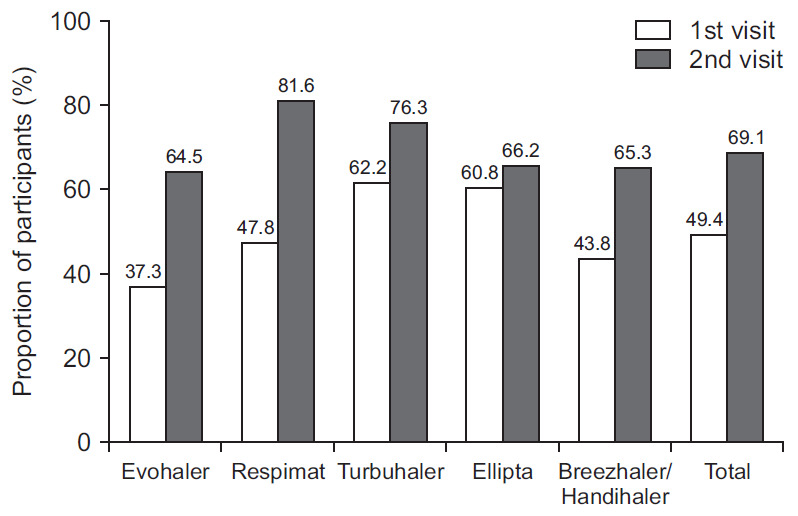
Results: A total of 251 patients (mean age, 76.4 years) were included. The handling of 320 devices was assessed in the study. All patients had been trained before. However, only 24.7% of them used inhalers correctly. Proportions of acceptable use for Evohaler, Respimat, Turbuhaler, Ellipta, and Breezhaler/Handihaler were 38.7%, 50.0%, 61.4%, 60.8%, and 43.2%, respectively (p=0.026). At the second visit, the acceptable use ratio had increased. There were no significant differences among inhaler types (Evohaler, 63.9%; Respimat, 86.1%; Turbuhaler, 74.3%; Ellipta, 64.6%; and Breezhaler/Handihaler, 65.3% [p=0.129]). In multivariate analysis, body mass index, Turbuhaler, and Ellipta showed positive correlations with acceptable use of inhalers, whereas Chronic Obstructive Pulmonary Disease Assessment Test score showed a negative correlation.
Conclusion: Although new inhalers have been developed, the accuracy of inhaler use remains low. Elderly patients showed more errors when using pressurized metered-dose inhalers than using dry powder inhalers and soft-mist inhalers. However, there were no significant differences in misuse among inhaler devices after individual training. Results of this study suggests that repeat training is more important than inhaler type.
Keywords: Aged; Asthma; Chronic Obstructive Pulmonary Disease; Inhaler.
Conflict of interest statement
No potential conflict of interest relevant to this article was reported.
Figures
References
-
- Rogliani P, Calzetta L, Coppola A, Cavalli F, Ora J, Puxeddu E, et al. Optimizing drug delivery in COPD: the role of inhaler devices. Respir Med. 2017;124:6–14. - PubMed
Grants and funding
LinkOut - more resources
Full Text Sources
Other Literature Sources