


Transmission of airborne virus through sneezed and coughed droplets
- PMID: 32982136
- PMCID: PMC7513825
- DOI: 10.1063/5.0022859
Transmission of airborne virus through sneezed and coughed droplets
Abstract
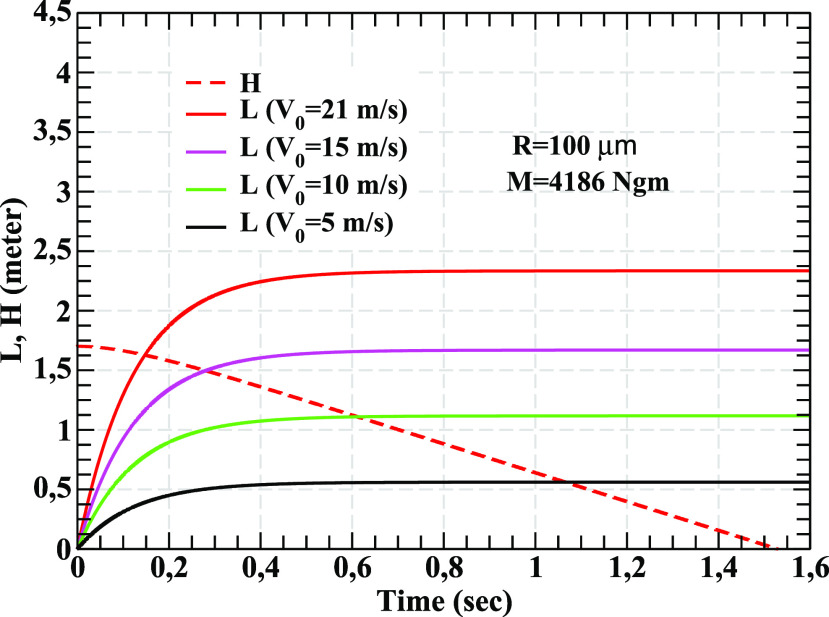
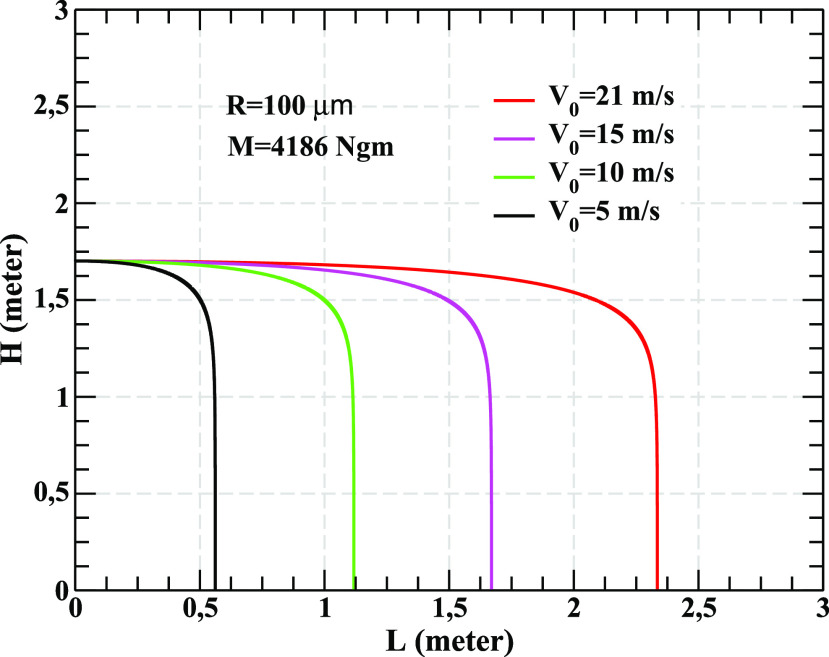
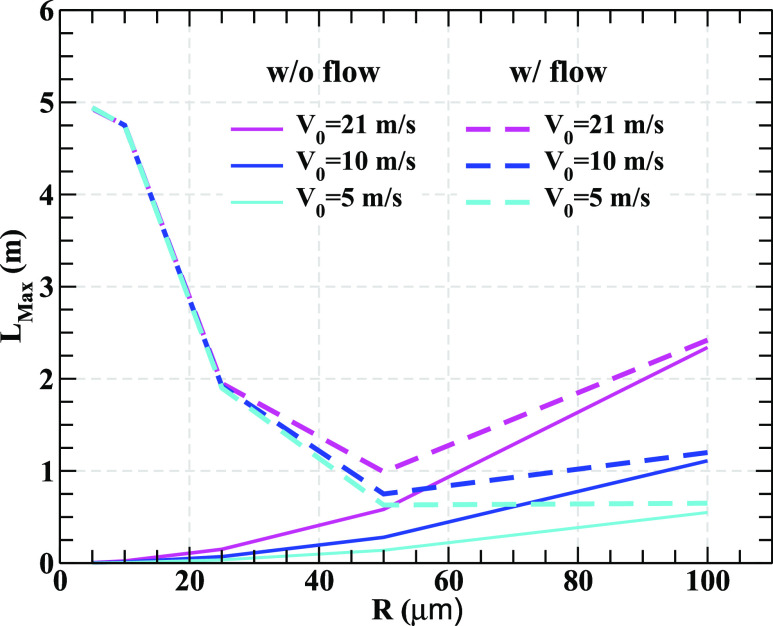
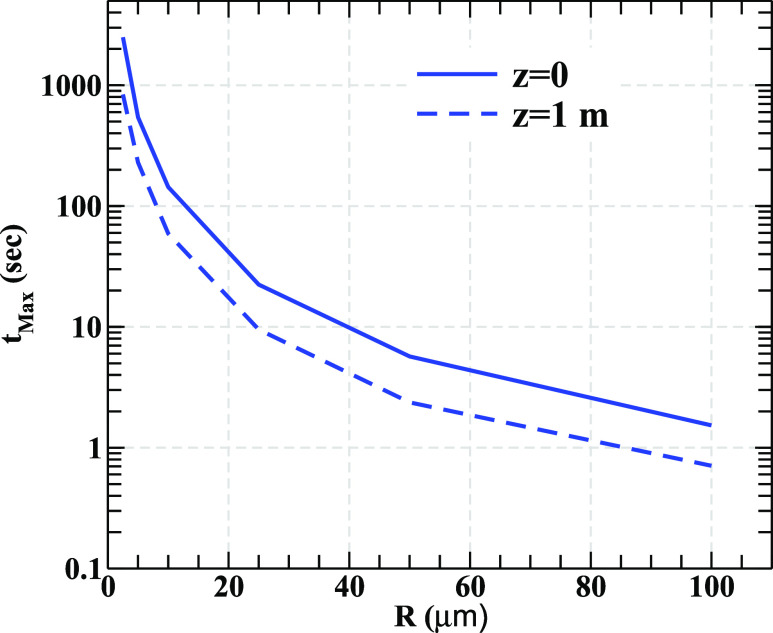
The spread of COVID19 through droplets ejected by infected individuals during sneezing and coughing has been considered a matter of key concern. Therefore, a quantitative understanding of the propagation of droplets containing the virus assumes immense importance. Here, we investigate the evolution of droplets in space and time under varying external conditions of temperature, humidity, and wind flow by using laws of statistical and fluid mechanics. The effects of drag, diffusion, and gravity on droplets of different sizes and ejection velocities have been considered during their motion in air. In still air, we found that bigger droplets traverse a larger distance, but smaller droplets remain suspended in air for a longer time. Therefore, in still air, the horizontal distance that a healthy individual should maintain from an infected one is based on the bigger droplets, but the time interval to be maintained is based on the smaller droplets. We show that in places with wind flow, the lighter droplets travel a larger distance and remain suspended in air for a longer time. Therefore, we conclude that both temporal and geometric distance that a healthy individual should maintain from an infected one is based on the smaller droplets under flowing air, which makes the use of a mask mandatory to prevent the virus. Maintenance of only stationary separation between healthy and infected individuals is not substantiated. The quantitative results obtained here will be useful to devise strategies for preventing the spread of other types of droplets containing microorganisms.
Copyright © 2020 Author(s).
Figures
References
-
- Flügge C., “Uber luftinfection,” Z. Hyg. Infektionskrankh. 25, 179 (1897). 10.1007/bf02220473 - DOI
-
- Bar-On Y. M., Flamholz A., Phillips R., and Milo R., https://elifesciences.org/articles/57309.
LinkOut - more resources
Full Text Sources