


N95 Filtering Facepiece Respirators during the COVID-19 Pandemic: Basics, Types, and Shortage Solutions
- PMID: 32983373
- PMCID: PMC7513643
- DOI: 10.5704/MOJ.2007.002
N95 Filtering Facepiece Respirators during the COVID-19 Pandemic: Basics, Types, and Shortage Solutions
Abstract
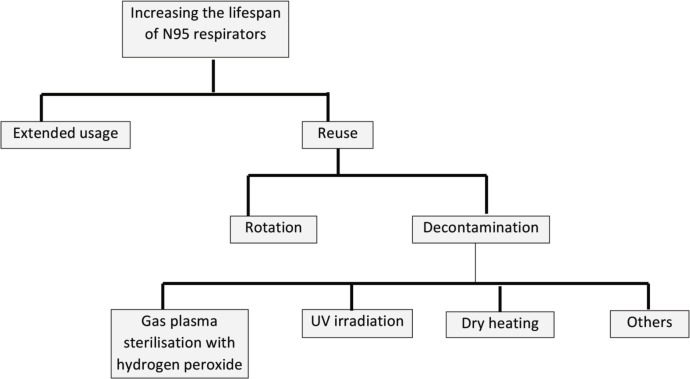
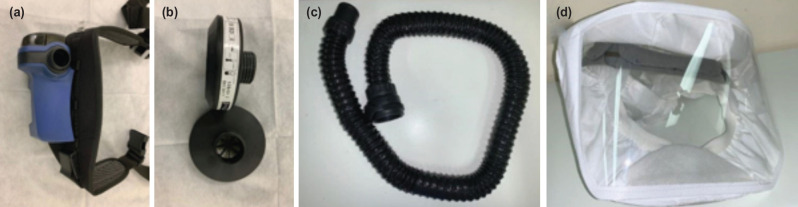
The coronavirus disease 2019 (COVID-19) is highly infectious, with the current pandemic causing significant morbidity and mortality worldwide. As large numbers of frontline healthcare workers (HCWs) have also been infected and several have died, there is much global concern about protective measures for them, particularly those performing surgery or other procedures with close patient contact. Since the beginning of the pandemic, there has been and there remains a shortage in the supply of personal protective equipment (PPE), including the N95 filtering facepiece (FFP) respirator, for HCWs. N95 respirators have filtration efficiency of 95% of aerosol particles. Surgical N95 respirators are used where fluid resistance is also required together with respiratory protection, e.g. during surgery or interventional procedures. The shortage of N95 respirators may be overcome by extended use and reuse - comprising rotation and decontamination by approved techniques. The additional role of powered air-purifying respirators (PAPR) is also discussed.
Keywords: COVID-19; N95 respirator; coronavirus disease; filtering facepiece (FFP) respirator; personal protective equipment (PPE).
© 2020 Malaysian Orthopaedic Association (MOA). All Rights Reserved.
Figures
References
-
- WHO. Coronavirus. World Health Organization. 2020. https://www.who.int/emergencies/diseases/novel-coronavirus-2019(accessed on 14 May 2020)
-
- Farmer B. At Least 9,000 U.S. Health Care Workers Sickened with COVID-19, CDC Data Shows. Nashville Public Radio, Shots Health News. https://www.npr.org/sections/health-shots/2020/04/15/834920016/at-least-... (accessed on 26 April 2020)
LinkOut - more resources
Full Text Sources