


Reliability of serological tests for COVID-19: comparison of three immunochromatography test kits for SARS-CoV-2 antibodies
- PMID: 32984615
- PMCID: PMC7495099
- DOI: 10.1016/j.heliyon.2020.e04929
Reliability of serological tests for COVID-19: comparison of three immunochromatography test kits for SARS-CoV-2 antibodies
Abstract
Background: Several immunochromatographic serological test kits have been developed to detect severe acute respiratory syndrome coronavirus 2 (SARS-CoV-2)-specific antibodies, but their relative performance and potential clinical utility is unclear.
Methods: Three commercially available serological test kits were evaluated using 99 serum samples collected from 29 patients diagnosed with coronavirus disease 2019 (COVID-19) and 100 serum samples collected from 100 healthy volunteers in 2017 as negative controls.
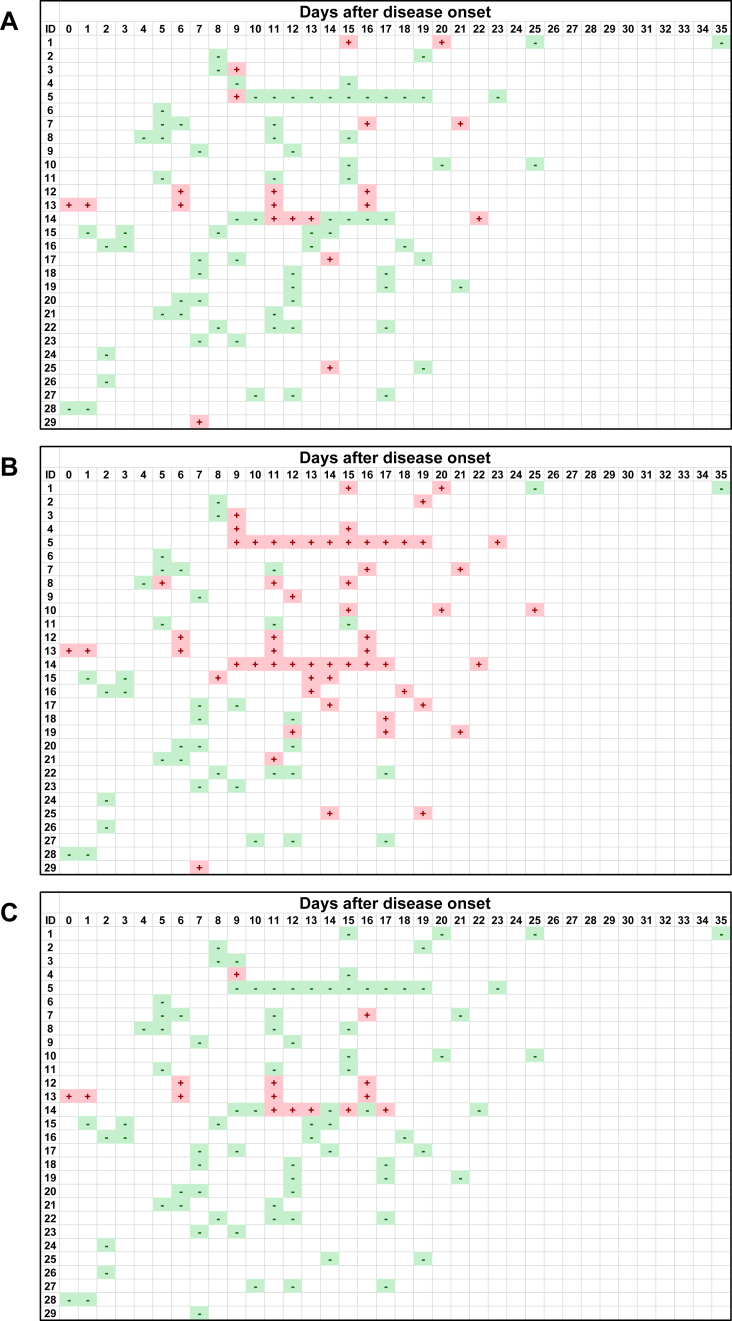
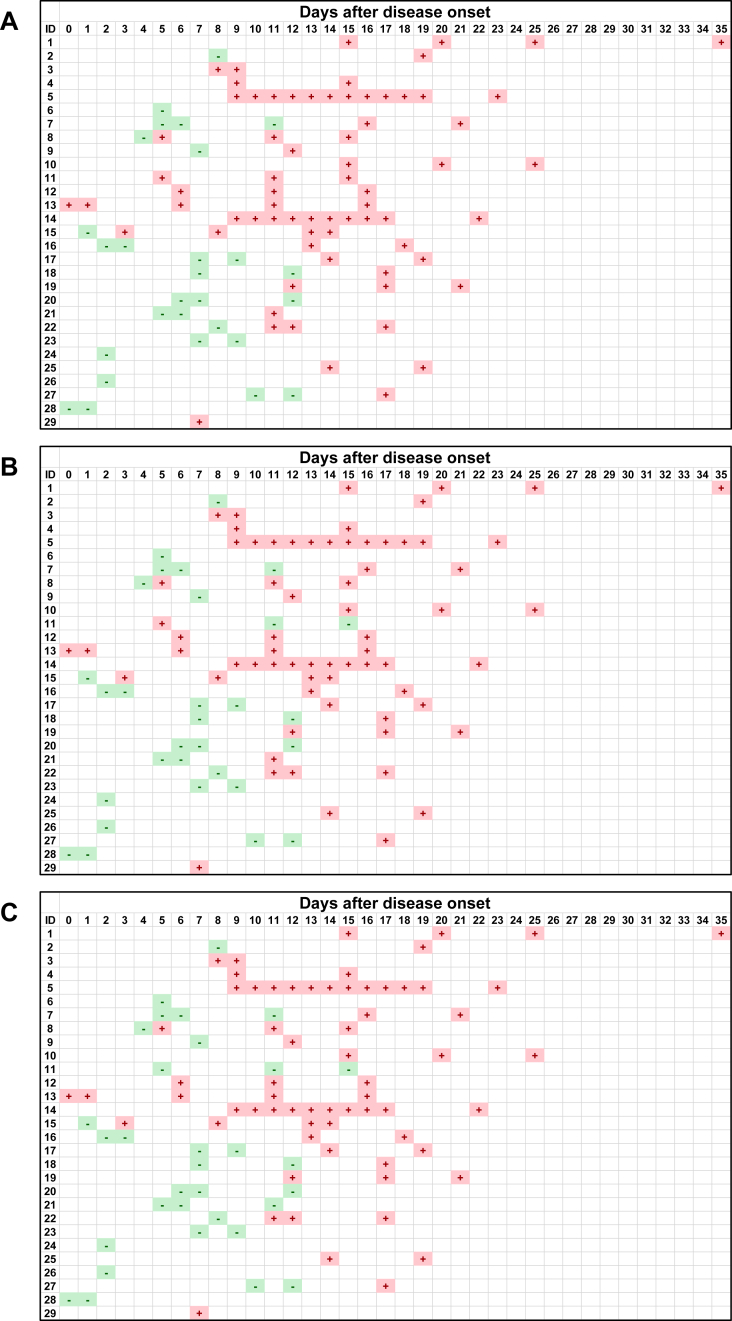
Results: The specificity of the IgM and IgG antibodies showed comparable results among the three immunochromatographic serological test kits. The specificity for IgM antibody was 98.0%, 98.0%, and 97.0%, and the specificity for IgG antibody was identical among the three kits (99.0%). The IgM antibody-positive rates of the three test kits for samples taken at the early stage of the disease (0-4 days after onset) were consistent with all three kits (18.2%); however, the IgM antibody-positive rates thereafter showed considerable differences among the kits, making it difficult to interpret the kinetics of IgM response against SARS-CoV-2. The IgG antibody-positive rates for samples taken after 13 days of onset were 100.0%, 97.6%, and 97.6%, respectively.
Conclusion: There were large differences among the results of the three test kits. Only few cases showed positive results for IgM, suggesting that at least 2 of these kits used in this study were unsuitable for diagnosis of COVID-19. The IgG antibody was positive in almost all samples after 13 days of onset, suggesting that it may be useful for determining infections in the recent past.
Keywords: Antibody; COVID-19; Diagnostics; Immunochromatography; Immunology; Infectious disease; Laboratory medicine; SARS-CoV-2; Virology.
© 2020 The Author(s).
Figures
References
-
- Huang C., Wang Y., Li X., Ren L., Zhao J., Hu Y., Zhang L., Fan G., Xu J., Gu X., Cheng Z., Yu T., Xia J., Wei Y., Wu W., Xie X., Yin W., Li H., Liu M., Xiao Y., Gao H., Guo L., Xie J., Wang G., Jiang R., Gao Z., Jin Q., Wang J., Cao B. Clinical features of patients infected with 2019 novel coronavirus in Wuhan, China. Lancet. 2020;395(10223):497–506. - PMC - PubMed
LinkOut - more resources
Full Text Sources
Other Literature Sources
Miscellaneous
