


Return to College After a First Episode of Psychosis
- PMID: 32984820
- PMCID: PMC7503481
- DOI: 10.1093/schizbullopen/sgaa041
Return to College After a First Episode of Psychosis
Abstract
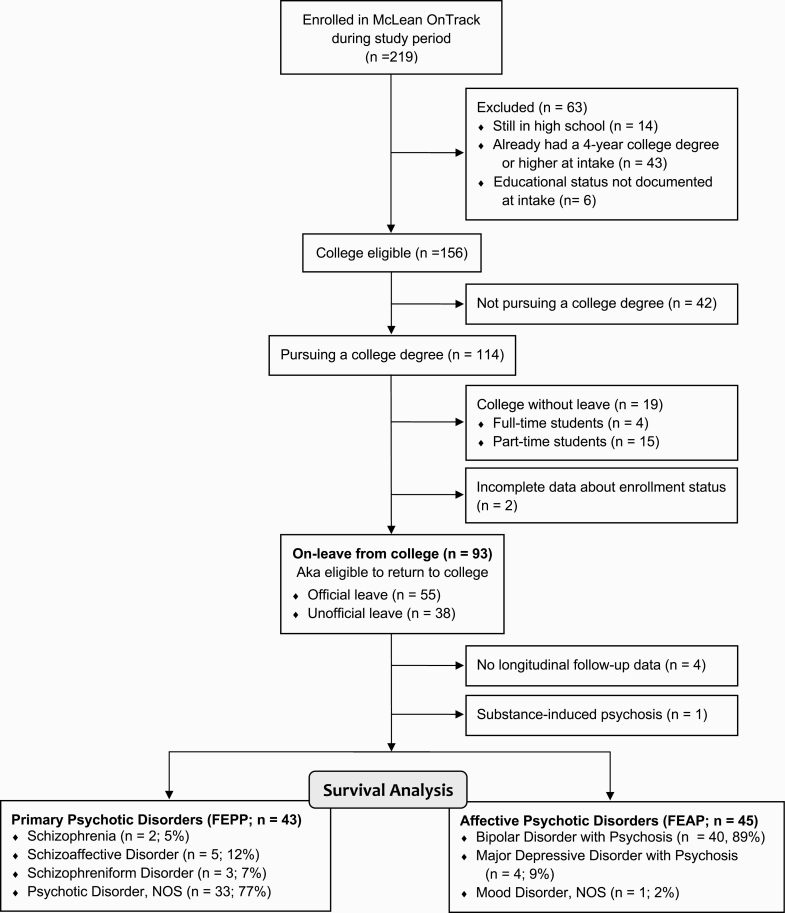
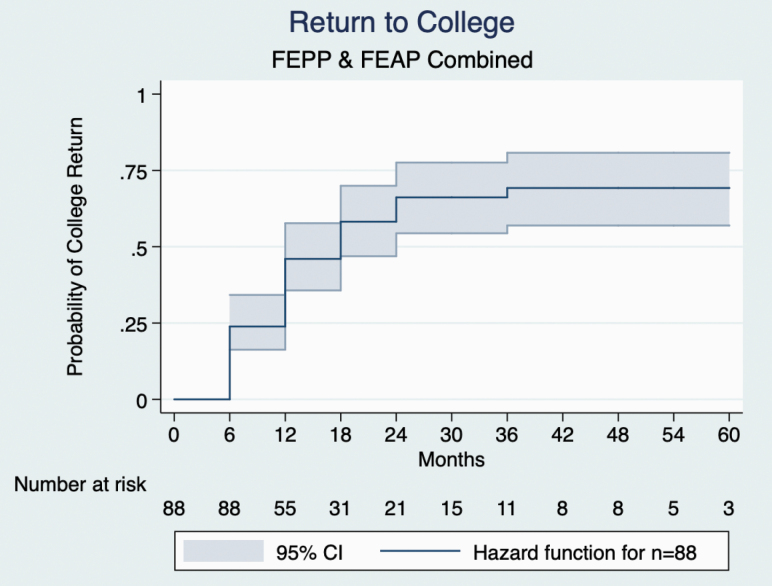
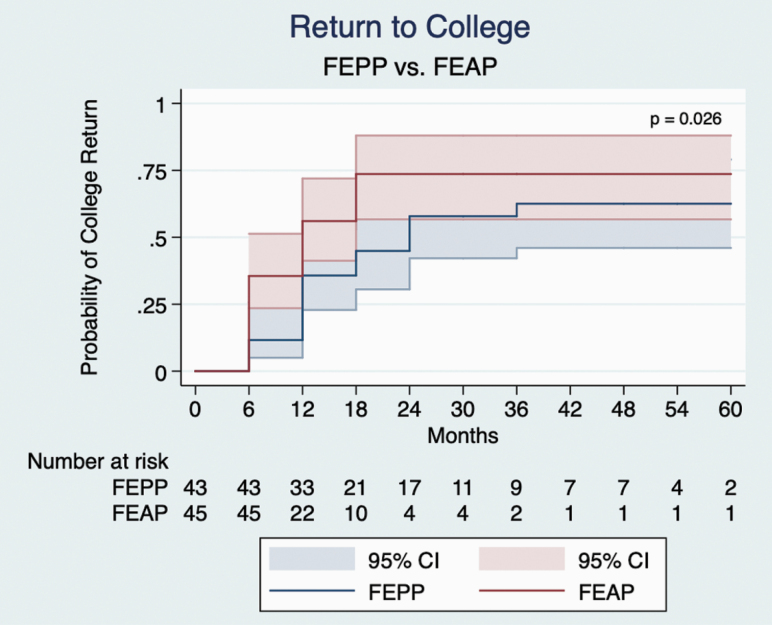
A first episode of psychosis (FEP) can derail a patient's educational goals, including attainment of a college education, and this can have lasting ramifications for socioeconomic and health outcomes. Despite this, few studies have examined return to college, which is an important index of real-world educational success after a FEP. In this study, we conducted a longitudinal medical record review of patients in a transdiagnostic outpatient FEP program and performed survival analysis, setting return to college as the endpoint, among the subset of patients whose college education was interrupted. We found that 82% (93/114) of college-enrolled FEP individuals experienced disruptions to their education after FEP, but that return to college also occurred in a substantial proportion (49/88, 56%) among those on leave who had follow-up data. In this sample, the median time to college return was 18 months. When separated by baseline diagnostic category, FEP patients with affective psychotic disorders (FEAP, n = 45) showed faster time to college return than those with primary psychotic disorders (FEPP, n = 43) (median 12 vs 24 mo; P = .024, unadjusted). When adjusted for having no more than 1 psychiatric hospitalization at intake and absence of cannabis use in the 6 months prior to intake (which were also significant predictors), differences by diagnostic category were more significant (hazard ratio 2.66, 95% CI 1.43-4.94, P = .002). Participation in education is an important outcome for stakeholders, and students with FEP can be successful in accomplishing this goal.
Keywords: bipolar disorder; college reintegration; educational attainment; functional outcomes; recovery; schizophrenia.
© The Author(s) 2020. Published by Oxford University Press on behalf of the University of Maryland's school of medicine, Maryland Psychiatric Research Center.
Figures
References
-
- McGorry PD, Purcell R, Goldstone S, Amminger GP. Age of onset and timing of treatment for mental and substance use disorders: implications for preventive intervention strategies and models of care. Curr Opin Psychiatry. 2011;24(4):301–306. - PubMed
-
- Wilens TE, Rosenbaum JF. Transitional aged youth: a new frontier in child and adolescent psychiatry. J Am Acad Child Adolesc Psychiatry. 2013;52(9):887–890. - PubMed
-
- Arnett JJ. Emerging adulthood. A theory of development from the late teens through the twenties. Am Psychol. 2000;55(5):469–480. - PubMed
-
- Arnett JJ, Žukauskienė R, Sugimura K. The new life stage of emerging adulthood at ages 18-29 years: implications for mental health. Lancet Psychiatry. 2014;1(7):569–576. - PubMed
LinkOut - more resources
Full Text Sources
