


Patient-Reported Outcomes from a 1-Year, Real-World, Head-to-Head Comparison of OnabotulinumtoxinA and Topiramate for Headache Prevention in Adults With Chronic Migraine
- PMID: 32985341
- PMCID: PMC7536482
- DOI: 10.1177/2150132720959936
Patient-Reported Outcomes from a 1-Year, Real-World, Head-to-Head Comparison of OnabotulinumtoxinA and Topiramate for Headache Prevention in Adults With Chronic Migraine
Abstract
Introduction/objective: Chronic migraine (CM) is associated with impaired health-related quality of life and substantial socioeconomic burden, but many people with CM are underdiagnosed and do not receive appropriate preventive treatment. OnabotulinumtoxinA and topiramate have demonstrated efficacy (treatment benefit under ideal conditions) for the prevention of headaches in people with CM in clinical trials, but real-world studies suggest markedly different clinical effectiveness (treatment benefit based on a blend of efficacy and tolerability). This study sought to evaluate patient-reported outcomes (PROs) of onabotulinumtoxinA versus topiramate immediate release for people with CM.
Methods: FORWARD was a prospective, multicenter, randomized, parallel-group, open-label, phase 4 study comparing onabotulinumtoxinA 155 U every 12 weeks with topiramate 50 to 100 mg/day for ≤36 weeks in people with CM. PROs measured included the Headache Impact Test (HIT-6), 9-item Patient Health Questionnaire Quick Depression Assessment (PHQ-9), Work Productivity and Activity Impairment Questionnaire: Specific Health Problem (WPAI:SHP), and Functional Impact of Migraine Questionnaire (FIMQ).
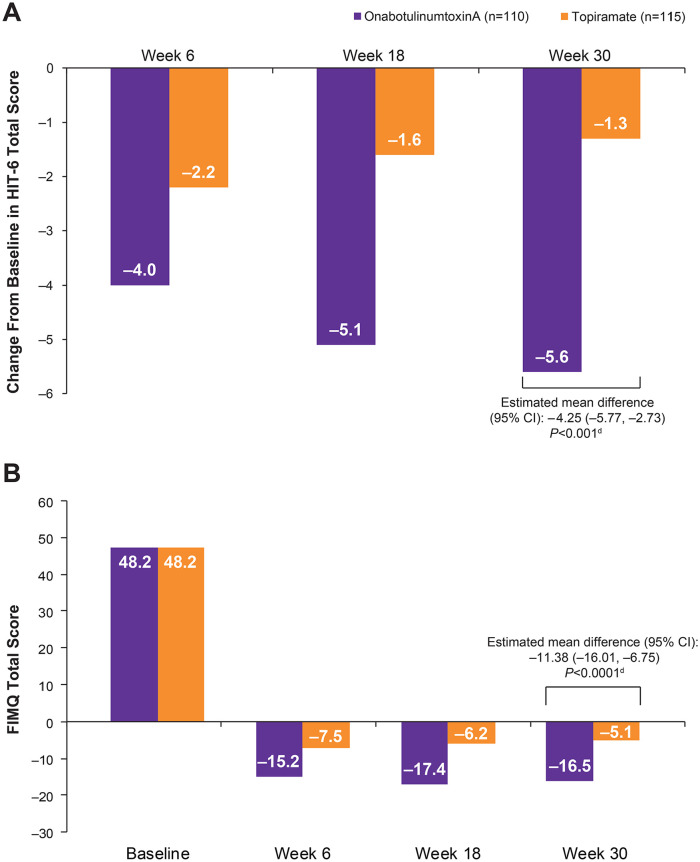
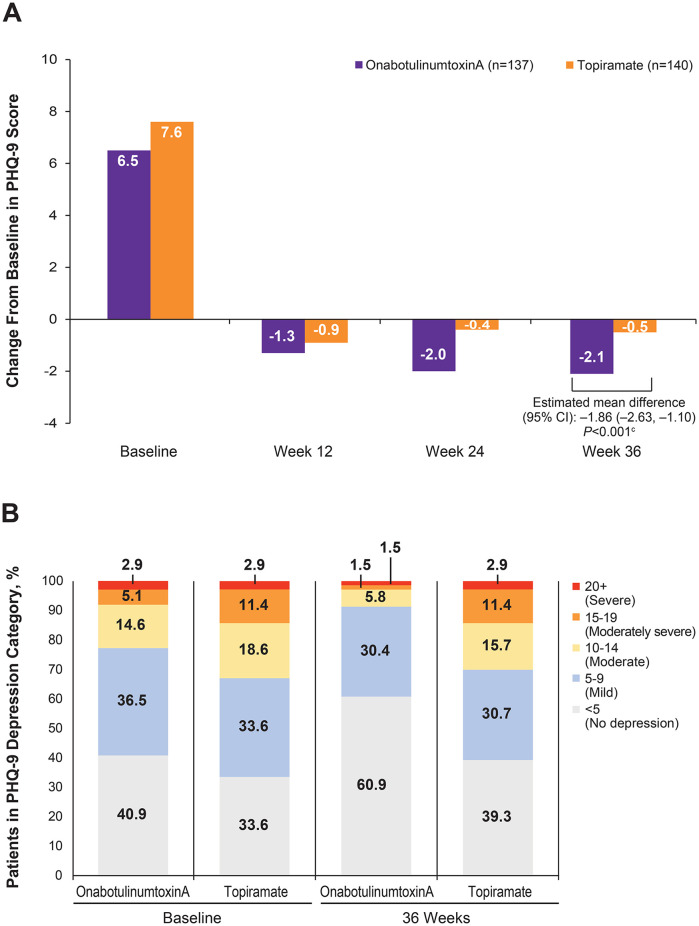
Results: A total of 282 patients were randomized and treated with onabotulinumtoxinA (n = 140) or topiramate (n = 142). From baseline to week 30, mean HIT-6 test scores improved significantly in patients taking onabotulinumtoxinA compared with topiramate (P < .001). Improvements in depression over time were observed via larger changes in PHQ-9 scores with onabotulinumtoxinA than topiramate (P < .001). Work productivity assessed via WPAI:SHP scores revealed significant improvements with onabotulinumtoxinA versus topiramate in Work Productivity Loss (P = .024) and Activity Impairment (P < .001) domains. Results from the FIMQ also revealed a larger reduction from baseline with onabotulinumtoxinA vs topiramate (P < .0001).
Conclusion: OnabotulinumtoxinA treatment had more favorable real-world effectiveness than topiramate on depression, headache impact, functioning and daily living, activity, and work productivity. The overall study results suggest that the beneficial effects on a range of PROs are the result of improved effectiveness when onabotulinumtoxinA is used as preventive treatment for CM.
Trial registration: clinicaltrials.gov: NCT02191579; https://clinicaltrials.gov/ct2/show/NCT02191579.
Keywords: activities of daily living; anxiety; depression; headache; migraine disorders; onabotulinumtoxinA; patient health questionnaire; patient-reported outcome measures; quality of life; topiramate; treatment outcome.
Conflict of interest statement
Figures

References
-
- Schwedt TJ. Chronic migraine. BMJ. 2014;348:g1416. - PubMed
-
- American Headache Society. The American Headache Society position statement on integrating new migraine treatments into clinical practice. Headache. 2019;59:1-18. - PubMed
-
- Silberstein SD. Practice parameter: evidence-based guidelines for migraine headache (an evidence-based review): report of the Quality Standards Subcommittee of the American Academy of Neurology. Neurology. 2000;55:754-762. - PubMed
Publication types
MeSH terms
Substances
Associated data
LinkOut - more resources
Full Text Sources
Medical
Miscellaneous
