


Physical activity barriers according to social stratification in Europe
- PMID: 32989480
- PMCID: PMC7521567
- DOI: 10.1007/s00038-020-01488-y
Physical activity barriers according to social stratification in Europe
Abstract
Objectives: To analyse relationships of social stratification on physical activity (PA) prevalence and barriers in the European population.
Methods: Data were retrieved from Eurobarometer 88.4, a cross-sectional survey conducted in 2017 with 28,031 over 15-year-old inhabitants of the European Union. PA prevalence was calculated along with the probability to be physically inactive by social stratification. Logistic regressions were run in the inactive population to show the social class effect on each barrier adjusted by sociodemographic factors employing a propensity score matched method.
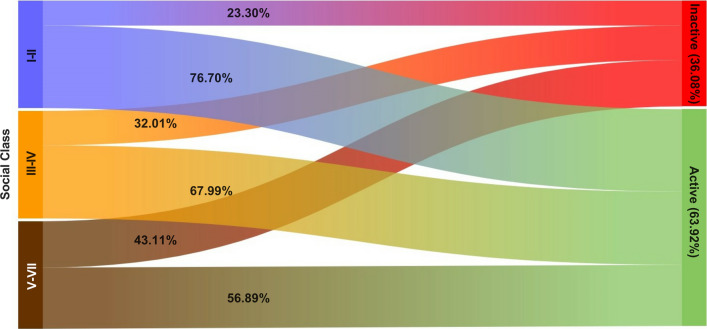
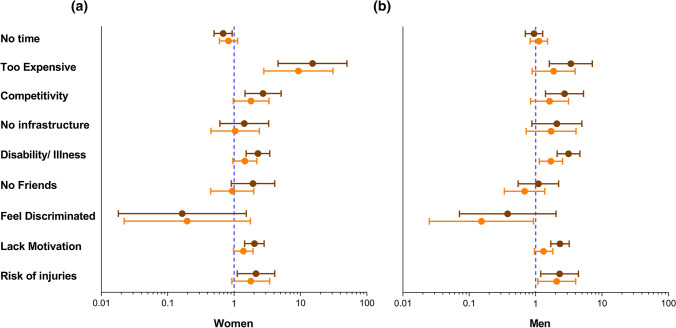
Results: Low social class presented higher inactivity prevalence (43.11%), whilst the high social class reported the lowest prevalence (23.30%). Also, the low (OR 0.52; 95% CI 0.47-0.58) and middle (OR 0.71; 95% CI 0.64-0.79) social classes were less likely to be active compared to high social class. In the inactive population, the low social class had mostly higher odds to report each barrier.
Conclusions: Social class is a relevant factor for low PA, with more barriers in the lower social classes. Public health institutions should implement strategies on more influential PA barriers and disadvantaged social groups.
Keywords: Barriers; Lifestyle; Physical activity; Social class; Social determinants.
Conflict of interest statement
The authors declare that they have no conflicts of interest.
Figures
References
-
- Chan TW, Goldthorpe JH. Class and status: the conceptual distinction and its empirical relevance. Am Sociol Rev. 2007;72:512–532. doi: 10.1177/000312240707200402. - DOI
MeSH terms
LinkOut - more resources
Full Text Sources
Medical
