


Tele-ophthalmology for age-related macular degeneration during the COVID-19 pandemic and beyond
- PMID: 32990152
- PMCID: PMC9444820
- DOI: 10.1177/1357633X20960636
Tele-ophthalmology for age-related macular degeneration during the COVID-19 pandemic and beyond
Abstract
Introduction: COVID-19 has disrupted how ophthalmic practice is conducted worldwide. One patient population that may suffer from poor outcomes during the pandemic are those with age-related macular degeneration (AMD). Many practices are performing some form of tele-ophthalmology services for their patients, and guidance is needed on how to maintain continuity of care amongst patients with AMD using tele-ophthalmology.
Methods: A literature search was conducted, ending 1 August 2020, to identify AMD outcomes and telecare management strategies that could be used during the COVID-19 pandemic.
Results: 237 total articles were retrieved, 56 of which were included for analysis. Four American Academy of Ophthalmology and Center for Disease Control web resources were also included.
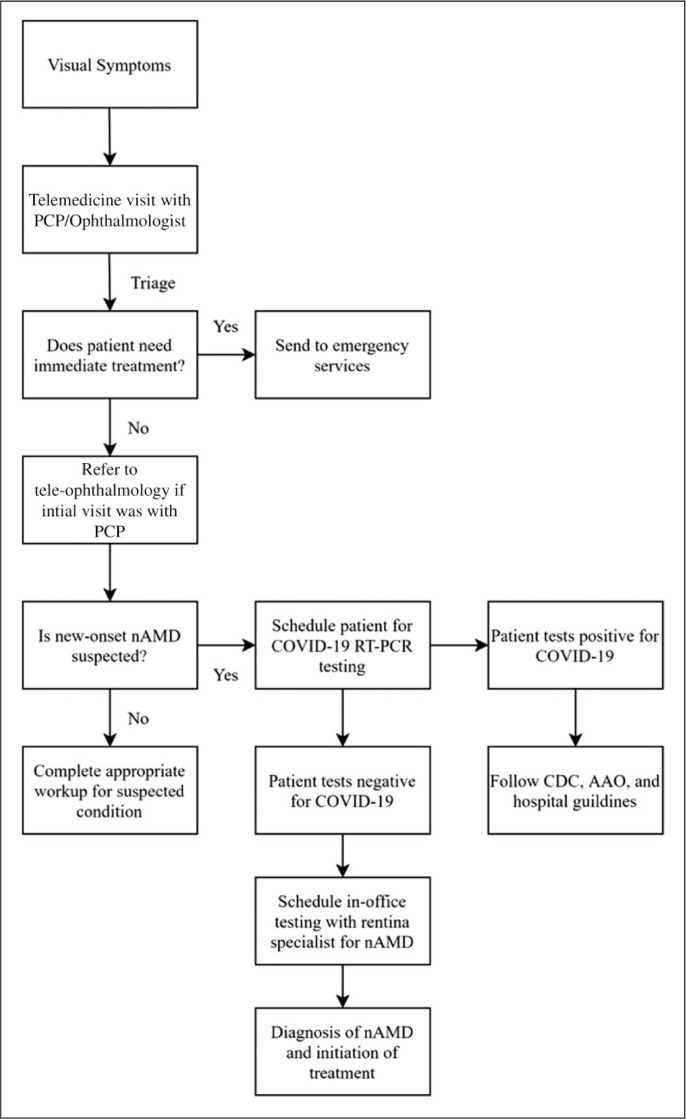
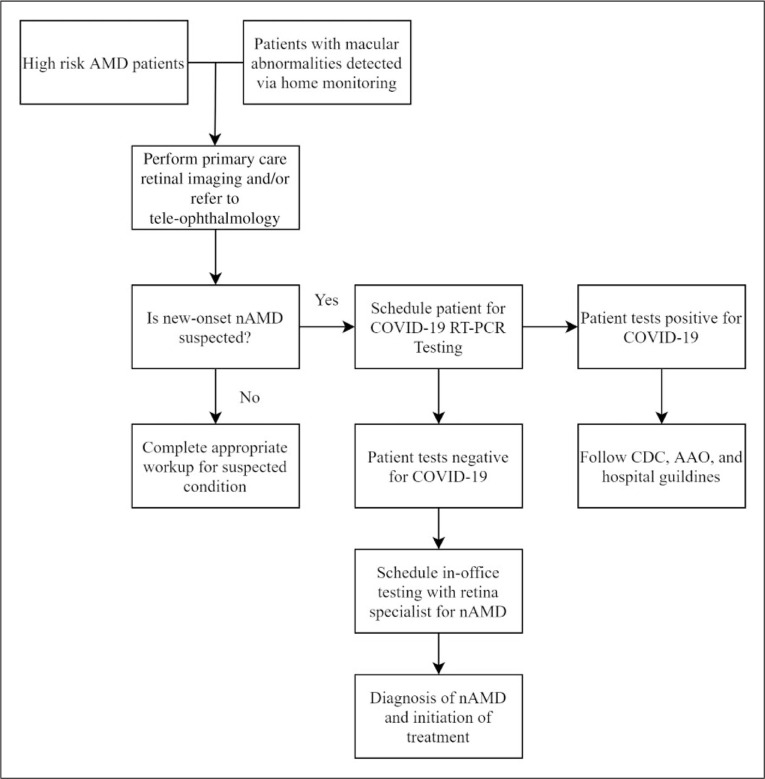
Discussion: Risk-stratification models have been developed that let providers readily screen existing patients for their future risk of neovascular AMD (nAMD). When used with at-home monitoring devices to detect nAMD, providers may be able to determine who should be contacted via tele-ophthalmology for screening. Telemedicine triage can be used for new complaints of vision loss to determine who should be referred to a retinal specialist for management of suspected nAMD. To increase access and provider flexibility, smartphone fundus photography images sent to a centralized tele-ophthalmology service can aid in the detection of nAMD. Considerations should also be made for COVID-19 transmission, and tele-ophthalmology can be used to screen patients for the presence of COVID-19 prior to in-person office visits. Tele-ophthalmology has additional utility in connecting with nursing home, rural, and socioeconomically disadvantaged patients in the post-pandemic period.
Keywords: COVID-19; age-related macular degeneration; coronavirus; pandemic; retinal disease; retinal specialist; tele-ophthalmology; telehealth; telemedicine.
Figures
References
-
- CDC. Coronavirus Disease 2019 (COVID-19) in the U.S. Centers for Disease Control and Prevention, https://www.cdc.gov/coronavirus/2019-ncov/cases-updates/cases-in-us.html (2020, accessed 23 April 2020).
-
- AAO. Important coronavirus updates for ophthalmologists. American Academy of Ophthalmology, https://www.aao.org/headline/alert-important-coronavirus-context (2020, accessed 24 April 2020).
MeSH terms
Substances
LinkOut - more resources
Full Text Sources
Medical
