


Effectiveness of the non-pharmaceutical public health interventions against COVID-19; a protocol of a systematic review and realist review
- PMID: 32991604
- PMCID: PMC7523985
- DOI: 10.1371/journal.pone.0239554
Effectiveness of the non-pharmaceutical public health interventions against COVID-19; a protocol of a systematic review and realist review
Update in
-
Effectiveness of non-pharmaceutical public health interventions against COVID-19: A systematic review and meta-analysis.PLoS One. 2021 Nov 23;16(11):e0260371. doi: 10.1371/journal.pone.0260371. eCollection 2021. PLoS One. 2021. PMID: 34813628 Free PMC article.
Abstract
Background: Without any pharmaceutical intervention and vaccination, the only way to combat Coronavirus Disease 2019 (COVID-19) is to slow down the spread of the disease by adopting non-pharmaceutical public health interventions (PHIs). Patient isolation, lockdown, quarantine, social distancing, changes in health care provision, and mass screening are the most common non-pharmaceutical PHIs to cope with the epidemic. However, there is neither systematic evidence on the effectiveness of non-pharmaceutical PHIs in controlling the COVID-19 nor on how these interventions work in different contexts. Therefore, in this study we will address two main objectives: 1) to assess the effectiveness of the non-pharmaceutical PHIs in controlling the spread of COVID-19 using a systematic review and meta-analyses; 2) to explore why, how, and for whom these interventions work using a realist review.
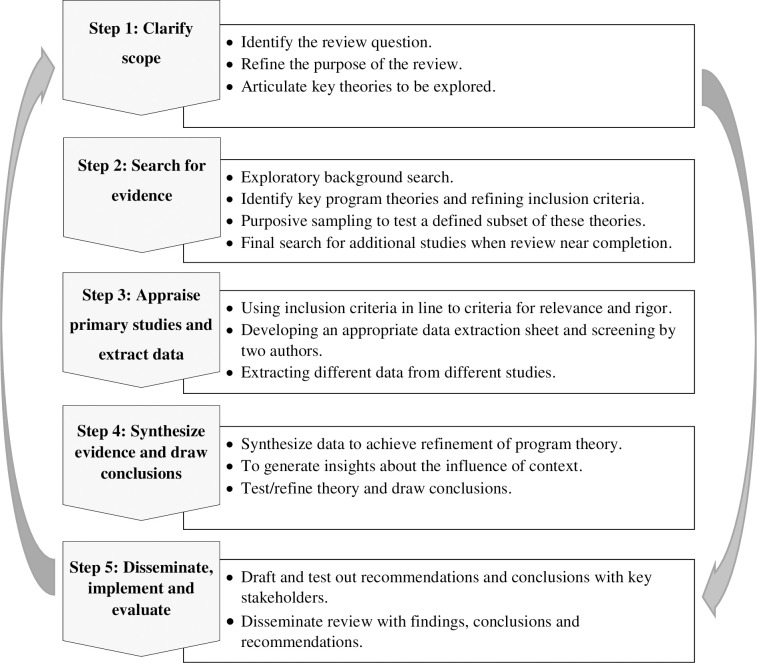
Materials and methods: This review study has two main phases. In the first phase of this study, we will extract data from two main types of studies including quasi-experimental studies (such as quasi-randomized trials, controlled before-after studies (CBAs) and interrupted time series studies (ITSs)) and observational studies (such as cohort, case-control, and cross-sectional studies), written in the English language. We will explore effectiveness of the non-pharmaceutical PHIs targeted either suppression or mitigation strategies (or a combination of both) in controlling the COVID-19 epidemics in the community level. Effectiveness will be considered as the changes in mortality rate, incidence rate, basic reproduction number rate, morbidity rate, rates of hospitalization, rates of intensive care unit (ICU) hospitalization, and other health outcomes where possible. We will perform random-effects meta-analyses, if possible, using CMA software. In the second phase, we will conduct a realist review to find out how, why, for whom, and in what circumstances the non-pharmaceutical PHIs work. At the realist review, we will identify and explore Context-Mechanism-Outcome configurations to provide a robust explanation on the effectiveness of the interventions in different contexts using Pawson's 5-step realist review template including: "clarify scope; search for evidence; appraise primary studies and extract data; synthesize evidence and draw conclusions; and disseminate, implement and evaluate". Although the steps are presented in a linear manner, in practice, we will follow them in iterative stages to fill any potential overlap.
Discussion: The findings of this research will provide a crucial insight into how and in which context the non-pharmaceutical PHIs work in controlling the spread of COVID-19. Conducting a systematic review and meta-analysis in line with a realist review will allow us to draw a robust conclusion on the effects and the way in which the interventions work. Understanding the role of contextual factors in the effectiveness of non-pharmaceutical PHIs and the mechanism of this process could enable policymakers to implement appropriate policies and manage the COVID-19 epidemics more efficiently.
Systematic review registration: CRD42020186855.
Conflict of interest statement
The authors have declared that no competing interests exist.
References
-
- Sahu KK, Mishra AK, Lal A. COVID-2019: update on epidemiology, disease spread and management. Monaldi Archives for Chest Disease. 2020;90(1). - PubMed
-
- Cascella M, Rajnik M, Cuomo A, Dulebohn SC, Di Napoli R. Features, evaluation and treatment coronavirus (COVID-19) Statpearls [internet]: StatPearls Publishing; 2020. - PubMed
-
- Alqahtani JS, Oyelade T, Aldhahir AM, Alghamdi SM, Almehmadi M, Alqahtani AS, et al. Prevalence, Severity and Mortality associated with COPD and Smoking in patients with COVID-19: A Rapid Systematic Review and Meta-Analysis. PLOS ONE. 2020;15(5):e0233147 10.1371/journal.pone.0233147 - DOI - PMC - PubMed
MeSH terms
LinkOut - more resources
Full Text Sources
