. 2021 Mar 11;137(10):1365-1376.
doi: 10.1182/blood.2020007039.

Higher-order connections between stereotyped subsets: implications for improved patient classification in CLL

Andreas Agathangelidis  1 Anastasia Chatzidimitriou  1   2 Katerina Gemenetzi  1   3 Veronique Giudicelli  4 Maria Karypidou  1 Karla Plevova  5   6 Zadie Davis  7 Xiao-Jie Yan  8 Sabine Jeromin  9 Christof Schneider  10 Lone Bredo Pedersen  11 Renee C Tschumper  12 Lesley-Ann Sutton  2 Panagiotis Baliakas  13 Lydia Scarfò  14 Ellen J van Gastel  15 Marine Armand  16 Eugen Tausch  17 Bella Biderman  18 Constance Baer  9 Davide Bagnara  19 Alba Navarro  20   21 Anne Langlois de Septenville  16 Valentina Guido  22 Gerlinde Mitterbauer-Hohendanner  23 Aleksandar Dimovski  24 Christian Brieghel  11 Sarah Lawless  25 Manja Meggendorfer  9 Kamila Brazdilova  5   6 Matthias Ritgen  26 Monica Facco  27   28 Cristina Tresoldi  29 Andrea Visentin  27   28 Andrea Patriarca  30 Mark Catherwood  25 Lisa Bonello  31 Andrey Sudarikov  18 Katrina Vanura  23 Maria Roumelioti  32 Hana Skuhrova Francova  5 Theodoros Moysiadis  1 Silvio Veronese  22 Krzysztof Giannopoulos  33 Larry Mansouri  2 Teodora Karan-Djurasevic  34 Raphael Sandaltzopoulos  3 Csaba Bödör  35 Franco Fais  19   36 Arnon P Kater  37 Irina Panovska  38 Davide Rossi  39 Salem Alshemmari  40 Panagiotis Panagiotidis  32 Paul Costeas  41   42 Blanca Espinet  43 Darko Antic  44 Letizia Foroni  45 Marco Montillo  22 Livio Trentin  27   28 Niki Stavroyianni  46 Gianluca Gaidano  30 Paola Francia di Celle  31 Carsten Niemann  11 Elias Campo  20   21   47 Achilles Anagnostopoulos  45 Christiane Pott  26 Kirsten Fischer  48 Michael Hallek  49 David Oscier  7 Stephan Stilgenbauer  17 Claudia Haferlach  9 Diane Jelinek  50 Nicholas Chiorazzi  8 Sarka Pospisilova  5   6 Marie-Paule Lefranc  4 Sofia Kossida  4 Anton W Langerak  15 Chrysoula Belessi  51 Frederic Davi  15 Richard Rosenquist  2   52 Paolo Ghia  14 Kostas Stamatopoulos  1   2
Affiliations

Higher-order connections between stereotyped subsets: implications for improved patient classification in CLL

Andreas Agathangelidis et al. Blood. .

Abstract

Chronic lymphocytic leukemia (CLL) is characterized by the existence of subsets of patients with (quasi)identical, stereotyped B-cell receptor (BcR) immunoglobulins. Patients in certain major stereotyped subsets often display remarkably consistent clinicobiological profiles, suggesting that the study of BcR immunoglobulin stereotypy in CLL has important implications for understanding disease pathophysiology and refining clinical decision-making. Nevertheless, several issues remain open, especially pertaining to the actual frequency of BcR immunoglobulin stereotypy and major subsets, as well as the existence of higher-order connections between individual subsets. To address these issues, we investigated clonotypic IGHV-IGHD-IGHJ gene rearrangements in a series of 29 856 patients with CLL, by far the largest series worldwide. We report that the stereotyped fraction of CLL peaks at 41% of the entire cohort and that all 19 previously identified major subsets retained their relative size and ranking, while 10 new ones emerged; overall, major stereotyped subsets had a cumulative frequency of 13.5%. Higher-level relationships were evident between subsets, particularly for major stereotyped subsets with unmutated IGHV genes (U-CLL), for which close relations with other subsets, termed "satellites," were identified. Satellite subsets accounted for 3% of the entire cohort. These results confirm our previous notion that major subsets can be robustly identified and are consistent in relative size, hence representing distinct disease variants amenable to compartmentalized research with the potential of overcoming the pronounced heterogeneity of CLL. Furthermore, the existence of satellite subsets reveals a novel aspect of repertoire restriction with implications for refined molecular classification of CLL.


Conflict of interest statement

Conflict-of-interest disclosure: S.V. has received honoraria from Bayer, AstraZeneca, and Janssen; A.K. has received research funding from AbbVie, Roche/Genentech, Janssen, and AstraZeneca. D.R. has received honoraria from AbbVie, AstraZeneca, Gilead, Janssen, Verastem, and research grants from AbbVie, Gilead, Janssen, and Cellestia. S.A. has received educational grants from Johnson & Johnson, AbbVie, and Roche. K. Giannopoulos has received honoraria from AbbVie, Janssen, and Roche. L.T. has received honoraria from AbbVie, Roche, Janssen, and Shire. A.V. has received honoraria from Janssen and AbbVie. G.G. has received honoraria from AbbVie, Janssen, Sunesis, and AstraZeneca for advisory boards or speaker’s bureau services. C.N. has received research support, consultancy fees, and/or travel grants from AbbVie, Gilead, Janssen, Roche, CSL Behring, Genmab, Sunesis, and Acerta/AstraZeneca outside this work. K.F. has received honoraria from Roche and AbbVie, and Roche travel grants. S.S. has received honoraria and research support from AbbVie, AstraZeneca, Celgene, Gilead, GlaxoSmithKline, Hoffmann La-Roche, Janssen, and Novartis. R.R. has received honoraria from AbbVie, Illumina, Janssen, and Roche. P.G. has received honoraria from AbbVie, Acerta, BeiGene, Gilead, Janssen, Sunesis, and reseach funding from AbbVie, Gilead, Janssen, Novartis, and Sunesis. K.S. has received honoraria and research support from AbbVie, Janssen, AstraZeneca, and Gilead. The remaining authors declare no competing financial interests.

Figures
None
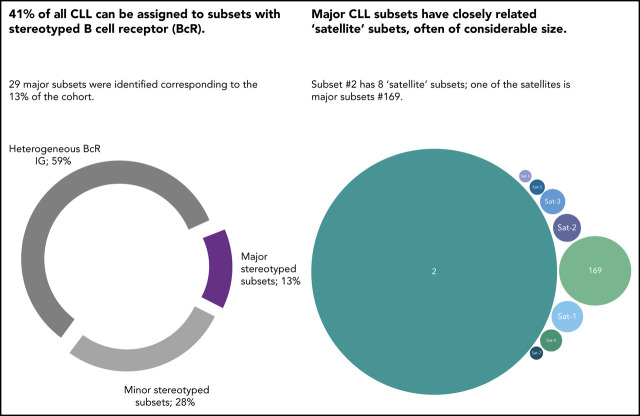
Graphical abstract
Figure 1.
Figure 1.
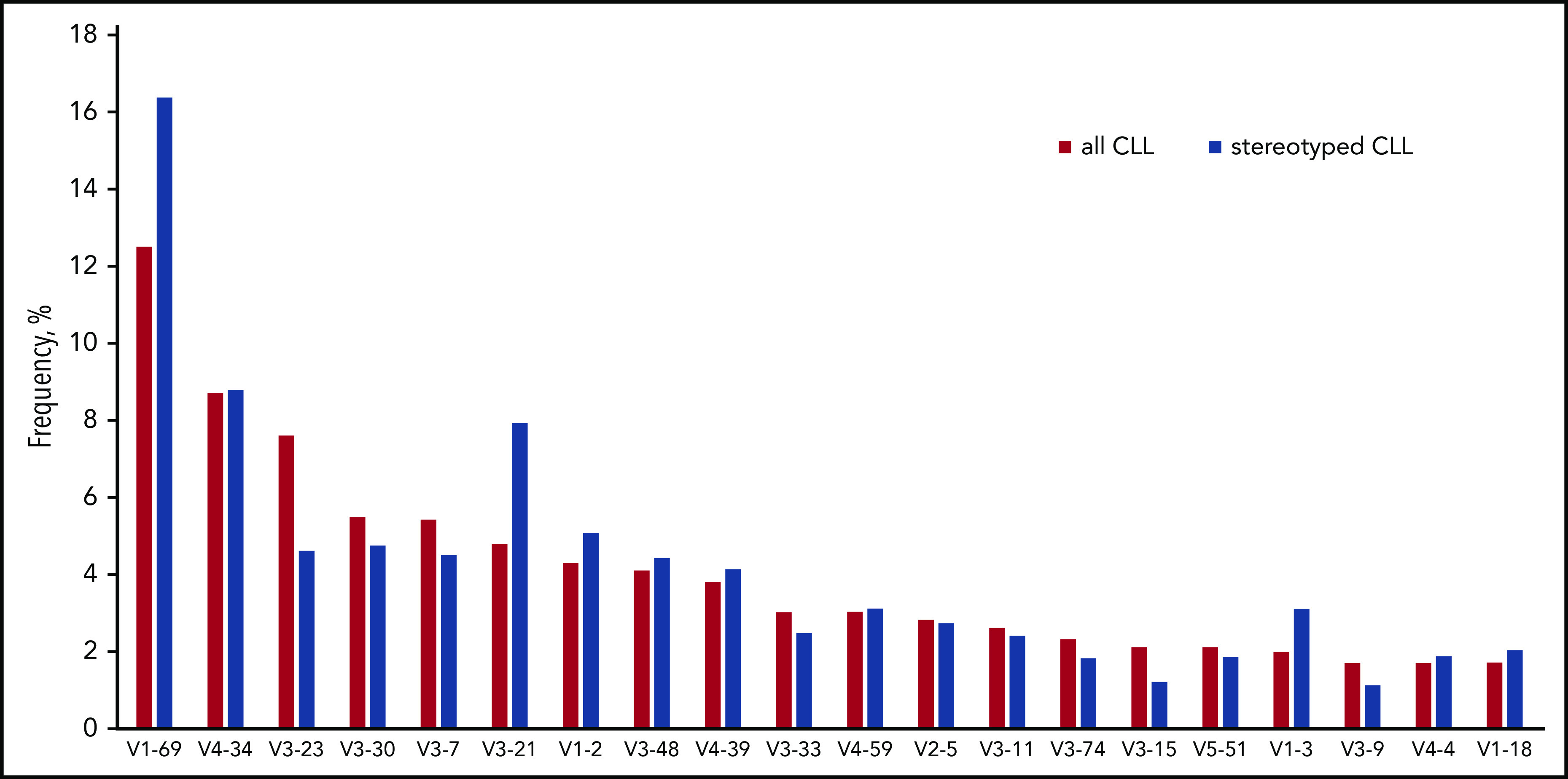
The IGHV gene repertoire of stereotyped CLL is clearly distinct from the general cohort. Cases expressing the IGHV1-69 and IGHV3-21 genes were significantly overexpressed in the stereotyped fraction of CLL compared with the heterogeneous group (16.4% vs 12.5% and 7.9% vs 4.8%, respectively). On the other hand, cases carrying the IGHV3-23 showed the opposite trend (4.6% in the stereotyped fraction vs 7.6% in the general cohort). Finally, the frequency of IGHV4-34 expressing cases was high in both groups (8.8% vs 8.7%).
Figure 2.
Figure 2.
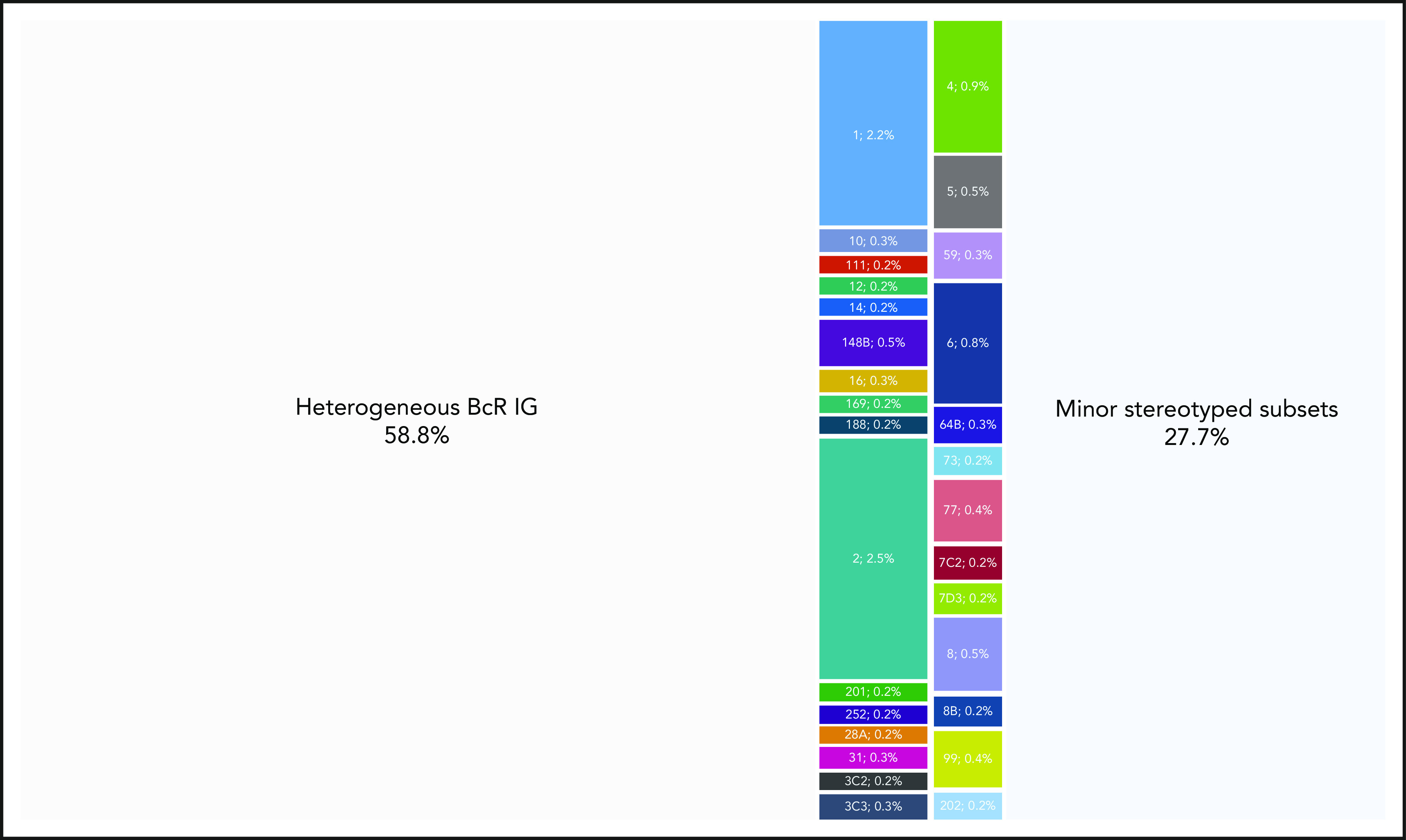
Cases assigned to major stereotyped subsets represent a significant portion of CLL. Twenty-nine different subsets were identified in the present study containing a minimum of 60 cases (0.2% of the cohort) and were defined as major. The relative size of each major subset is indicated in the graph. Their basic immunogenetic information is given in supplemental Table 4; all sequences assigned to each major subset are listed in supplemental Table 5. Altogether, major subsets comprised in total 4098 of 30 413 rearrangements that corresponds to the 13.5% of the cohort.
Figure 3.
Figure 3.
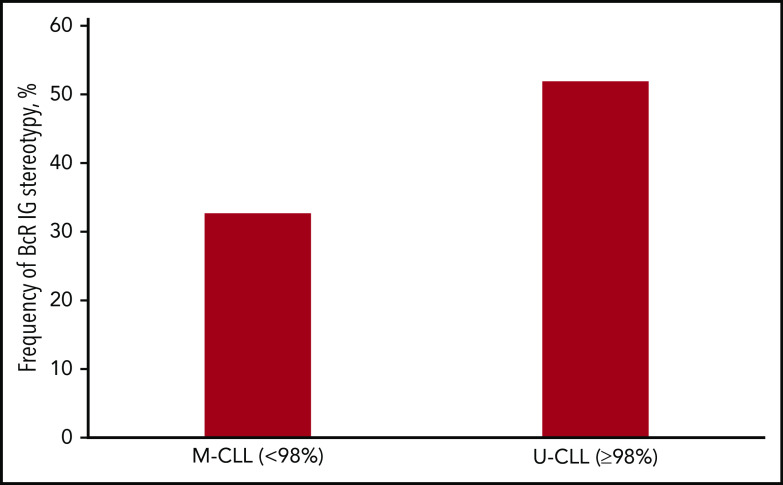
Frequency of BcR immunoglobulin stereotypy in the CLL mutational subgroups. The majority of cases carrying BcR immunoglobulin sequences belonging to U-CLL were assigned to stereotyped subsets compared with approximately one-third of cases from M-CLL.
Figure 4.
Figure 4.
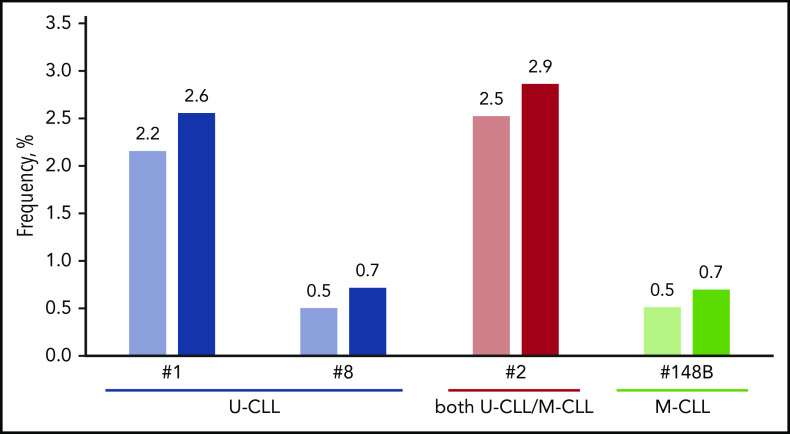
The impact of satellite subsets on the relative size of major stereotyped subsets. More pronounced increases were evident in major subsets comprising U-CLL cases, whereas most M-CLL major subsets were not significantly affected. Characteristic examples concern subsets #1, #2 and #8 that correlate with dismal prognosis. On the other hand, subset #148B showed the highest increase in the category of M-CLL subsets.
Figure 5.
Figure 5.
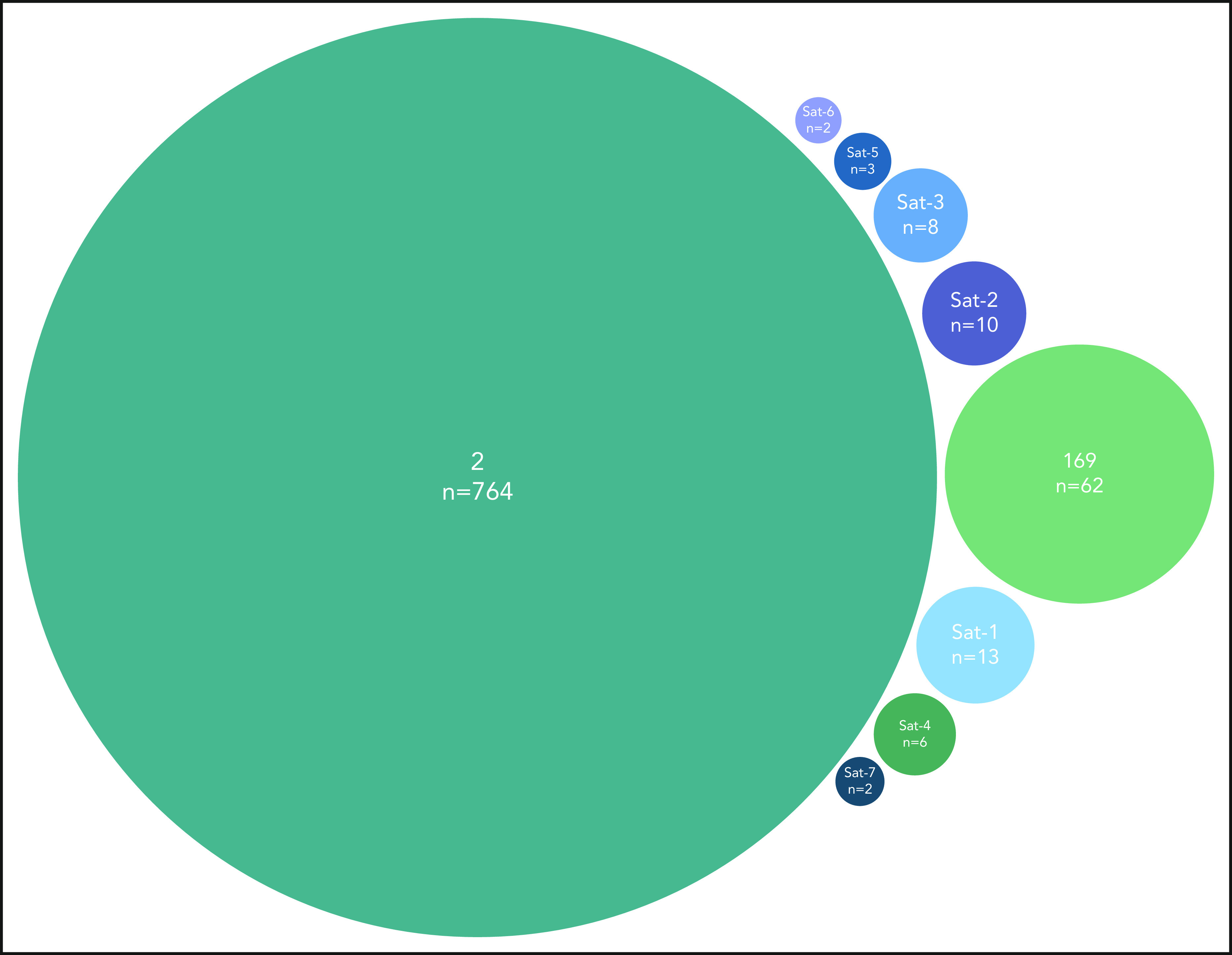
Major subset #2 and its close immunogenetic relatives (satellite subsets). Stereotyped subset #2 had 8 satellite subsets with the most frequent being subset #169, also characterized as major. The remaining satellite subsets were minor and cumulatively accounted for 44 BcR immunoglobulin sequences. Subset #2 satellite full names are the following: #164 (Sat-1), #2B (Sat-2), V3-30|9|1 (Sat-3), V3|11|42 (Sat-4), V3-74|8|1 (Sat-5), V3-48|7|1 (Sat-6), and V3|10|25 (Sat-7).
Figure 6.
Figure 6.
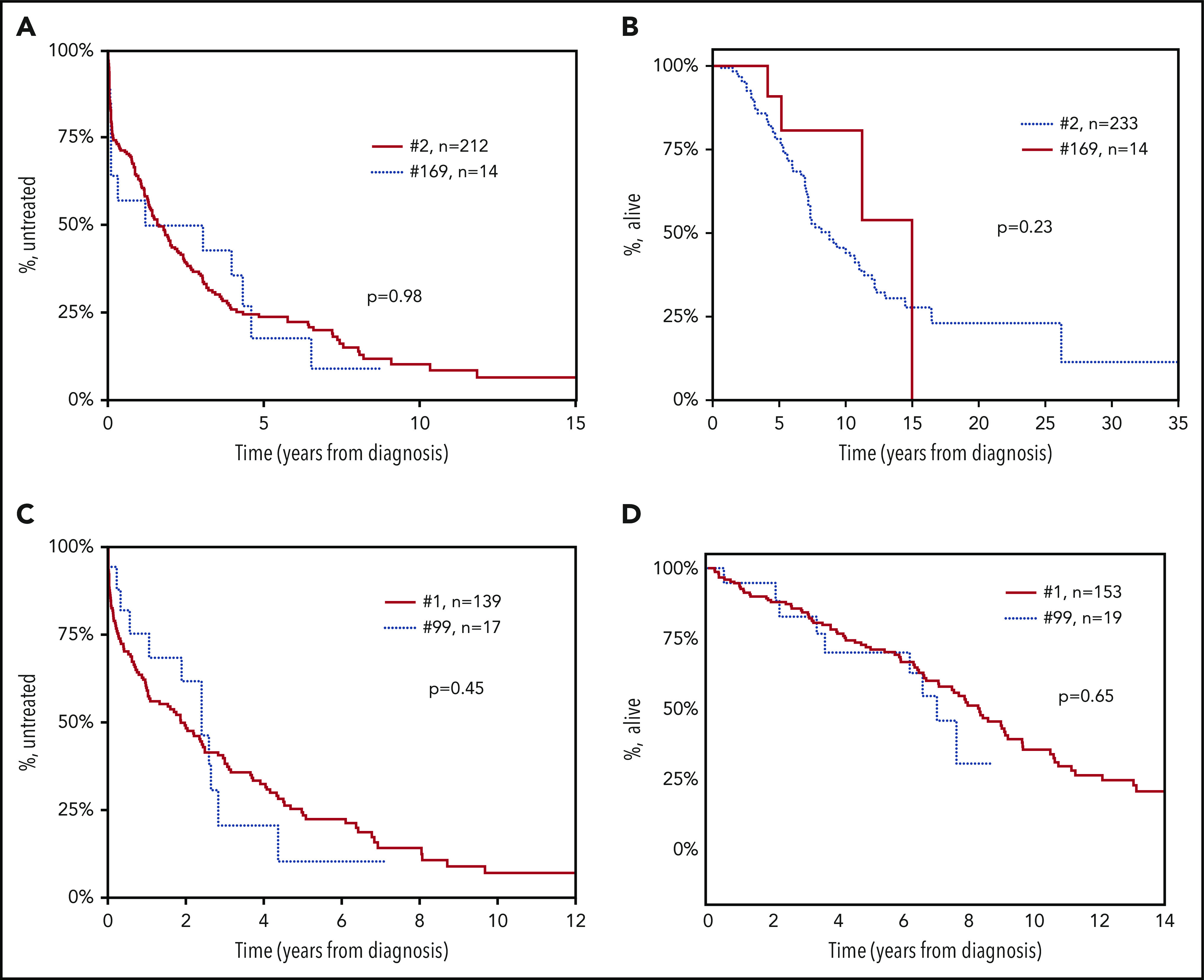
Patients assigned to major stereotyped subsets and their satellites exhibit consistent clinical profiles. Consistent clinical outcomes were observed between patients belonging to subset #2 and subset #169, its main satellite, with no statistical difference regarding: (A) time-to-first-treatment (TTFT) (P = .98) and (B) overall survival (OS) (P = .23). Similarly, patients from stereotyped subset #1 and #99, its main satellite, showed highly similar (C) TTFT (P = .45), and (D) OS (P = .65).

References

    1. Sutton LA, Rosenquist R. The complex interplay between cell-intrinsic and cell-extrinsic factors driving the evolution of chronic lymphocytic leukemia. Semin Cancer Biol. 2015;34:22-35. - PubMed
    1. Puente XS, Jares P, Campo E. Chronic lymphocytic leukemia and mantle cell lymphoma: crossroads of genetic and microenvironment interactions. Blood. 2018;131(21):2283-2296. - PubMed
    1. Byrd JC, Furman RR, Coutre SE, et al. . Three-year follow-up of treatment-naïve and previously treated patients with CLL and SLL receiving single-agent ibrutinib. Blood. 2015;125(16):2497-2506. - PMC - PubMed
    1. Jones JA, Robak T, Brown JR, et al. . Efficacy and safety of idelalisib in combination with ofatumumab for previously treated chronic lymphocytic leukaemia: an open-label, randomised phase 3 trial. Lancet Haematol. 2017;4(3):e114-e126. - PubMed
    1. Brown JR, Hillmen P, O’Brien S, et al. . Extended follow-up and impact of high-risk prognostic factors from the phase 3 RESONATE study in patients with previously treated CLL/SLL. Leukemia. 2018;32(1):83-91. - PMC - PubMed

Publication types

MeSH terms

Substances