


Betaine Supplementation May Improve Heat Tolerance: Potential Mechanisms in Humans
- PMID: 32992781
- PMCID: PMC7599524
- DOI: 10.3390/nu12102939
Betaine Supplementation May Improve Heat Tolerance: Potential Mechanisms in Humans
Abstract
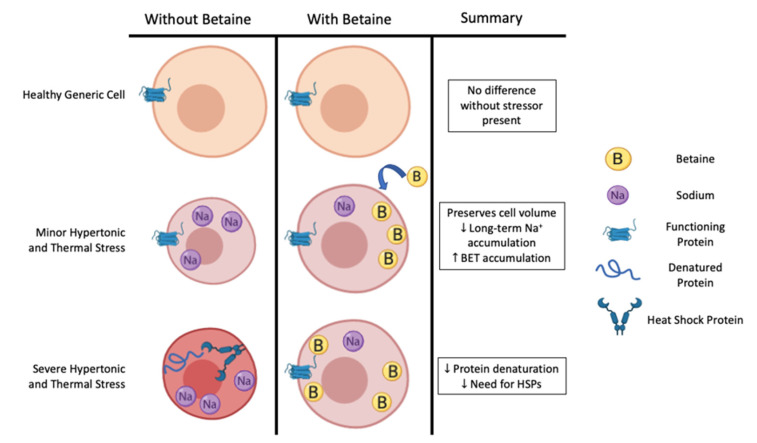
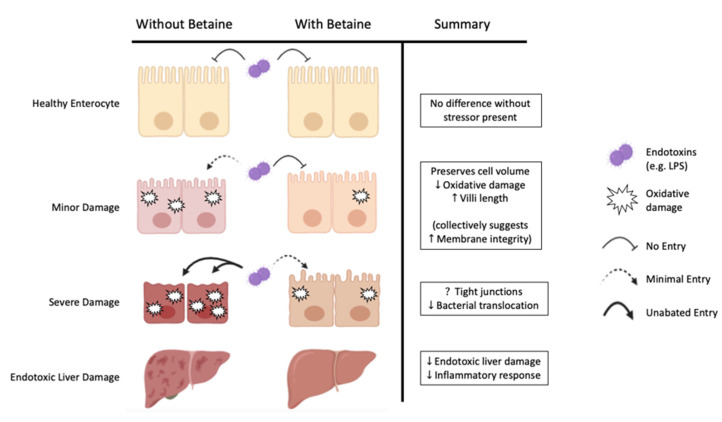
Betaine has been demonstrated to increase tolerance to hypertonic and thermal stressors. At the cellular level, intracellular betaine functions similar to molecular chaperones, thereby reducing the need for inducible heat shock protein expression. In addition to stabilizing protein conformations, betaine has been demonstrated to reduce oxidative damage. For the enterocyte, during periods of reduced perfusion as well as greater oxidative, thermal, and hypertonic stress (i.e., prolonged exercise in hot-humid conditions), betaine results in greater villi length and evidence for greater membrane integrity. Collectively, this reduces exercise-induced gut permeability, protecting against bacterial translocation and endotoxemia. At the systemic level, chronic betaine intake has been shown to reduce core temperature, all-cause mortality, markers of inflammation, and change blood chemistry in several animal models when exposed to heat stress. Despite convincing research in cell culture and animal models, only one published study exists exploring betaine's thermoregulatory function in humans. If the same premise holds true for humans, chronic betaine consumption may increase heat tolerance and provide another avenue of supplementation for those who find that heat stress is a major factor in their work, or training for exercise and sport. Yet, this remains speculative until data demonstrate such effects in humans.
Keywords: gut permeability; heat shock proteins; heat stress; osmolyte; thermoregulation.
Conflict of interest statement
The authors declare no conflict of interest.
Figures
References
-
- Kark J.A., Burr P.Q., Wenger C.B., Gastaldo E., Gardner J.W. Exertional heat illness in marine corps recruit training. Aviat. Space Environ. Med. 1996;67:354–360. - PubMed
-
- Berko J., Ingram D.D., Saha S., Parker J.D. Deaths attributed to heat, cold, and other weather events in the United States, 2006–2010. Natl. Health Stat. Rep. 2014;2014:1–15. - PubMed
Publication types
MeSH terms
Substances
LinkOut - more resources
Full Text Sources
Medical
