


Red Propolis and Its Dyslipidemic Regulator Formononetin: Evaluation of Antioxidant Activity and Gastroprotective Effects in Rat Model of Gastric Ulcer
- PMID: 32993069
- PMCID: PMC7600383
- DOI: 10.3390/nu12102951
Red Propolis and Its Dyslipidemic Regulator Formononetin: Evaluation of Antioxidant Activity and Gastroprotective Effects in Rat Model of Gastric Ulcer
Abstract
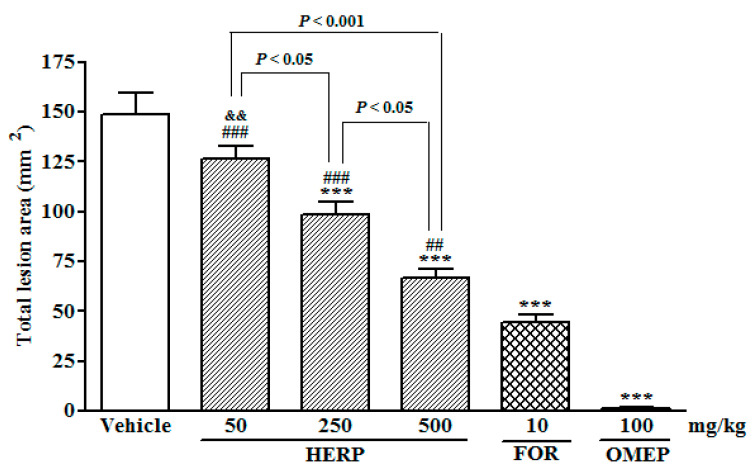
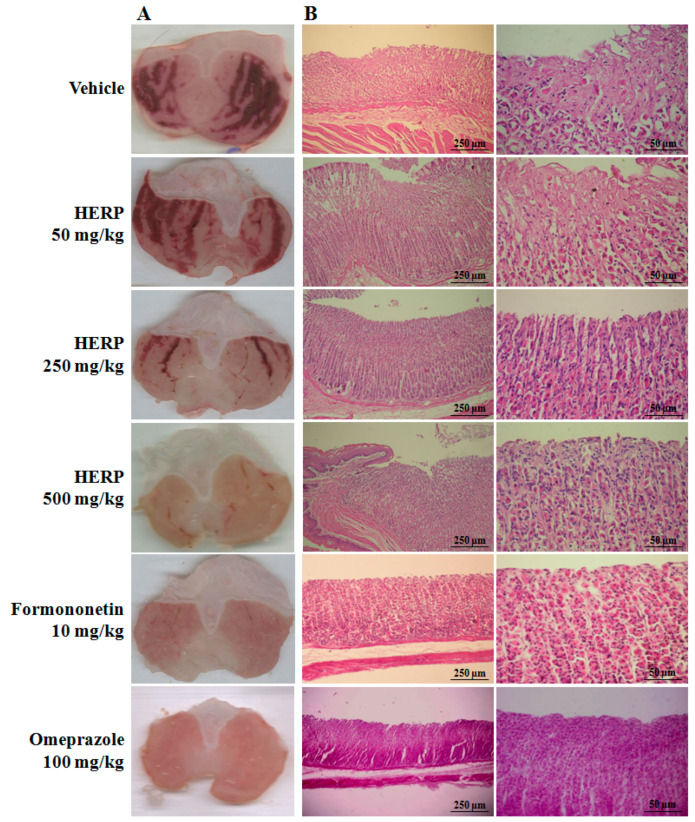
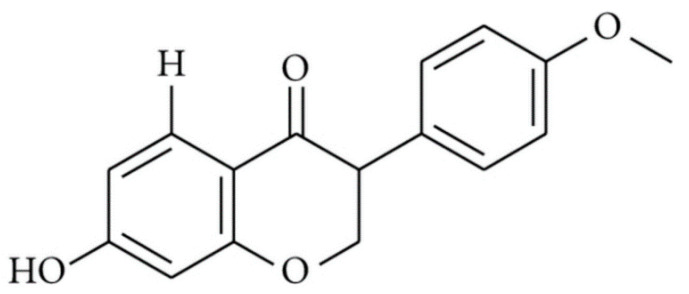
Propolis has various pharmacological properties of clinical interest, and is also considered a functional food. In particular, hydroalcoholic extracts of red propolis (HERP), together with its isoflavonoid formononetin, have recognized antioxidant and anti-inflammatory properties, with known added value against dyslipidemia. In this study, we report the gastroprotective effects of HERP (50-500 mg/kg, p.o.) and formononetin (10 mg/kg, p.o.) in ethanol and non-steroidal anti-inflammatory drug-induced models of rat ulcer. The volume, pH, and total acidity were the evaluated gastric secretion parameters using the pylorus ligature model, together with the assessment of gastric mucus contents. The anti-Helicobacter pylori activities of HERP were evaluated using the agar-well diffusion method. In our experiments, HERP (250 and 500 mg/kg) and formononetin (10 mg/kg) reduced (p < 0.001) total lesion areas in the ethanol-induced rat ulcer model, and reduced (p < 0.05) ulcer indices in the indomethacin-induced rat ulcer model. Administration of HERP and formononetin to pylorus ligature models significantly decreased (p < 0.01) gastric secretion volumes and increased (p < 0.05) mucus production. We have also shown the antioxidant and anti-Helicobacter pylori activities of HERP. The obtained results indicate that HERP and formononetin are gastroprotective in acute ulcer models, suggesting a prominent role of formononetin in the effects of HERP.
Keywords: dyslipidemia; formononetin; gastric ulcer; propolis; rats.
Conflict of interest statement
The authors declare no conflict of interest.
Figures
References
-
- Cefali L.C., Ataide J., Fernandes A.R., Sanchez-Lopez E., Sousa I., Figueiredo M.C., Ruiz A., Foglio M., Mazzola P.G., Souto E.B. Evaluation of In Vitro Solar Protection Factor (SPF), Antioxidant Activity, and Cell Viability of Mixed Vegetable Extracts from Dirmophandra mollis Benth, Ginkgo biloba L., Ruta graveolens L., and Vitis vinífera L. Plants. 2019;8:453. doi: 10.3390/plants8110453. - DOI - PMC - PubMed
-
- Silva A.M., Martins-Gomes C., Souto E.B., Schäfer J., Dos Santos J.A., Bunzel M., Nunes F.M. Thymus zygis subsp. zygis an Endemic Portuguese Plant: Phytochemical Profiling, Antioxidant, Anti-Proliferative and Anti-Inflammatory Activities. Antioxidants. 2020;9:482. doi: 10.3390/antiox9060482. - DOI - PMC - PubMed
-
- Carvalho F.M.D.A.D., Schneider J.K., De Jesus C.V.F., Andrade L., Amaral R.G., David J.M., Krause L.C., Severino P., Soares C., Caramão E.B., et al. Brazilian Red Propolis: Extracts Production, Physicochemical Characterization, and Cytotoxicity Profile for Antitumor Activity. Biomolecules. 2020;10:726. doi: 10.3390/biom10050726. - DOI - PMC - PubMed
MeSH terms
Substances
LinkOut - more resources
Full Text Sources
Medical
