


AQP2: Mutations Associated with Congenital Nephrogenic Diabetes Insipidus and Regulation by Post-Translational Modifications and Protein-Protein Interactions
- PMID: 32993088
- PMCID: PMC7599609
- DOI: 10.3390/cells9102172
AQP2: Mutations Associated with Congenital Nephrogenic Diabetes Insipidus and Regulation by Post-Translational Modifications and Protein-Protein Interactions
Abstract
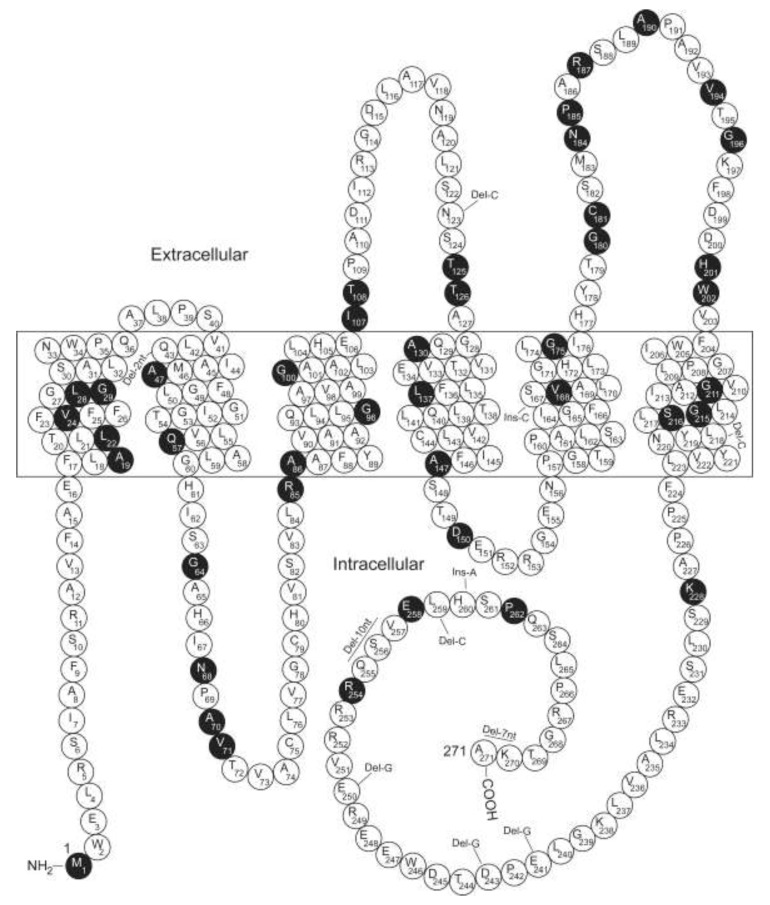
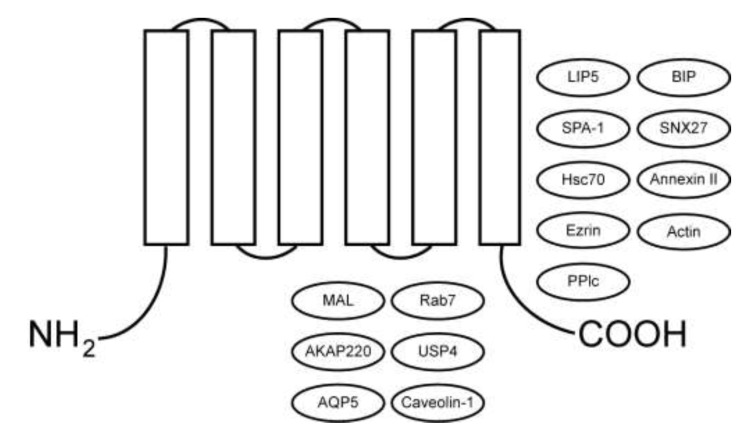
As a rare hereditary disease, congenital nephrogenic diabetes insipidus (NDI) is clinically characterized by polyuria with hyposthenuria and polydipsia. NDI results from collecting duct principal cell hyporesponsiveness or insensitivity to the antidiuretic action of arginine vasopressin (AVP). The principal cell-specific water channel aquaporin-2 (AQP2) plays an essential role in water reabsorption along osmotic gradients. The capacity to accumulate AQP2 in the apical plasma membrane in response to decreased fluid volume or increased plasma osmolality is critically regulated by the antidiuretic hormone AVP and its receptor 2 (AVPR2). Mutations in AVPR2 result in X-linked recessive NDI, the most common form of inherited NDI. Genetic defects in AQP2 cause autosomal recessive or dominant NDI. In this review, we provide an updated overview of the genetic and molecular mechanisms of congenital NDI, with a focus on the potential disease-causing mutations in AVPR2 and AQP2, the molecular defects in the AVPR2 and AQP2 mutants, post-translational modifications (i.e., phosphorylation, ubiquitination, and glycosylation) and various protein-protein interactions that regulate phosphorylation, ubiquitination, tetramerization, trafficking, stability, and degradation of AQP2.
Keywords: AQP2; AVPR2; glycosylation; mutation; nephrogenic diabetes insipidus; phosphorylation; protein-protein interaction; trafficking; ubiquitination.
Conflict of interest statement
The authors declare no conflict of interest.
Figures
References
Publication types
MeSH terms
Substances
Grants and funding
LinkOut - more resources
Full Text Sources
Miscellaneous
