. 2020 Sep 30;18(Suppl 1):17.
doi: 10.1186/s12963-020-00218-z.

Trends in prevalence, mortality, and morbidity associated with high systolic blood pressure in Brazil from 1990 to 2017: estimates from the "Global Burden of Disease 2017" (GBD 2017) study

Affiliations

Trends in prevalence, mortality, and morbidity associated with high systolic blood pressure in Brazil from 1990 to 2017: estimates from the "Global Burden of Disease 2017" (GBD 2017) study

Bruno Ramos Nascimento et al. Popul Health Metr. .

Abstract

Background: Hypertension remains the leading risk factor for cardiovascular disease (CVD) worldwide, and its impact in Brazil should be assessed in order to better address the issue. We aimed to describe trends in prevalence and burden of disease attributable to high systolic blood pressure (HSBP) among Brazilians ≥ 25 years old according to sex and federal units (FU) using the Global Burden of Disease (GBD) 2017 estimates.

Methods: We used the comparative risk assessment developed for the GBD study to estimate trends in attributable deaths and disability-adjusted life-years (DALY), by sex, and FU for HSBP from 1990 to 2017. This study included 14 HSBP-outcome pairs. HSBP was defined as ≥ 140 mmHg for prevalence estimates, and a theoretical minimum risk exposure level (TMREL) of 110-115 mmHg was considered for disease burden. We estimated the portion of deaths and DALYs attributed to HSBP. We also explored the drivers of trends in HSBP burden, as well as the correlation between disease burden and sociodemographic development index (SDI).

Results: In Brazil, the prevalence of HSBP is 18.9% (95% uncertainty intervals [UI] 18.5-19.3%), with an annual 0.4% increase rate, while age-standardized death rates attributable to HSBP decreased from 189.2 (95%UI 168.5-209.2) deaths to 104.8 (95%UI 94.9-114.4) deaths per 100,000 from 1990 to 2017. In spite of that, the total number of deaths attributable to HSBP increased 53.4% and HSBP raised from 3rd to 1st position, as the leading risk factor for deaths during the period. Regarding total DALYs, HSBP raised from 4th in 1990 to 2nd cause in 2017. The main driver of change of HSBP burden is population aging. Across FUs, the reduction in the age-standardized death rates attributable to HSBP correlated with higher SDI.

Conclusions: While HSBP prevalence shows an increasing trend, age-standardized death and DALY rates are decreasing in Brazil, probably as results of successful public policies for CVD secondary prevention and control, but suboptimal control of its determinants. Reduction was more significant in FUs with higher SDI, suggesting that the effect of health policies was heterogeneous. Moreover, HSBP has become the main risk factor for death in Brazil, mainly due to population aging.

Keywords: Epidemiology; Global burden of disease; Hypertension; Morbidity; Mortality.


Conflict of interest statement

The authors have no competing conflicts of interest regarding this manuscript.

Figures
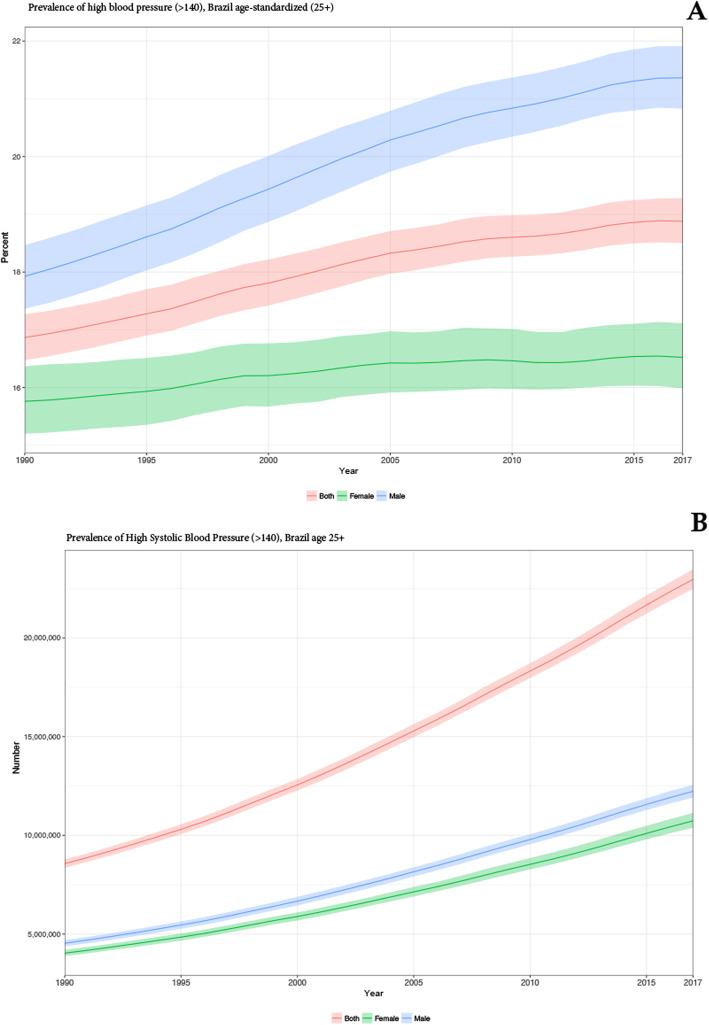
Fig. 1
Fig. 1
Trends in prevalence of high systolic blood pressure in Brazil for men, women, and both sexes for individuals with ≥ 25 years old, 1990–2017. a Age-standardized prevalence. b Total number
Fig. 2
Fig. 2
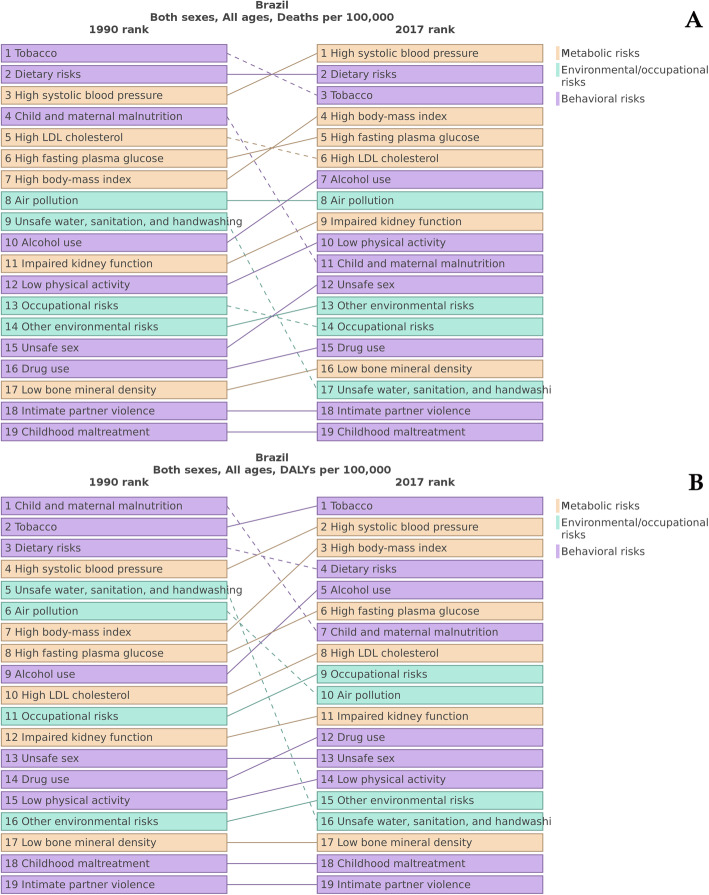
Leading 12 main risk factors for all-causes of death (a) and DALY (b) in Brazil, for both sexes, in 1990 and 2017
Fig. 3
Fig. 3
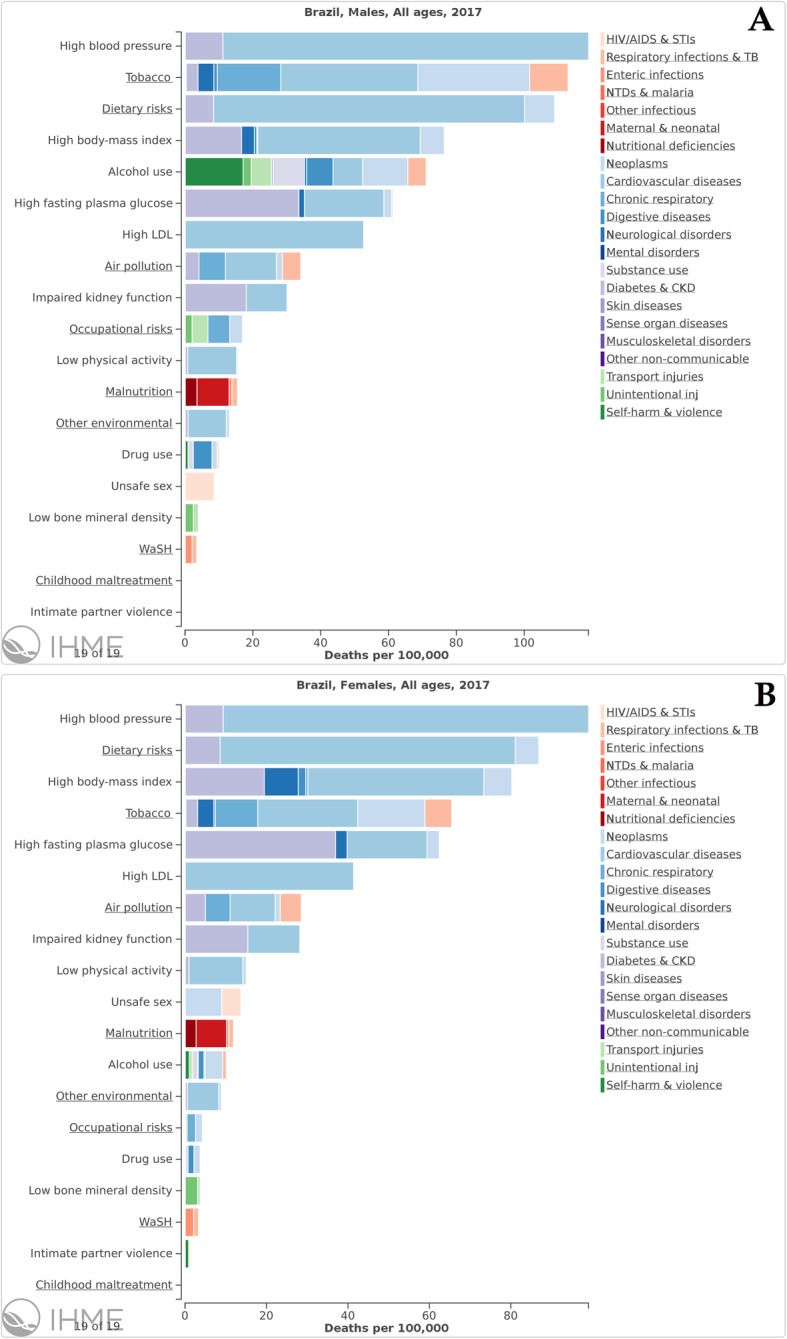
Attributable risk of 17 main risk factors for all-causes of death in Brazil, stratified by sex, in 2017
Fig. 4
Fig. 4
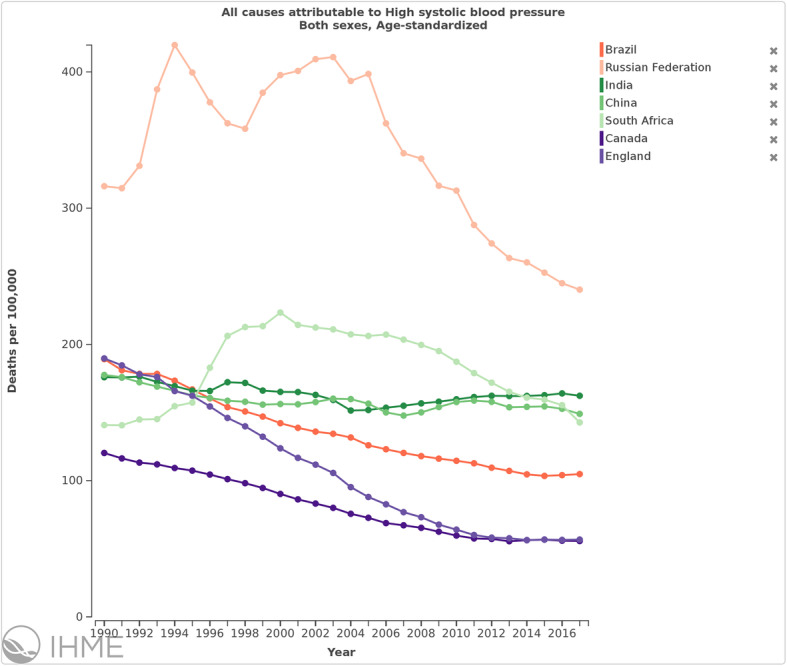
Trends in all causes of deaths attributable to high systolic blood pressure in Brazil, Russia, India, China, and South Africa (BRICS), Canada, and England, both sexes and age standardized, 1990–2017
Fig. 5
Fig. 5
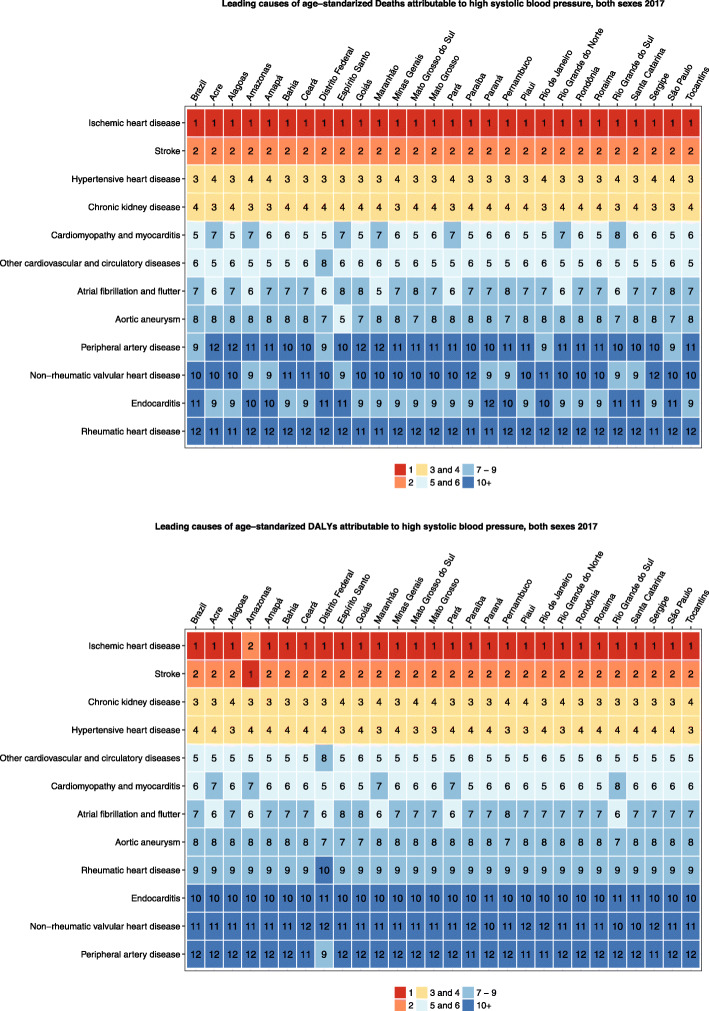
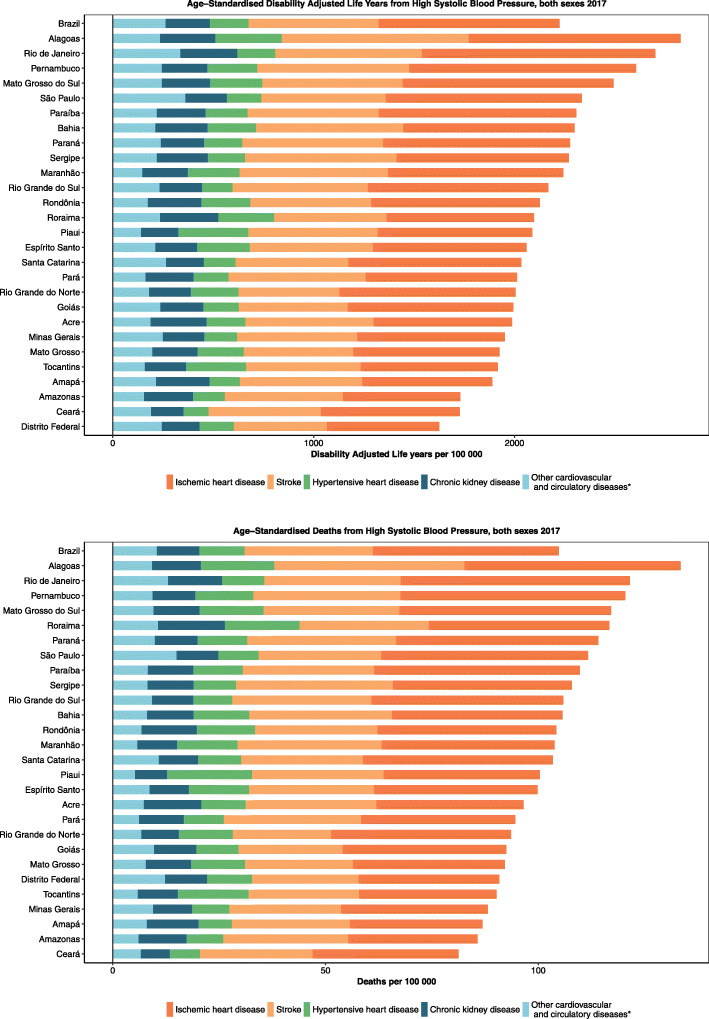
Main causes of deaths (a) and DALYs (b) attributable to high systolic blood pressure, both sexes, Brazilian federal units, 2017
Fig. 6
Fig. 6
Age-standardized causes of a deaths and b DALYs attributable to high systolic blood pressure in Brazil and its Federal Units in 2017, both sexes, for men and women
Fig. 7
Fig. 7
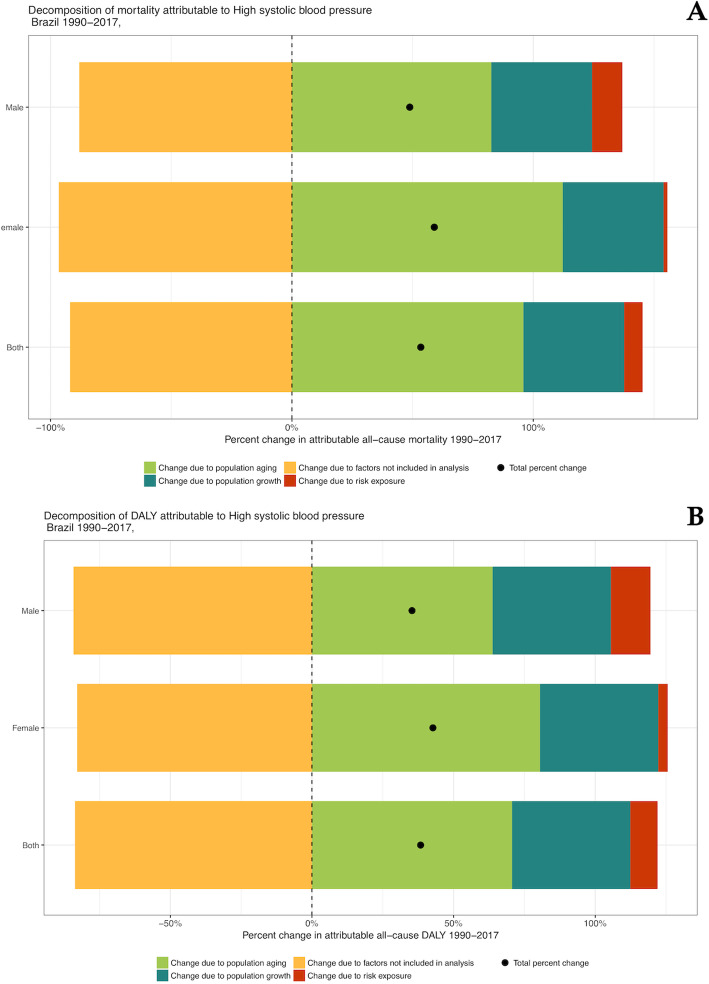
Percent change in deaths (a) and DALYs (b) attributable to high systolic blood pressure in Brazil, 1990–2016, due to population growth, population aging, trends in exposure included in GBD 2016, and all other (risk-deleted or residual) factors
Fig. 8
Fig. 8
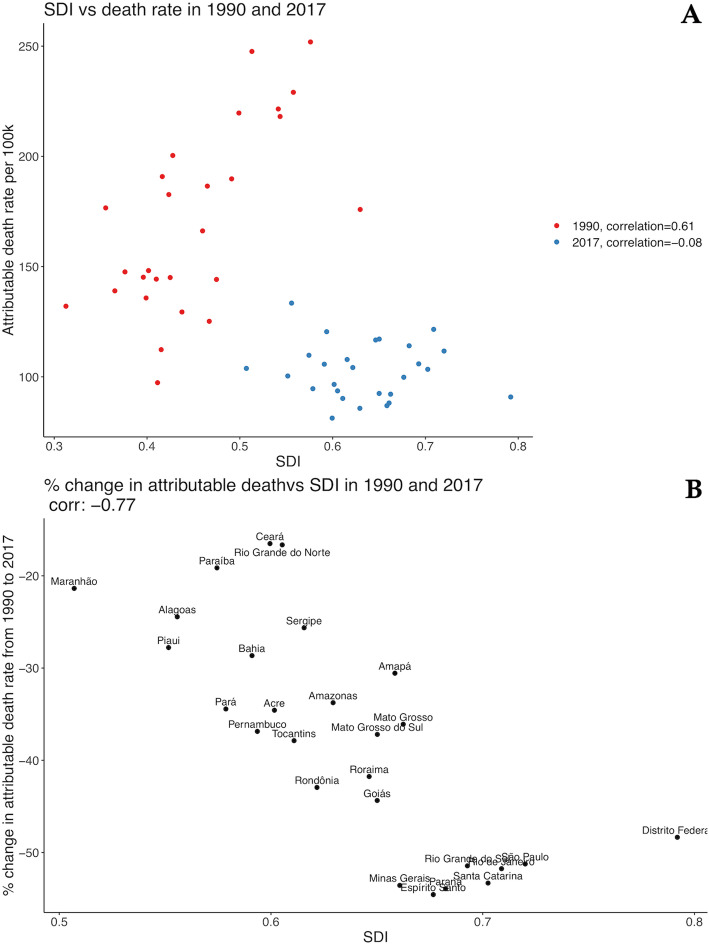
Correlation between age-standardized death rates attributable to high systolic blood pressure and the 2017 sociodemographic index (SDI) in 1990 and 2017 for both sexes, in Brazilian federal units (a) and percent change in death rates attributable to HSBP between 1990 and 2017 (b)
Fig. 9
Fig. 9
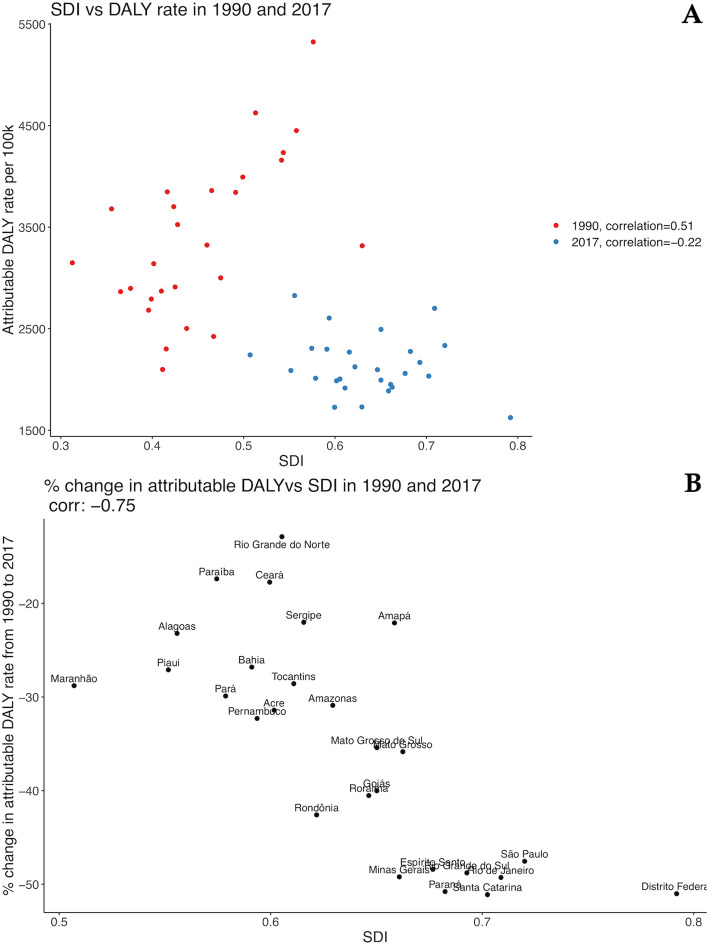
Correlation between age-standardized DALY rates attributable to high systolic blood pressure and sociodemographic index (SDI) in 1990 and 2017 for both sexes, in Brazilian federal units (a) and percent change in DALY rates attributable to HSBP between 1990 and 2017 (b)

References

    1. Ribeiro AL, Duncan BB, Brant LC, Lotufo PA, Mill JG, Barreto SM. Cardiovascular health in Brazil: trends and perspectives. Circulation. 2016;133(4):422–433. doi: 10.1161/CIRCULATIONAHA.114.008727. - DOI - PubMed
    1. Malta DC, Duncan BB, Barros MBA, Katikireddi SV, Souza FM, Silva AGD, Machado DB, Barreto ML. Fiscal austerity measures hamper noncommunicable disease control goals in Brazil. Cien Saude Colet. 2018;23(10):3115–3122. doi: 10.1590/1413-812320182310.25222018. - DOI - PubMed
    1. Malta DC, Santos NB, Perillo RD, Szwarcwald CL. Prevalence of high blood pressure measured in the Brazilian population, National Health Survey, 2013. Sao Paulo Med J. 2016;134(2):163–170. doi: 10.1590/1516-3180.2015.02090911. - DOI - PMC - PubMed
    1. Malachias M, Plavnik FL, Machado CA, Malta D, Scala LCN, Fuchs S. 7th Brazilian Guideline of Arterial Hypertension: Chapter 1 - Concept, Epidemiology and Primary Prevention. Arq Bras Cardiol. 2016;107(3 Suppl 3):1–6. - PMC - PubMed
    1. Zhang Y, Moran AE. Trends in the prevalence, awareness, treatment, and control of hypertension among young adults in the United States, 1999 to 2014. Hypertension. 2017;70(4):736–742. doi: 10.1161/HYPERTENSIONAHA.117.09801. - DOI - PMC - PubMed

Publication types