


The burden of diabetes and hyperglycemia in Brazil: a global burden of disease study 2017
- PMID: 32993680
- PMCID: PMC7526086
- DOI: 10.1186/s12963-020-00209-0
The burden of diabetes and hyperglycemia in Brazil: a global burden of disease study 2017
Abstract
Background: The Global Burden of Diseases (GBD) 2017 database permits an up-to-date evaluation of the frequency and burden of diabetes at the state level in Brazil and by type of diabetes. The objective of this report is to describe, using these updated GBD data, the current and projected future burden of diabetes and hyperglycemia in Brazil, as well as its variation over time and space.
Methods: We derived all estimates using the GBD 2016 and 2017 databases to characterize disease burden related to diabetes and hyperglycemia in Brazil, from 1990 to 2040, using standard GBD methodologies.
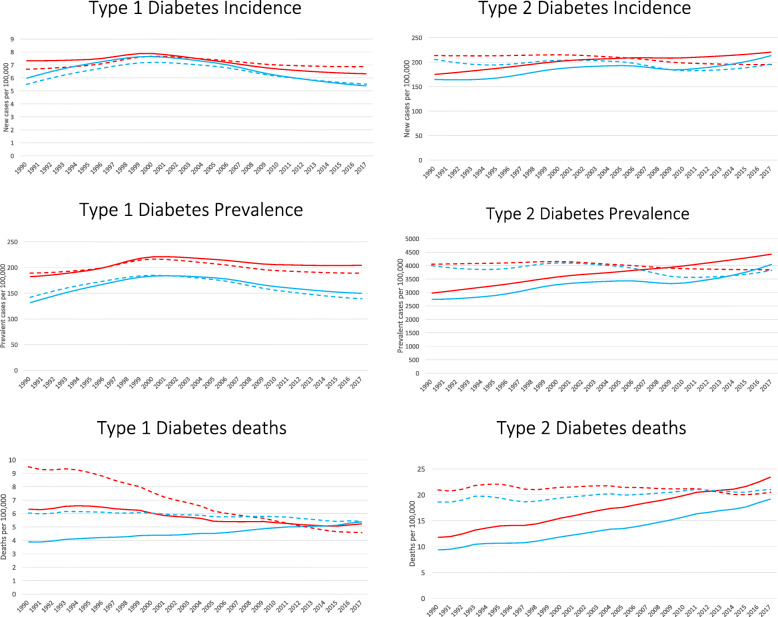
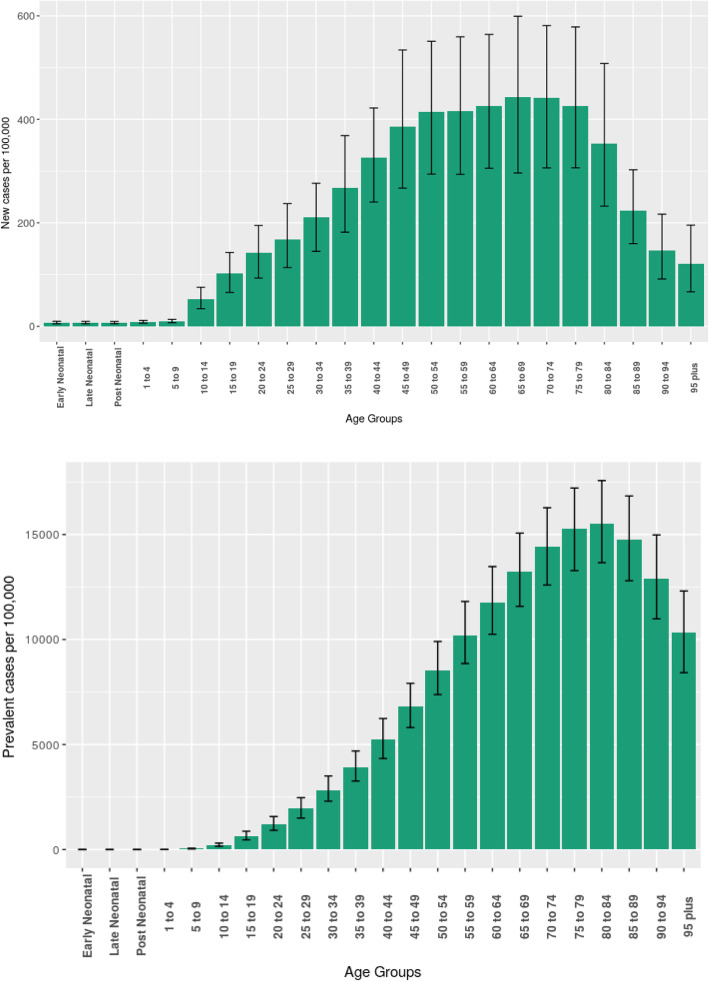
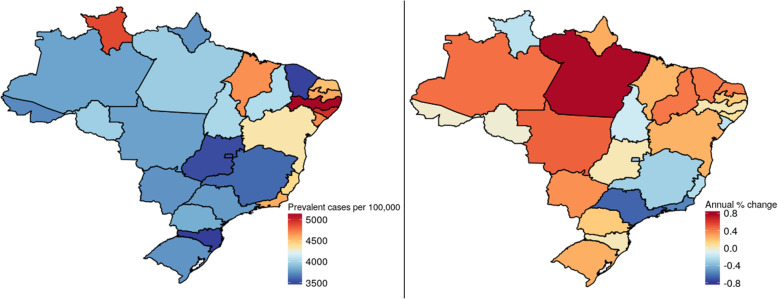
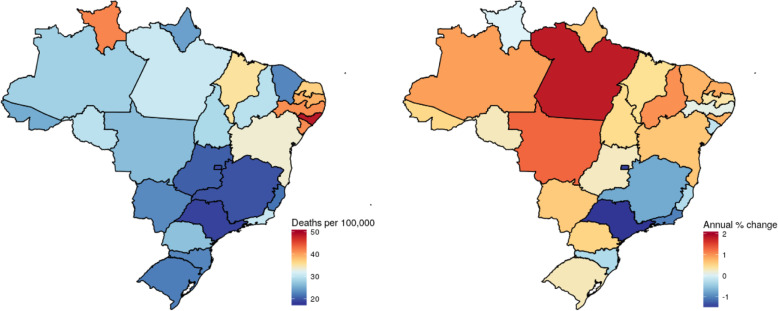
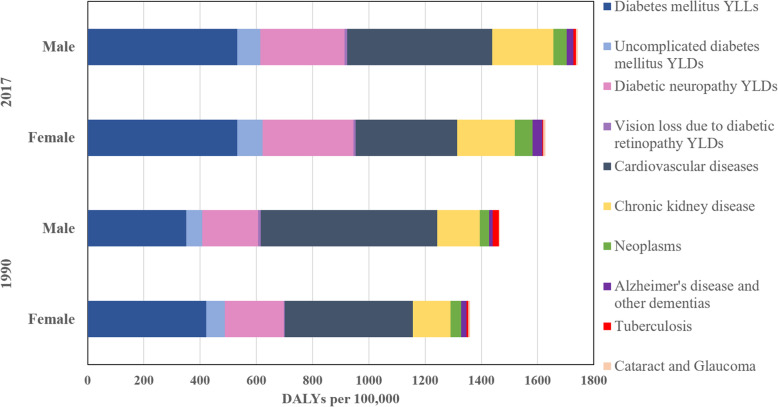
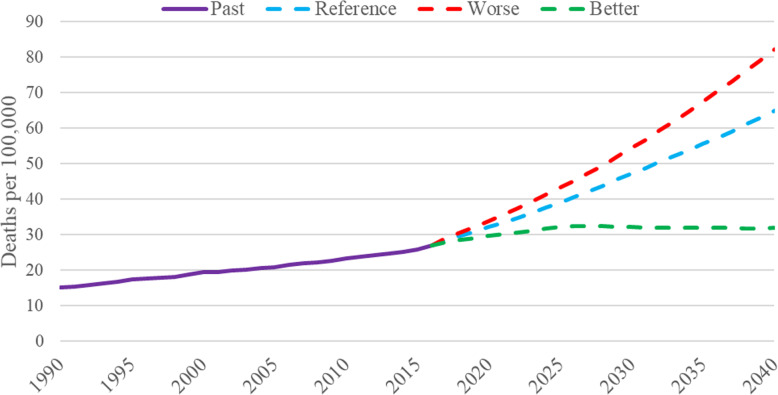
Results: The overall estimated prevalence of diabetes in Brazil in 2017 was 4.4% (95%UI 4.0-4.9%), with 4.0% of those with diabetes being identified as having type 1 disease. While the crude prevalence of type 1 disease has remained relatively stable from 1990, type 2 prevalence has increased 30% for males and 26% for females. In 2017, approximately 3.3% of all disability-adjusted life years lost were due to diabetes and 5.9% to hyperglycemia. Diabetes prevalence and mortality were highest in the Northeast region and growing fastest in the North, Northeast, and Center-West regions. Over this period, despite a slight decrease in age-standardized incidence of type 2 diabetes, crude overall burden due to hyperglycemia has increased 19%, with population aging being a main cause for this rise. Cardiovascular diseases, responsible for 38.3% of this burden in 1990, caused only 25.9% of it in 2017, with premature mortality attributed directly to diabetes causing 31.6% of the 2017 burden. Future projections suggest that the diabetes mortality burden will increase 144% by 2040, more than twice the expected increase in crude disease burden overall (54%). By 2040, diabetes is projected to be Brazil's third leading cause of death and hyperglycemia its third leading risk factor, in terms of deaths.
Conclusions: The disease burden in Brazil attributable to diabetes and hyperglycemia, already large, is predicted by GBD estimates to more than double to 2040. Strong actions by the Ministry of Health are necessary to counterbalance the major deleterious effects of population aging.
Keywords: Brazil; Diabetes mellitus; Global Burden of Disease; epidemiology; hyperglycemia.
Conflict of interest statement
None
Figures
References
-
- GBD 2017 DALYs and HALE Collaborators Global, regional, and national disability-adjusted life-years (DALYs) for 359 diseases and injuries and healthy life expectancy (HALE) for 195 countries and territories, 1990-2017: a systematic analysis for the Global Burden of Disease Study 2017. Lancet Lond Engl. 2018;392:1859–1922. doi: 10.1016/S0140-6736(18)32335-3. - DOI - PMC - PubMed
-
- World Health Organization . Best buys and other recommended interventions for the prevention and control of noncommunicable diseases Updated (2017) Appendix 3 of the Global Action Plan for the Prevention and Control of Noncommunicable Diseases 2013-2020. 2017.
-
- Institute for Health Metrics and Evaluation (IHME). GBD compare data visualization. 2017. https://vizhub.healthdata.org/gbd-compare/. Accessed 26 Nov 2018.
-
- GBD Results Tool | GHDx. http://ghdx.healthdata.org/gbd-results-tool. Accessed 16 Jan 2019.
Publication types
MeSH terms
LinkOut - more resources
Full Text Sources
Medical
