


The burden of non-communicable diseases attributable to high BMI in Brazil, 1990-2017: findings from the Global Burden of Disease Study
- PMID: 32993699
- PMCID: PMC7525961
- DOI: 10.1186/s12963-020-00219-y
The burden of non-communicable diseases attributable to high BMI in Brazil, 1990-2017: findings from the Global Burden of Disease Study
Abstract
Background: The prevalence and burden of disease resulting from obesity have increased worldwide. In Brazil, more than half of the population is now overweight. However, the impact of this growing risk factor on disease burden remains inexact. Using the 2017 Global Burden of Disease (GBD) results, this study sought to estimate mortality and disability-adjusted life years (DALYs) lost to non-communicable diseases caused by high body mass index (BMI) in both sexes and across age categories. This study also aimed to describe the prevalence of overweight and obesity throughout the states of Brazil.
Methods: Age-standardized prevalence of overweight and obesity were estimated between 1990 and 2017. A comparative risk assessment was applied to estimate DALYs and deaths for non-communicable diseases and for all causes linked to high BMI.
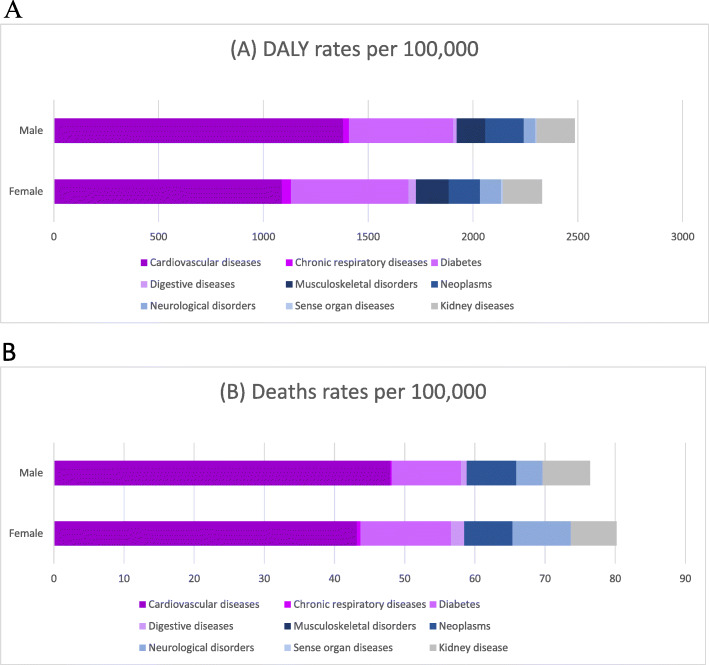
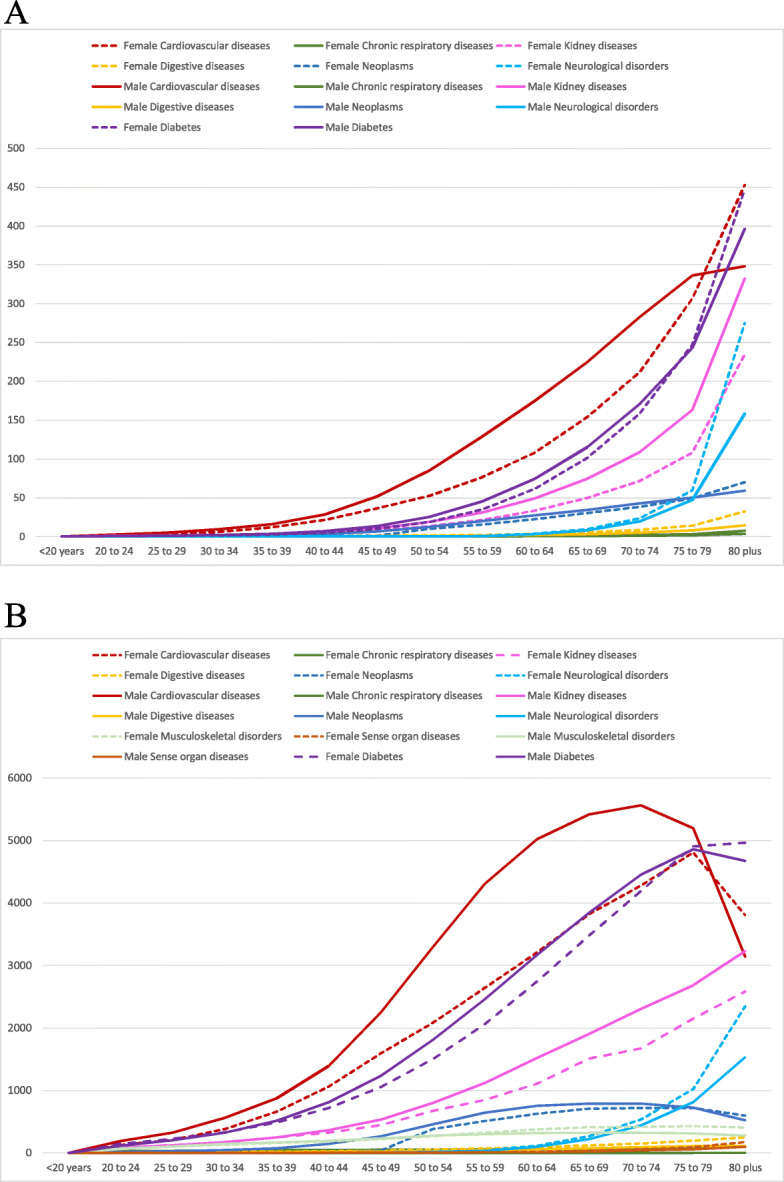
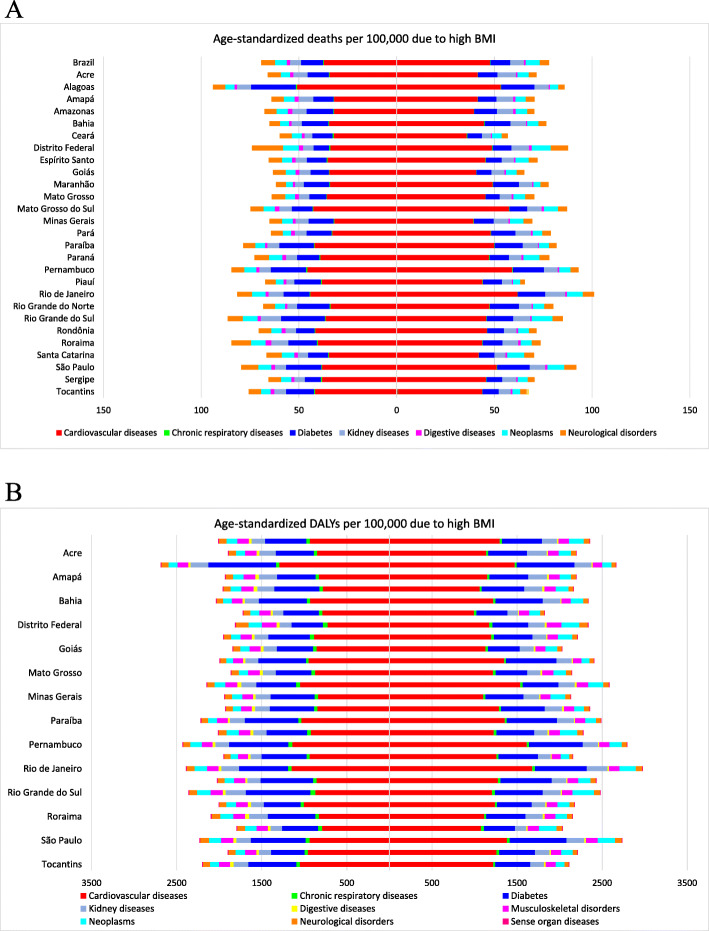
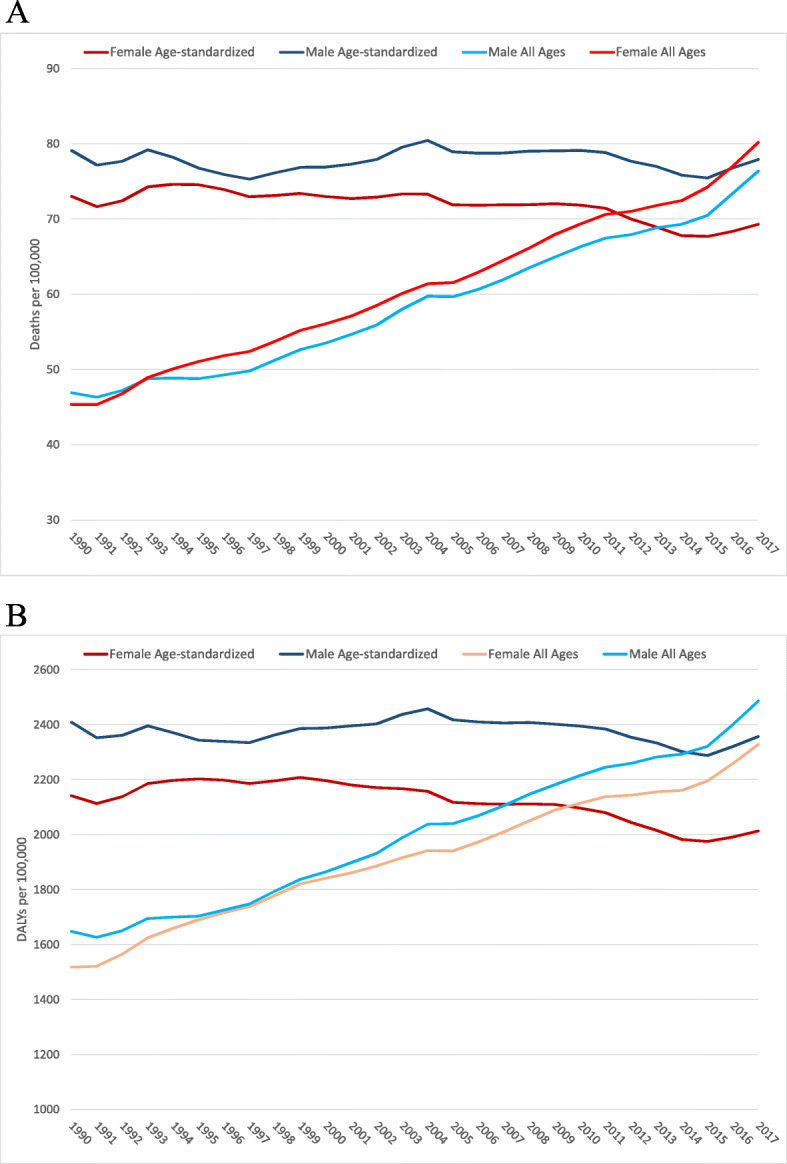
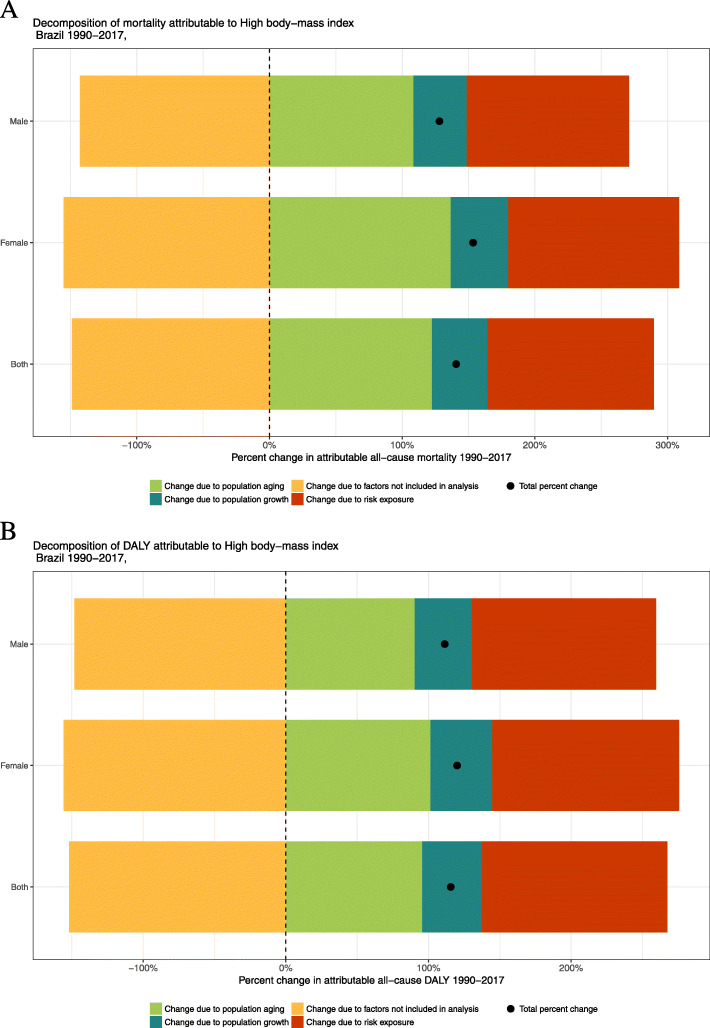
Results: The prevalence of overweight and obesity increased during the period of analysis. Overall, age-standardized prevalence of obesity in Brazil was higher in females (29.8%) than in males (24.6%) in 2017; however, since 1990, males have presented greater rise in obesity (244.1%) than females (165.7%). Increases in prevalence burden were greatest in states from the North and Northeast regions of Brazil. Overall, burden due to high BMI also increased from 1990 to 2017. In 2017, high BMI was responsible for 12.3% (8.8-16.1%) of all deaths and 8.4% (6.3-10.7%) of total DALYs lost to non-communicable diseases, up from 7.2% (4.1-10.8%), and 4.6% (2.4-6.0%) in 1990, respectively. Change due to risk exposure is the leading contributor to the growth of BMI burden in Brazil. In 2017, high BMI was responsible for 165,954 deaths and 5,095,125 DALYs. Cardiovascular disease and diabetes have proven to be the most prevalent causes of deaths, along with DALYs caused by high BMI, regardless of sex or state.
Conclusions: This study demonstrates increasing age-standardized prevalence of obesity in all Brazilian states. High BMI plays an important role in disease burdens in terms of cardiovascular diseases, diabetes, and all causes of mortality. Assessing levels and trends in exposures to high BMI and the resulting disease burden highlights the current priority for primary prevention and public health action initiatives focused on obesity.
Keywords: Body mass index; Cardiovascular disease; Comparative risk assessment; Obesity; Risk factors.
Conflict of interest statement
The authors declare that they have no competing interests.
Figures
References
-
- Abarca-Gómez L, Abdeen ZA, Hamid ZA, Abu-Rmeileh NM, Acosta-Cazares B, Acuin C, et al. Worldwide trends in body-mass index, underweight, overweight, and obesity from 1975 to 2016: a pooled analysis of 2416 population-based measurement studies in 128·9 million children, adolescents, and adults. Lancet. 2017; 10.1016/S0140-6736(17)32129-3. - PMC - PubMed
-
- Lauby-Secretan B, Scoccianti C, Loomis D, Grosse Y, Bianchini F, Straif K. Body fatness and cancer — viewpoint of the IARC Working Group. N Engl J Med. 2016; https://www.nejm.org/doi/full/10.1056/NEJMsr1606602. - DOI - PMC - PubMed
Publication types
MeSH terms
LinkOut - more resources
Full Text Sources
Medical
