


Rugged landscapes: complexity and implementation science
- PMID: 32993756
- PMCID: PMC7523395
- DOI: 10.1186/s13012-020-01028-5
Rugged landscapes: complexity and implementation science
Abstract
Background: Mis-implementation-defined as failure to successfully implement and continue evidence-based programs-is widespread in public health practice. Yet the causes of this phenomenon are poorly understood.
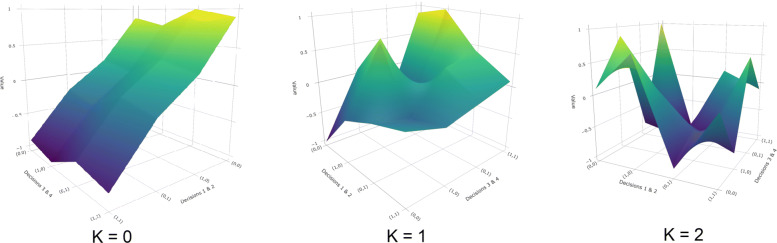
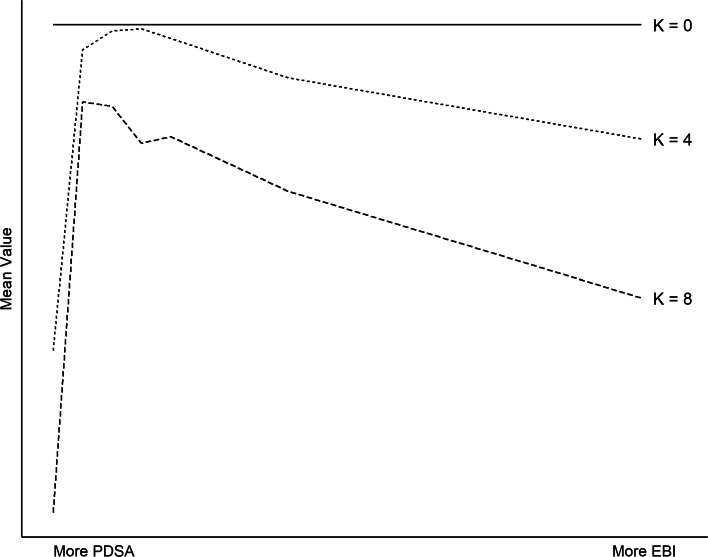
Methods: We develop an agent-based computational model to explore how complexity hinders effective implementation. The model is adapted from the evolutionary biology literature and incorporates three distinct complexities faced in public health practice: dimensionality, ruggedness, and context-specificity. Agents in the model attempt to solve problems using one of three approaches-Plan-Do-Study-Act (PDSA), evidence-based interventions (EBIs), and evidence-based decision-making (EBDM).
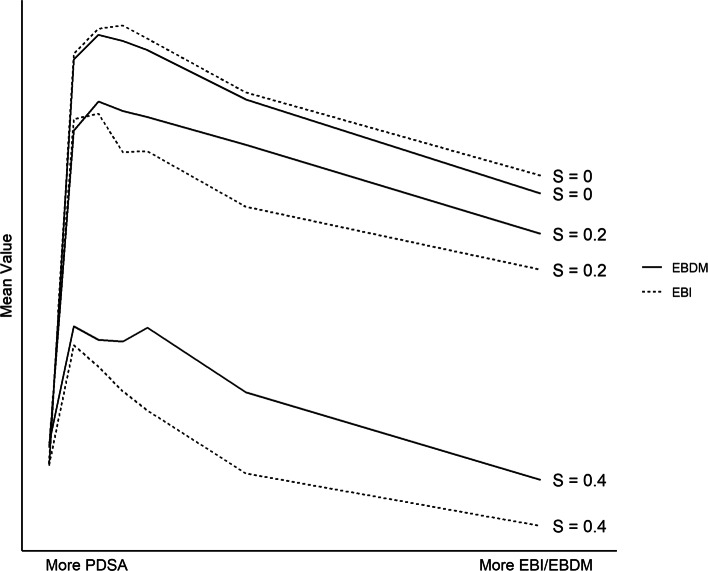
Results: The model demonstrates that the most effective approach to implementation and quality improvement depends on the underlying nature of the problem. Rugged problems are best approached with a combination of PDSA and EBI. Context-specific problems are best approached with EBDM.
Conclusions: The model's results emphasize the importance of adapting one's approach to the characteristics of the problem at hand. Evidence-based decision-making (EBDM), which combines evidence from multiple independent sources with on-the-ground local knowledge, is a particularly potent strategy for implementation and quality improvement.
Keywords: Agent-based modeling; Complexity; Evidence-based decision-making; Mis-implementation.
Conflict of interest statement
The authors declare that they have no competing interests.
Figures
References
-
- Dreisinger M, Leet T, Baker E, Gillespie K, Haas B, Brownson R. Improving the public health workforce: evaluation of a training course to enhance evidence-based decision making. J Public Health Manag Pract. 2008;14(2):138–43. - PubMed
Publication types
MeSH terms
Grants and funding
LinkOut - more resources
Full Text Sources
