


Development of a novel method to measure material surface staining by cigarette, e-cigarette or tobacco heating product aerosols
- PMID: 32995648
- PMCID: PMC7511806
- DOI: 10.1016/j.heliyon.2020.e05012
Development of a novel method to measure material surface staining by cigarette, e-cigarette or tobacco heating product aerosols
Abstract
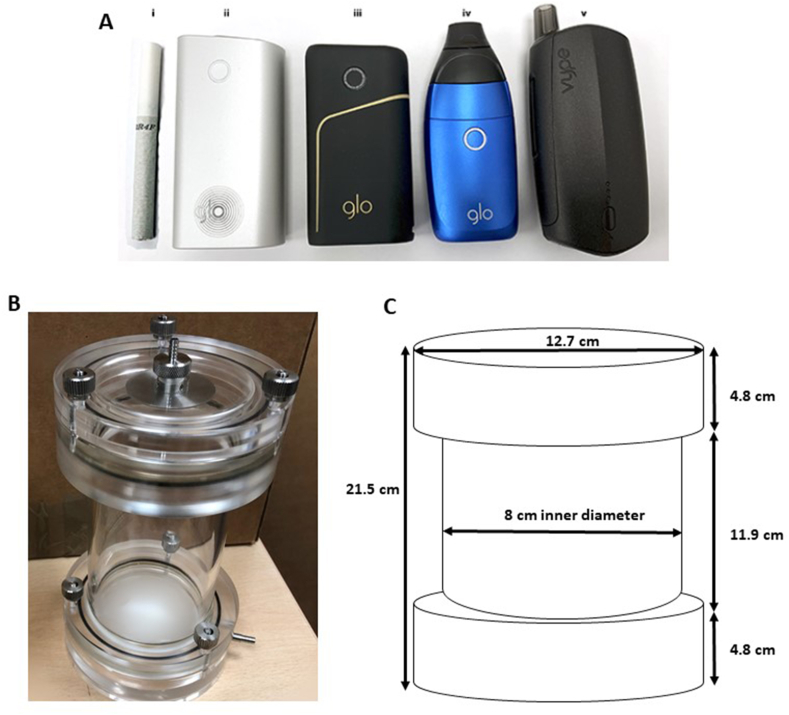
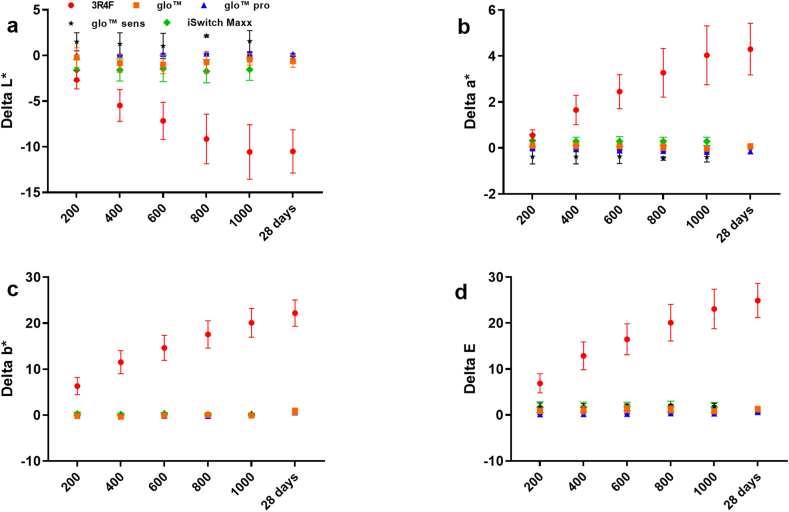
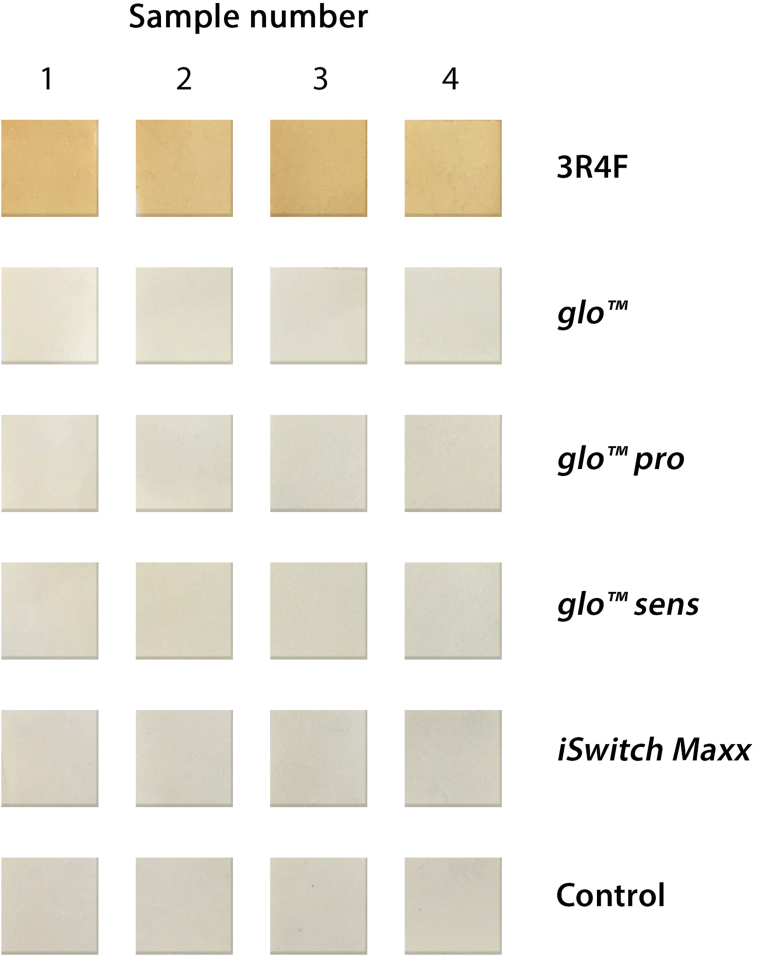
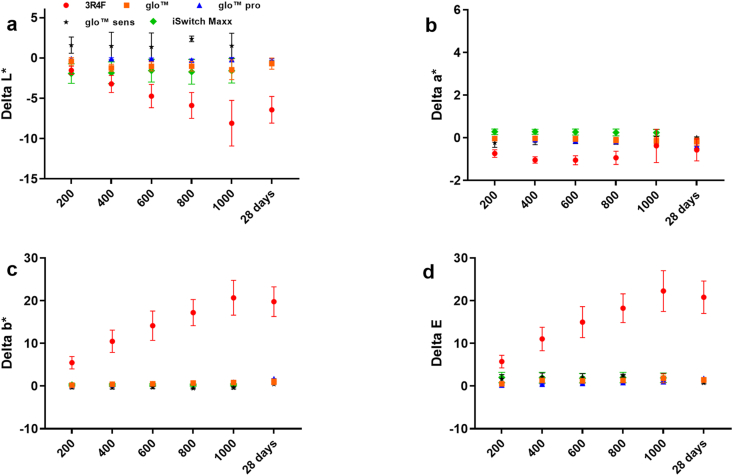
Tobacco smoke (CS) may visually stain indoor surfaces including ceilings, walls and soft furnishings over time. Potentially reduced risk products (PRRPs) such as e-cigarettes (EC) and tobacco heating products (THP) produce chemically less complex aerosols with significantly reduced levels of toxicants, particles and odour. However, the potential effects of EC and THP aerosols on the staining of indoor surfaces are currently unknown. In this study, an exposure chamber was developed as a model system to enable the accelerated staining of wallpaper and cotton samples by a scientific reference cigarette (3R4F), three THP (glo™, glo™ pro, glo™ sens) and an e-cigarette (iSwitch Maxx). Exposure to 3R4F reference cigarettes caused the greatest level of staining, which was significantly higher than glo™, glo™ pro, glo™ sens or iSwitch Maxx aerosols, all of which showed relatively little colour change. Exposure to 200-1000 puffs of 3R4F cigarette smoke resulted in a visible dose response effect to wallpaper and cotton samples which was not observed following exposure to glo™, glo™ pro, glo™ sens or iSwitch Maxx aerosols. Aging of the samples for 4 weeks post-exposure resulted in changes to the staining levels, however PRRP staining levels were minimal and significantly lower than 3R4F exposed samples. For the first time, diverse PRRPs across the tobacco and nicotine products risk continuum have been assessed in vitro for their impact on surface staining. CS exposure significantly increased the level of wallpaper and cotton staining, whereas exposure to glo™, glo™ pro, glo™ sens or iSwitch Maxx aerosols resulted in significantly reduced levels of staining, staining levels were also comparable to untreated control samples.
Keywords: Cigarette; Electronic cigarette/e-cigarette; Environmental exposure; Environmental tobacco smoke; Hygiene; Materials science; Surface staining; Tobacco heating product.
© 2020 The Author(s).
Figures
References
-
- Adamson J., Jaunky T., Thorne D., Gaça M.D. Characterisation of the borgwaldt LM4E system for in vitro exposures to undiluted aerosols from next generation tobacco and nicotine products (NGPs) Food Chem. Toxicol. 2018;113:337–344. - PubMed
-
- Alandia-Roman C.C., Cruvinel D.R., Sousa A.B., Pires-de-Souza F.C., Panzeri H. Effect of cigarette smoke on color stability and surface roughness of dental composites. J. Dent. 2013;41:e73–e79. - PubMed
-
- Ayers J.W., Ribisl K.M., Brownstein J.S. Tracking the rise in popularity of electronic nicotine delivery systems (electronic cigarettes) using search query surveillance. Am. J. Prev. Med. 2011;40:448–453. - PubMed
-
- Bazzi J.Z., Bindo M.J., Rached R.N., Mazur R.F., Vieira S., de Souza E.M. The effect of at-home bleaching and toothbrushing on removal of coffee and cigarette smoke stains and color stability of enamel. J. Am. Dent. Assoc. 2012;143:e1–e7. - PubMed
LinkOut - more resources
Full Text Sources
