


Cross-sectional and prospective relationship between physical activity and depression symptoms
- PMID: 32999306
- PMCID: PMC7527477
- DOI: 10.1038/s41598-020-72987-4
Cross-sectional and prospective relationship between physical activity and depression symptoms
Abstract
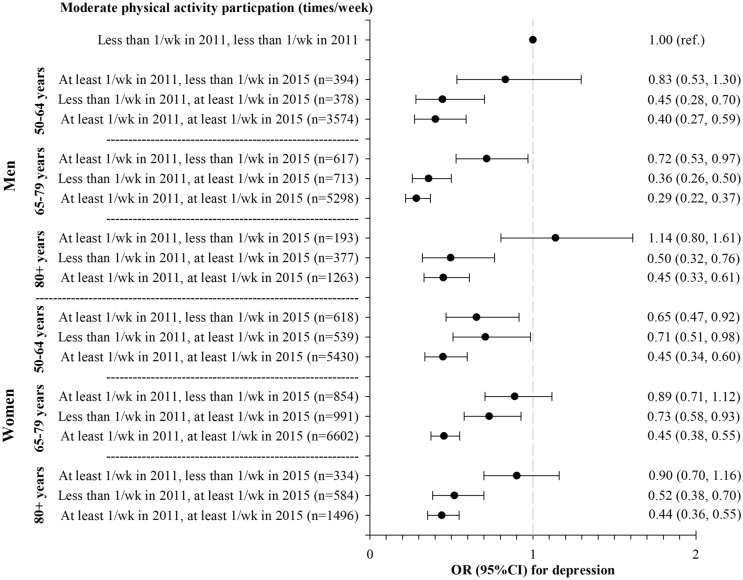
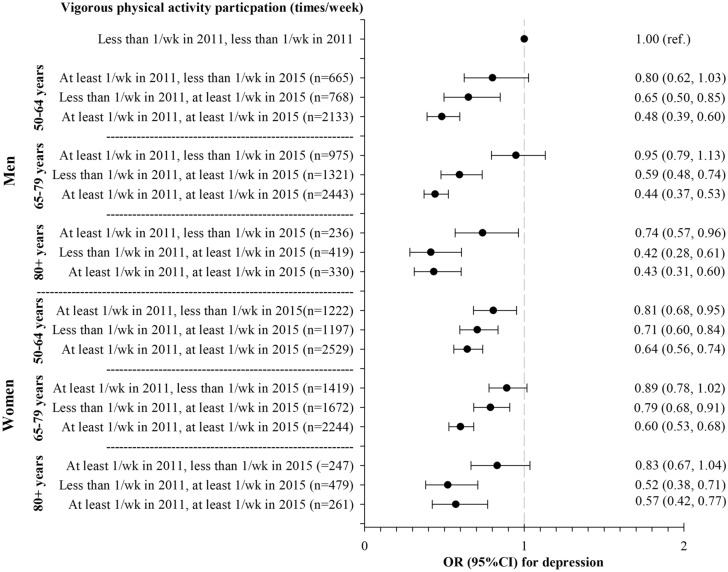
This study aimed to analyse the cross-sectional and prospective relationship between moderate and vigorous physical activity (PA) and depression symptoms. This study analysed 32,392 European late middle-aged to older adults, from 14 European countries across a 4-year follow-up. Data was collected in the fourth (in 2011) and sixth (in 2015) wave, from the Survey of Health, Ageing and Retirement in Europe (SHARE). For the present analysis, participants were considered who responded to the EURO-D 12-item scale of depression symptoms and reported the intensity and frequency of PA. ANCOVAs were conducted to assess the cross-sectional and prospective associations. For both men and women, engaging in moderate or vigorous PA in 2011 was associated with a lower score of depression in 2011 and 2015. From the prospective analysis, moderate and vigorous PA in 2011 was inversely associated with the score of depression. This association remains significant in the fully adjusted for self-rated health, sociodemographic characteristics, and the presence of chronic diseases. Moderate and vigorous PA at least once a week is negatively related to the score of depression, both in men and women. PA is negatively associated with depression symptoms, and from prospective analysis PA predicts lower depression scores 4 years later.
Conflict of interest statement
The authors declare no competing interests.
Figures
References
-
- WHO. Depression and other common mental disorders. Global health estimates. (World Health Organization, 2017).
-
- Murray, C. J. & Lopez, A. D. The global burden of disease: a comprehensive assessment of mortality and disability from diseases, injuries, and risk factors in 1990 and projected to 2020: summary. WHO (1996).
-
- Smit, H., Cuijpers, P., Duivis, H. & Petrea, I. Preventing depression in the WHO European region. WHO (2013).
