


Exogenous naringenin improved digestible protein accumulation and altered morphology via VrPIN and auxin redistribution in Vigna radiata
- PMID: 32999809
- PMCID: PMC7492357
- DOI: 10.1007/s13205-020-02428-6
Exogenous naringenin improved digestible protein accumulation and altered morphology via VrPIN and auxin redistribution in Vigna radiata
Abstract
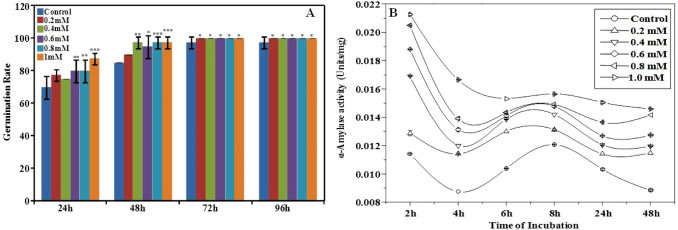
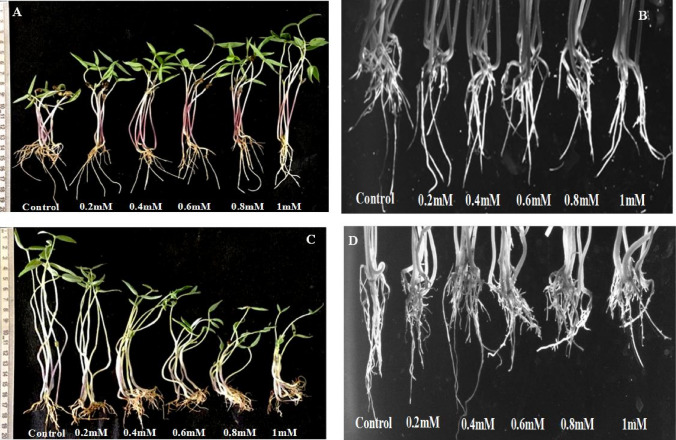
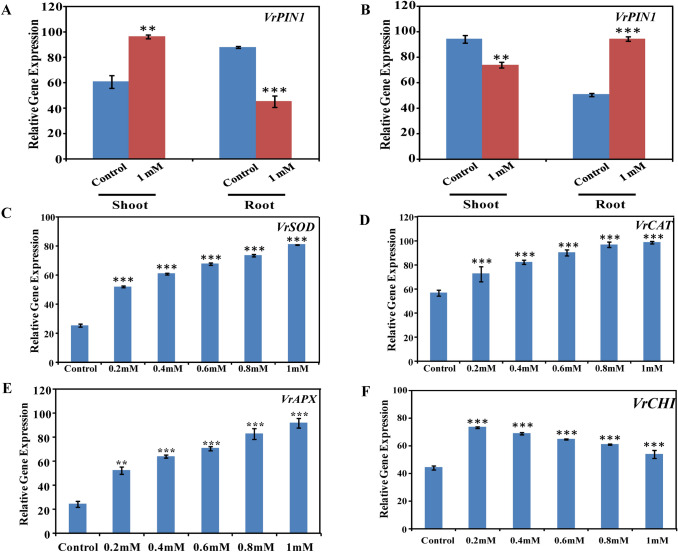
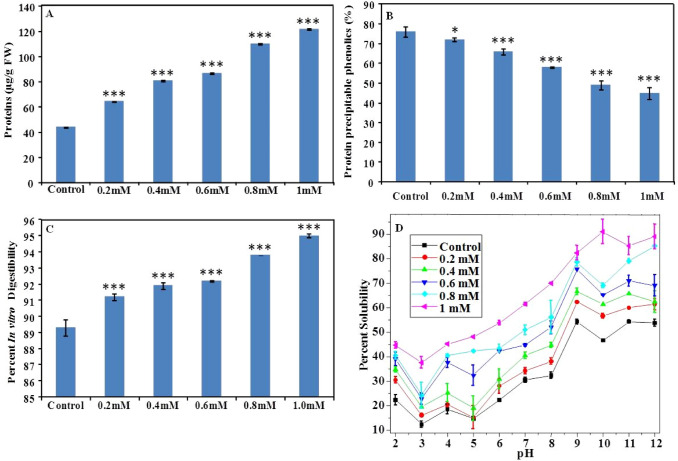
Naringenin exposure altered auxin redistribution via VrPIN1 leading to morphological alterations and significantly reduced the protein precipitable tannins that further enhanced the protein accumulation and bioavailability. Flavonoid exposure is known to affect the antioxidant profile of legumes. However, a detailed study evaluating the effect of flavonoid naringenin on morphology and biochemical profile of legume is lacking. The present study is a novel report of improved in planta protein bioavailability and antioxidant potential of legume mungbean on naringenin exposure. The quantitative evaluation revealed significant protein accumulation (64-122 μg/g FW) on naringenin exposure. Further, an increase in protein solubility and digestibility compared to control was evident. Naringenin mediated altered α-amylase activity improved the mungbean seed germination rate. Naringenin induced auxin redistribution and altered PIN formed transcript expression reduced lateral root density and increased stem length that was subsequently reverted on exogenous indole acetic acid application. Naringenin enhanced polyphenolic accumulation and improved the antioxidant potential of mungbean. Additionally, the responsiveness of the early gene of the flavonoid biosynthetic pathway, Chalcone isomerase to naringenin concentration was revealed indicating a probable feedback regulation. Further, the presence of alternate liquiritigenin biosynthesis was also evident. The present study, thus reveals the probable potential of phytochemical naringenin towards agricultural sustainability in the changing environmental conditions.
Keywords: Alternate biosynthesis; Antioxidant; Auxin; Chalcone isomerase; Germination; Liquiritigenin; Mungbean; Naringenin; Protein; VrPIN1; α-Amylase.
© King Abdulaziz City for Science and Technology 2020.
Conflict of interest statement
Conflict of interestThere is no conflict of interest between any of the authors.
Figures
References
-
- Afiukwa CA, Ibiam UA, Edeogu CO, Nweke FN, Chukwu UE. Determination of amylase activity of crude extract from partially germinated mango seeds (Mangifera oraphila) Afr J Biotechnol. 2009;8:3294–3296.
-
- Benett CGS, Buzetti S, Silva KS, Bergamaschine AF, Fabricio JA. Productivity and bromatological composition of marandu grass at sources and doses of nitrogen1. Cienc Agrotec. 2008;32:1629–1636.
-
- Benkova E, Michniewicz M, Sauer M, Teichmann T, Seifertova D, Jurgens G, Friml J. Local, efflux-dependent auxin gradients as a common module for plant organ formation. Cell. 2003;115:591–602. - PubMed
-
- Bido GS, Ferrarese MLL, Marchiosi R, Ferrarese-Filho O. Naringenin inhibits the growth and stimulates the lignification of soybean root. Braz Arch Biol Technol. 2010;53:533–542.
LinkOut - more resources
Full Text Sources
