


The longitudinal impact of COVID-19 pandemic on neurosurgical practice
- PMID: 33002677
- PMCID: PMC7497779
- DOI: 10.1016/j.clineuro.2020.106237
The longitudinal impact of COVID-19 pandemic on neurosurgical practice
Abstract
Objective: This observational cross-sectional multicenter study aimed to evaluate the longitudinal impact of the coronavirus disease 2019 (COVID-19) pandemic on neurosurgical practice.
Methods: We included 29 participating neurosurgeons in centers from all geographical regions in the Kingdom of Saudi Arabia. The study period, which was between March 5, 2020 and May 20, 2020, was divided into three equal periods to determine the longitudinal effect of COVID-19 measures on neurosurgical practice over time.
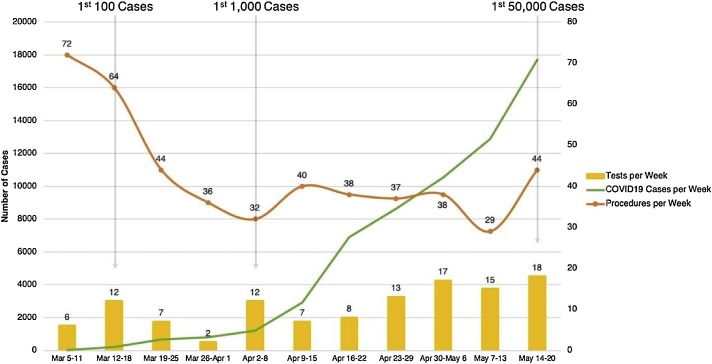
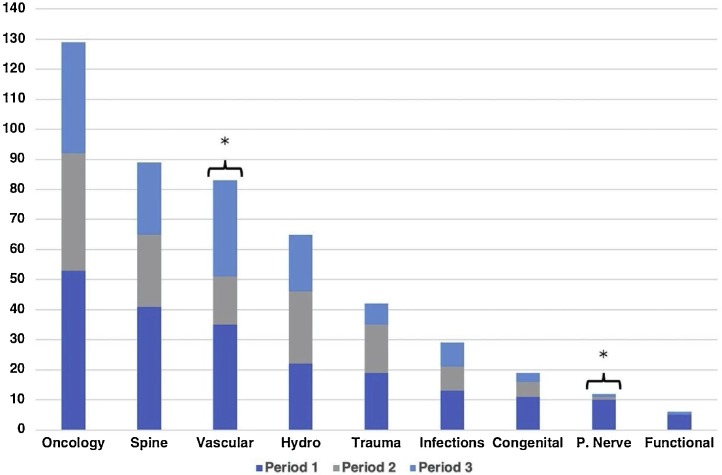
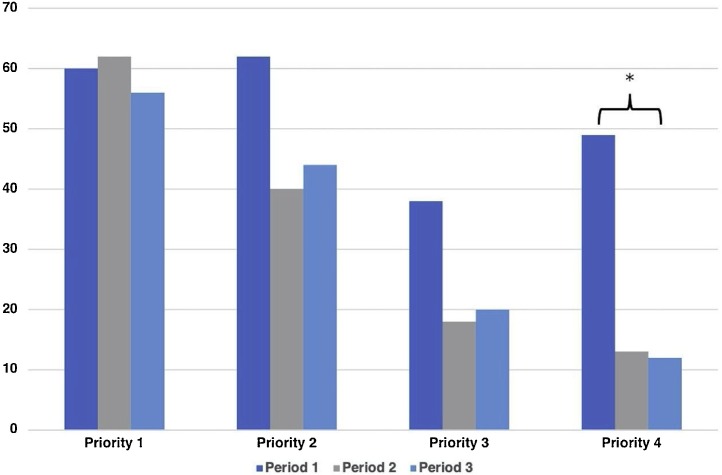
Results: During the 11-week study period, 474 neurosurgical interventions were performed. The median number of neurosurgical procedures per day was 5.5 (interquartile range [IQR]: 3.5-8). The number of cases declined from 72 in the first week and plateaued at the 30's range in subsequent weeks. The most and least number of performed procedures were oncology (129 [27.2 %]) and functional procedures (6 [1.3 %]), respectively. Emergency (Priority 1) cases were more frequent than non-urgent (Priority 4) cases (178 [37.6 %] vs. 74 [15.6 %], respectively). In our series, there were three positive COVID-19 cases. There was a significant among-period difference in the length of hospital stay, which dropped from a median stay of 7 days (IQR: 4-18) to 6 (IQR: 3-13) to 5 days (IQR: 2-8). There was no significant among-period difference with respect to institution type, complications, or mortality.
Conclusion: Our study demonstrated that the COVID-19 pandemic decreased the number of procedures performed in neurosurgery practice. The load of emergency neurosurgery procedures did not change throughout the three periods, which reflects the need to designate ample resources to cover emergencies. Notably, with strict screening for COVID -19 infections, neurosurgical procedures could be safely performed during the early pandemic phase. We recommend to restart performing neurosurgical procedures once the pandemic gets stabilized to avoid possible post pandemic health-care system intolerable overload.
Keywords: COVID-19; Impact; Neurosurgery; Neurosurgical practice; Pandemic.
Copyright © 2020 Elsevier B.V. All rights reserved.
Conflict of interest statement
The authors report no declarations of interest.
Figures
References
-
- (WHO) WHO . World Health Organization; 2020. WHO Director-General’s Opening Remarks at the Media Briefing on COVID-19 - 11 March 2020.
-
- (WHO) WHO . 2020. Coronavirus Disease (COVID-19) Situation Report – 133.
-
- (MOH) MoH . 2020. COVID 19 Dashboard: Saudi Arabia.
Publication types
MeSH terms
LinkOut - more resources
Full Text Sources
Medical
