


Extracellular Vesicles as an Efficient and Versatile System for Drug Delivery
- PMID: 33003285
- PMCID: PMC7600121
- DOI: 10.3390/cells9102191
Extracellular Vesicles as an Efficient and Versatile System for Drug Delivery
Abstract
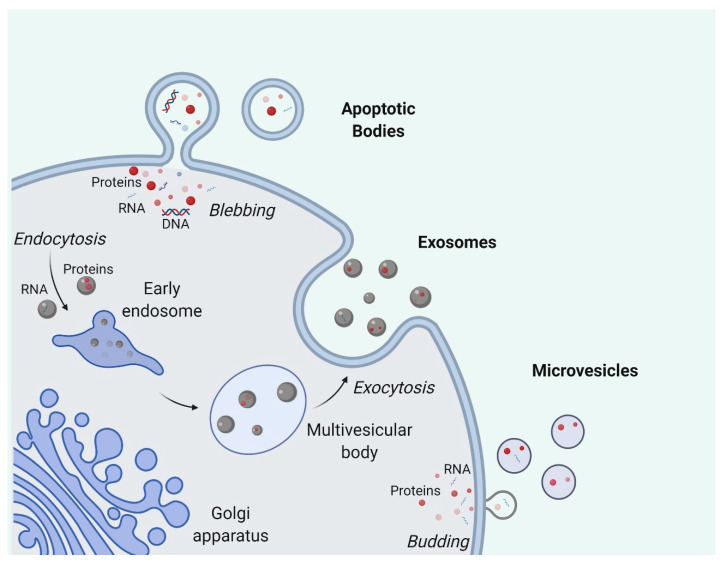
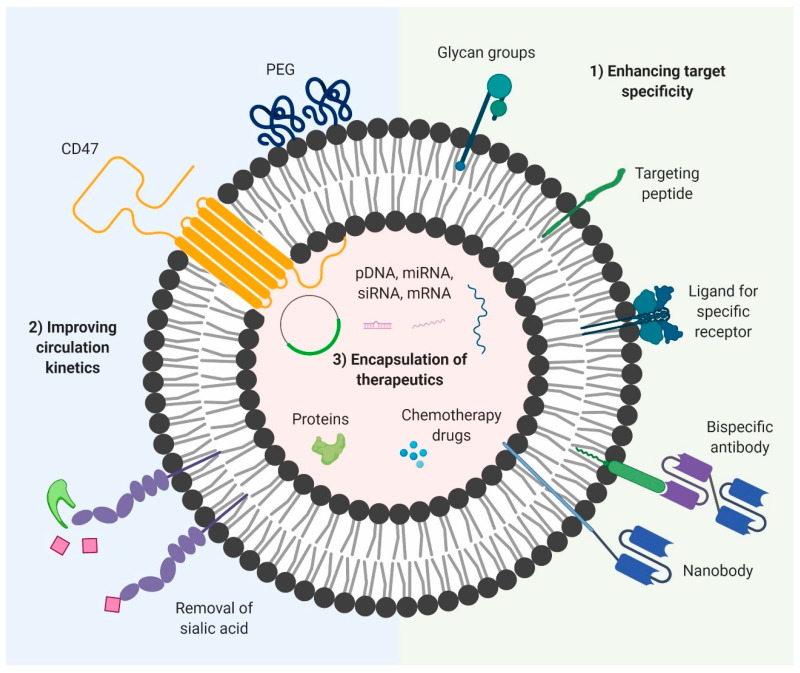
Despite the recent advances in drug development, the majority of novel therapeutics have not been successfully translated into clinical applications. One of the major factors hindering their clinical translation is the lack of a safe, non-immunogenic delivery system with high target specificity upon systemic administration. In this respect, extracellular vesicles (EVs), as natural carriers of bioactive cargo, have emerged as a promising solution and can be further modified to improve their therapeutic efficacy. In this review, we provide an overview of the biogenesis pathways, biochemical features, and isolation methods of EVs with an emphasis on their many intrinsic properties that make them desirable as drug carriers. We then describe in detail the current advances in EV therapeutics, focusing on how EVs can be engineered to achieve improved target specificity, better circulation kinetics, and efficient encapsulation of therapeutic payloads. We also identify the challenges and obstacles ahead for clinical translation and provide an outlook on the future perspective of EV-based therapeutics.
Keywords: clinical; drug delivery; extracellular vesicles; therapeutic; translation.
Conflict of interest statement
M.T.N.L. is a scientific co-founder, advisor and shareholder of Carmine Therapeutics, a company that develops extracellular-vesicle-based therapies. Other authors declare no conflict of interest.
Figures
References
-
- Illum L., Jones P., Baldwin R., Davis S. Tissue distribution of poly (hexyl 2-cyanoacrylate) nanoparticles coated with monoclonal antibodies in mice bearing human tumor xenografts. J. Pharmacol. Exp. Ther. 1984;230:733–736. - PubMed
-
- Liu R., Colby A.H., Gilmore D., Schulz M., Zeng J., Padera R.F., Shirihai O., Grinstaff M.W., Colson Y.L. Nanoparticle tumor localization, disruption of autophagosomal trafficking, and prolonged drug delivery improve survival in peritoneal mesothelioma. Biomaterials. 2016;102:175–186. doi: 10.1016/j.biomaterials.2016.06.031. - DOI - PMC - PubMed
Publication types
MeSH terms
Substances
LinkOut - more resources
Full Text Sources
