


Maternal perceptions of the quality of Care in the Free Maternal Care Policy in sub-Sahara Africa: a systematic scoping review
- PMID: 33004029
- PMCID: PMC7528345
- DOI: 10.1186/s12913-020-05755-9
Maternal perceptions of the quality of Care in the Free Maternal Care Policy in sub-Sahara Africa: a systematic scoping review
Abstract
Background: The world aims to achieve universal health coverage by removing all forms of financial barriers to improve access to healthcare as well as reduce maternal and child deaths by 2030. Although free maternal healthcare has been embraced as a major intervention towards this course in some countries in sub-Saharan Africa (SSA), the perception of the quality of healthcare may influence utilization and maternal health outcomes. We systematically mapped literature and described the evidence on maternal perceptions of the quality of care under the free care financing policies in SSA.
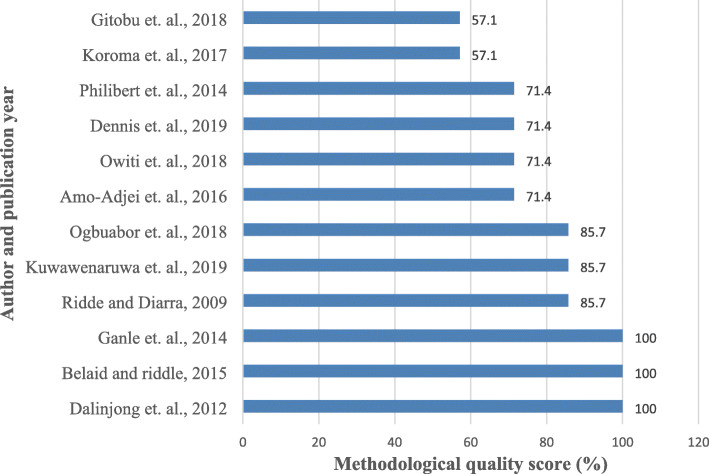
Methods: We employed the Arskey and O'Malley's framework to guide this scoping review. We searched without date limitations to 19th May 2019 for relevant published articles in PubMed, Google Scholar, Web of Science, Science Direct, and CINAHL using a combination of keywords, Boolean terms, and medical subject headings. We included primary studies that involved pregnant/post-natal mothers, free maternal care policy, quality of care, and was conduct in an SSA country. Two reviewers independently screened the articles at the abstract and full-text screening guided by inclusion and exclusion criteria. All relevant data were extracted and organized into themes and a summary of the results reported narratively. The recent version of the mixed methods appraisal tool was used to assess the methodological quality of the included studies.
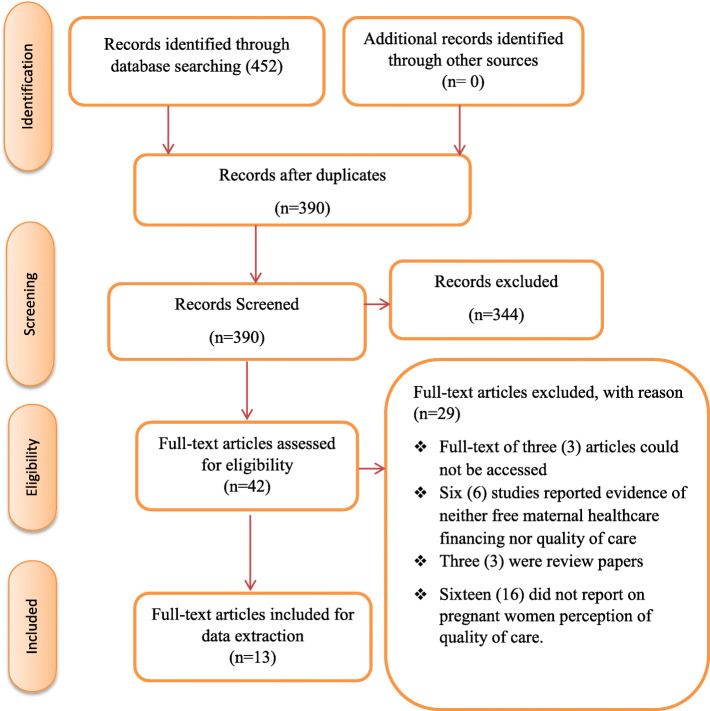
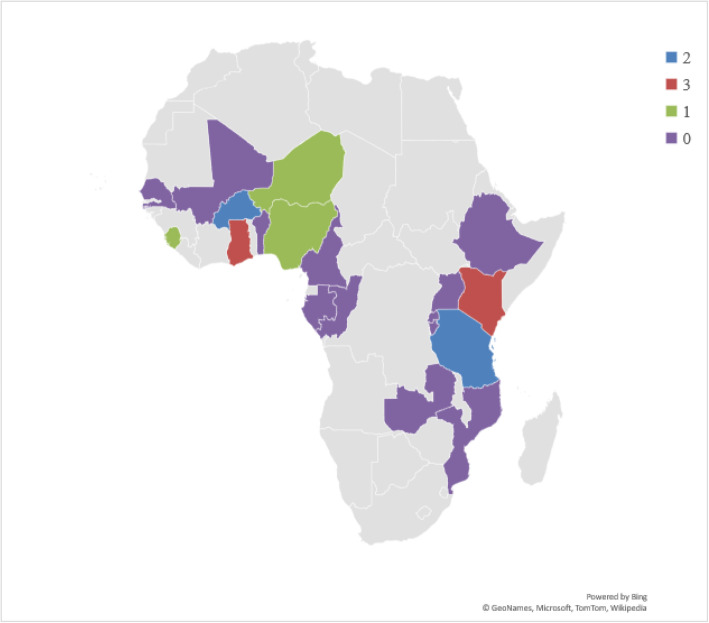
Results: Out of 390 studies, 13 were identified to have evidence of free maternal healthcare and client perceived quality of care. All the 13 studies were conducted in 7 different countries. We found three studies each from Ghana and Kenya, two each in Burkina Faso and Nigeria, and a study each from Niger, Sierra Leone, and Tanzania. Of the 13 included studies, eight reported that pregnant women perceived the quality of care under the free maternal healthcare policy to be poor. The following reasons accounted for the poor perception of service quality: long waiting time, ill-attitudes of providers, inadequate supply of essential drugs and lack of potable water, unequal distribution of skilled birth attendants, out-of-pocket payment and weak patient complaint system.
Conclusion: This study suggests few papers exist that looked at maternal perceptions of the quality of care in the free care policy in SSA. Considering the influence mothers perceptions of the quality of care can have on future health service utilisation, further studies at the household, community, and health facility levels are needed to help unearth and address all hidden quality of care challenges and improve maternal health services towards attaining the sustainable development goals on maternal and child health.
Keywords: Free healthcare policy; Free maternal healthcare; Healthcare financing; Maternal health; Perceptions; Post-natal mother; Pregnant women; Quality of care; Sub-Sahara Africa.
Conflict of interest statement
None declared.
Figures
References
Publication types
MeSH terms
LinkOut - more resources
Full Text Sources
Research Materials
