. 2020 Oct 1;10(1):16364.
doi: 10.1038/s41598-020-73347-y.

Elevated adipose tissue associated IL-2 expression in obesity correlates with metabolic inflammation and insulin resistance

Affiliations

Elevated adipose tissue associated IL-2 expression in obesity correlates with metabolic inflammation and insulin resistance

Shihab Kochumon et al. Sci Rep. .

Abstract

Adipose tissue (AT) associated cytokines are involved in the development of chronic low-grade inflammation in obese individuals. IL-2, a pleiotropic cytokine, contributes to immune alterations during inflammation. However, the interaction between AT-IL-2 and other inflammatory biomolecules in obesity remains elusive. We investigated whether AT-IL-2 expression was associated with markers of inflammation and insulin resistance in overweight/obese individuals. Subcutaneous fat tissues were collected from 56 individuals (lean/overweight/obese) for RNA extraction. IL-2 and inflammatory mediators were quantified by qRT-PCR and immunohistochemistry. CRP was measured by ELISA. AT-IL-2 expression was higher in obese compared with lean individuals (P < 0.021) and correlated with BMI. IL-2 correlated with interleukins IL-8 and IL-12A (r = 0.333-0.481; p = 0.0001-0.029); as well as with chemokines and their receptors including CCL5, CCL19, CCR2 and CCR5 (r = 0.538-0.677; p < 0.0001). Moreover, IL-2 correlated with toll-like receptors (TLR2, TLR8, TLR10), interferon regulatory factor 5 (IRF5) and cluster of differentiation CD11c (r = 0.282-0.357; p < 0.039). Notably, IL-2 was associated positively with fasting blood glucose (FBG), HbA1c, TGL and CRP (r ≥ 0.423;P ≤ 0.007). In multiple regression analysis, IL-2 is an independent predictor of IL-8, IL-12A, TLR10, TGL and HbA1c. Overall, our data demonstrate that increased expression of the AT-IL-2, in obesity, may represent a novel biomarker for progression of metabolic inflammation and insulin-resistance.


Conflict of interest statement

The authors declare no competing interests.

Figures
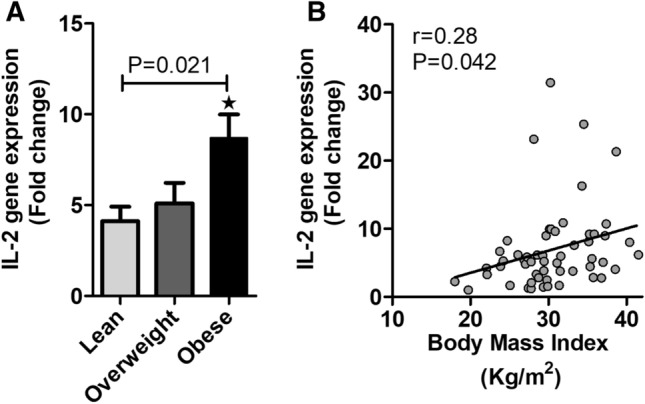
Figure 1
Figure 1
Increased adipose tissue associated IL-2 gene expression in obese individual. (A) qRT-PCR analysis for IL-2 RNA isolated from adipose tissues from lean, overweight and obese individuals. (B) In the studied population, IL-2 transcript levels, in adipose tissue, are positively associated BMI.
Figure 2
Figure 2
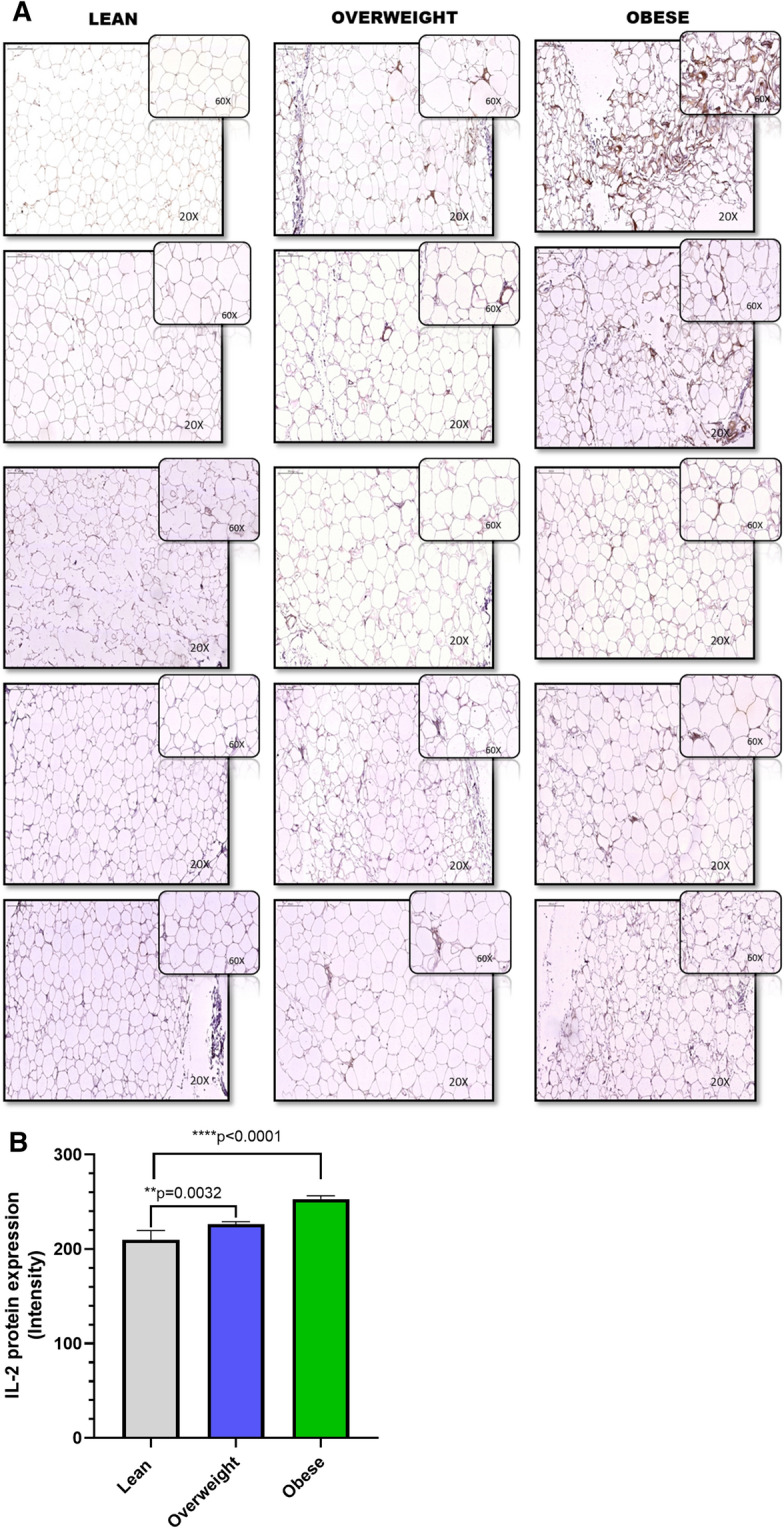
Increased adipose IL-2 protein expression in obese individuals. IL-2 protein expression was determined in five lean, 5 overweight, and 5 obese non-diabetic individuals using immunohistochemistry (IHC) as described in “Material and methods”. (A) The representative IHC images obtained from three independent determinations with similar results show increased adipose tissue IL-2 expression (× 20 or insert × 60 magnification) in overweight and obese individuals compared with lean. (B) Staining intensity was determined based on Aperio-positive pixel counts (Aperio software algorithm version 9.0) URL: https://www.3dhistech.com/products-and-software/hardware/pannoramic-digital-slide-scanners/pannoramic-scan-2/). IL-2 protein was expressed as IHC intensity in arbitrary units and presented as mean ± SEM. The asterisks ** and **** represent significance levels of P < 0.004, and P < 0.0001, respectively.
Figure 3
Figure 3
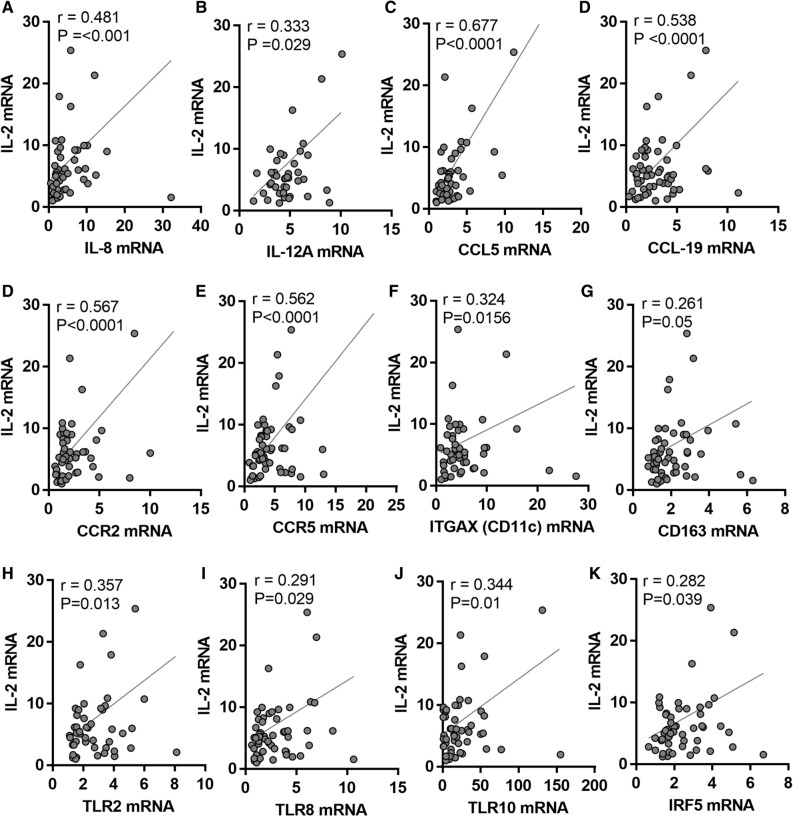
Increased adipose tissue associated IL-2 gene expression is correlated with inflammatory markers. Subcutaneous adipose tissues were obtained from lean, overweight, obese individuals. mRNA expression of IL-2, IL-12A, CCL5, CCL19, CCR2, CCR5, CD11c, CD163, TLR2, TLR8, TLR10, and IRF5 was detected by real-time RT-PCR and represented as fold change over controls. (A–K) In the studied population, IL-2 transcript levels, in adipose tissue, are positively correlated with inflammatory markers.
Figure 4
Figure 4
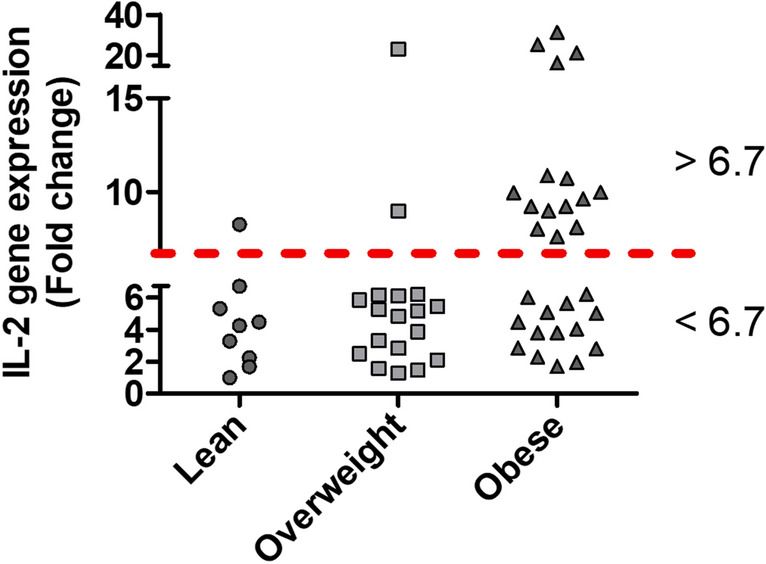
AT associated IL-2 gene expression in obese individuals exist in two distinct expression clusters. qRT-PCR analysis was performed for IL-2 mRNA isolated from adipose tissues from lean, overweight and obese individuals. IL-2 gene expression in obese individuals displayed two distinct clusters high (> 6.7-fold change) and low (< 6.7-fold change).
Figure 5
Figure 5
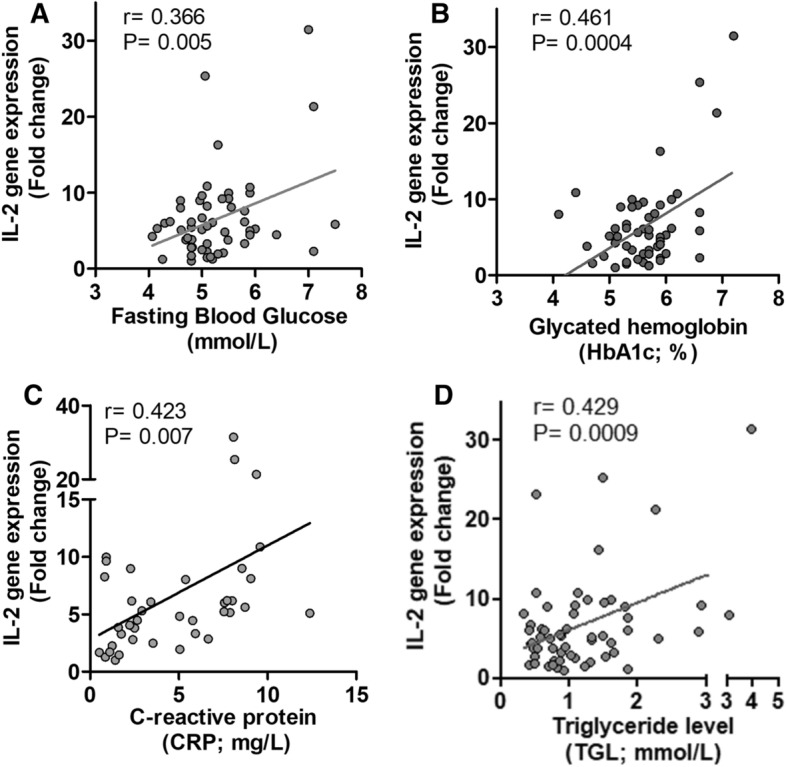
Correlation of IL-2 gene expression with clinical parameters. (A–D) IL-2 RNA expression levels, in AT, exhibited a substantial positive correlation with the plasma fasting blood glucose (FBG), glycated hemoglobin (HbA1c), C-reactive protein (CRP), and triglyceride levels (TGL).
Figure 6
Figure 6
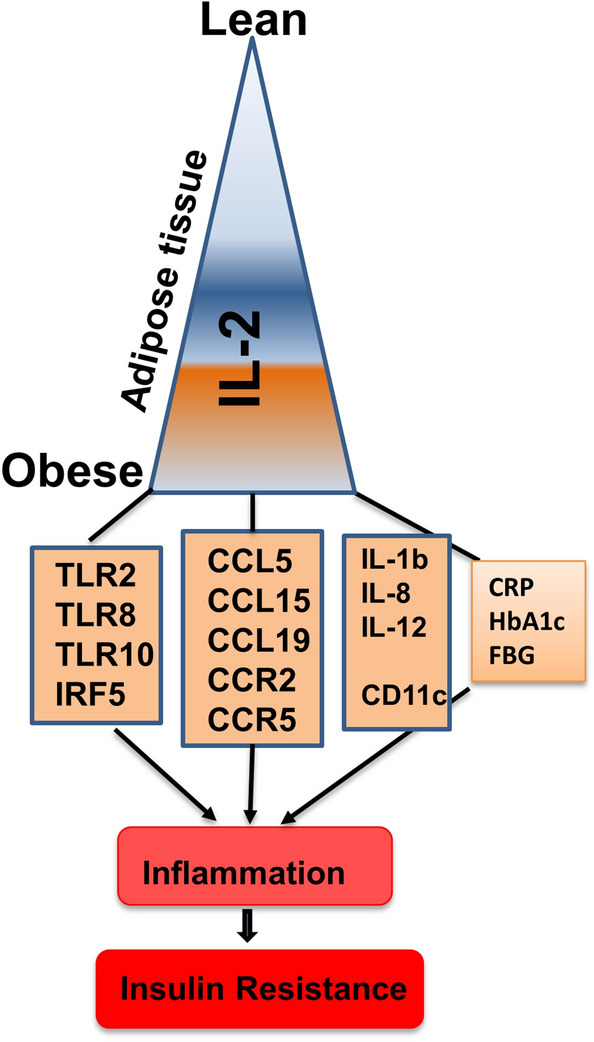
Increased adipose IL-2 expression corresponds with metabolic inflammation. The illustration displays a proposed model of metabolic inflammation, in support of the data presented, wherein the increase in obesity parallels with IL-2 adipose upregulation (positive relations with BMI and insulin resistance signatures; HbA1c and FBG). These alterations in the IL-2 expression are in agreement with various markers of adipose inflammation including inflammatory cytokines/chemokines, TLRs and TLR-associated signaling molecule IRF5, inflammatory macrophage marker (CD11c), as well as systemic immune-metabolic marker i.e., a positive association with circulatory CRP levels. Taken together, these changes support the IL-2 upregulation may be a marker for adipose tissue inflammation in obesity.

References

    1. Collaborators GBDO, et al. Health effects of overweight and obesity in 195 countries over 25 years. N. Engl. J. Med. 2017;377:13–27. doi: 10.1056/NEJMoa1614362. - DOI - PMC - PubMed
    1. Gregg EW, Shaw JE. Global health effects of overweight and obesity. N. Engl. J. Med. 2017;377:80–81. doi: 10.1056/NEJMe1706095. - DOI - PubMed
    1. Lee, L. & Sanders, R. A. Metabolic syndrome. Pediatr. Rev.33, 459–466; quiz 467–458, https://doi.org/10.1542/pir.33-10-459 (2012). - PMC - PubMed
    1. Echahidi N, et al. Obesity and metabolic syndrome are independent risk factors for atrial fibrillation after coronary artery bypass graft surgery. Circulation. 2007;116:I213–219. doi: 10.1161/CIRCULATIONAHA.106.681304. - DOI - PubMed
    1. Herrera BM, Lindgren CM. The genetics of obesity. Curr. Diab. Rep. 2010;10:498–505. doi: 10.1007/s11892-010-0153-z. - DOI - PMC - PubMed

Publication types