


Aldh2 gene reduces oxidative stress in the bladder by regulating the NF-κB pathway in a mouse model of ketamine-induced cystitis
- PMID: 33005240
- PMCID: PMC7523278
- DOI: 10.3892/etm.2020.9239
Aldh2 gene reduces oxidative stress in the bladder by regulating the NF-κB pathway in a mouse model of ketamine-induced cystitis
Abstract
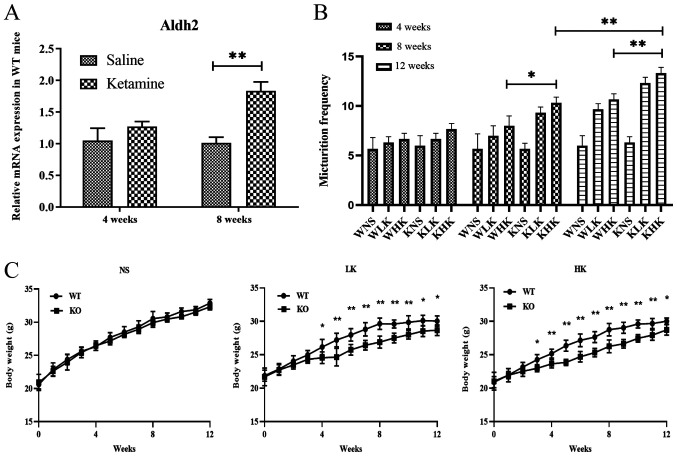
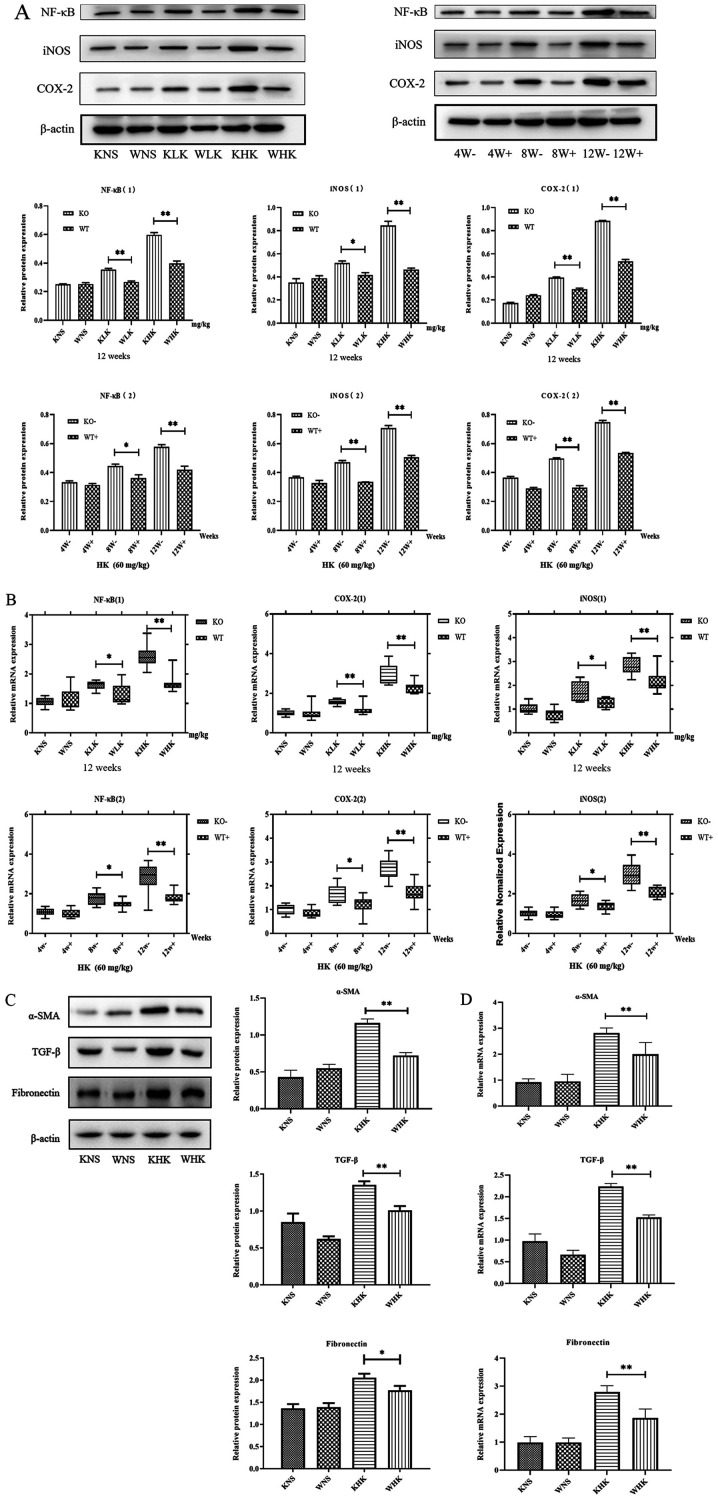
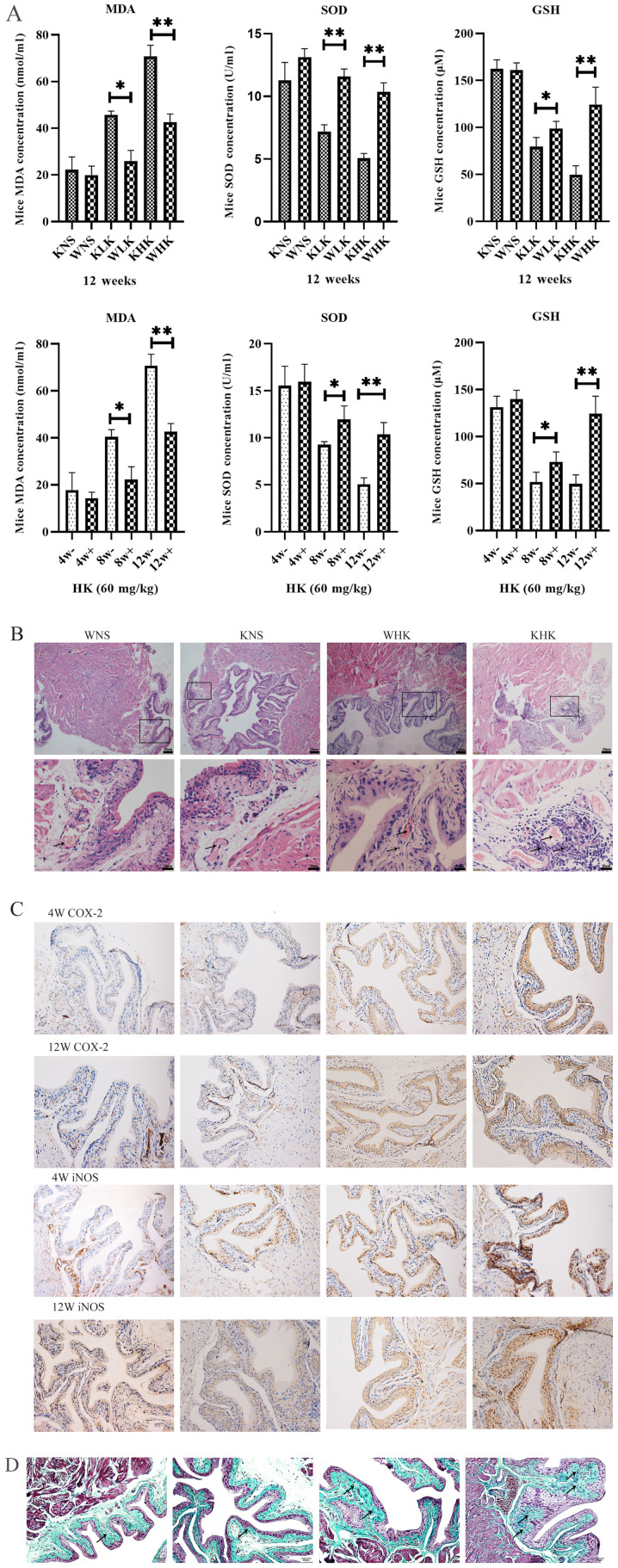
Aldehyde dehydrogenase 2 (aldh2) serves an important role in the development of organ injury. Therefore, the present study investigated the effects of aldh2 on the oxidative stress response in a mouse model of ketamine-induced cystitis (KIC). A total of 60 8-week-old male Institute of Cancer Research wild-type (WT) mice and 45 aldh2 knock-out (KO) mice were randomized to receive low-dose ketamine (30 mg/kg), high-dose ketamine (60 mg/kg) or normal saline (controls). At 4, 8 and 12 weeks post-injection, bladder tissues were harvested and used to investigate the protective mechanisms of aldh2 on bladder function. The results demonstrated that aldh2 KO mice exhibited significant weight loss following chronic ketamine injection compared with that in WT mice. Furthermore, ketamine treatment increased the urination rate (P<0.05), pathological score (P<0.05), levels of the oxidative stress product malondialdehyde (P<0.05) in addition to reducing the expression of the anti-oxidative stress enzyme superoxide dismutase (P<0.05) and glutathione-SH (P<0.05). Oxidative stress in aldh2 KO mice was also found to significantly enhance the expression of proteins associated with the NF-κB signaling pathway, which promoted the expression of inducible nitric oxide synthase (P<0.05) and cyclooxygenase-2 (P<0.05) further. Finally, aldh2 KO mice demonstrated higher severity of fibrosis in the submucosal and muscular layers of the bladder. In conclusion, the present study suggests that aldh2 serves a protective role in preventing inflammation and fibrosis in KIC.
Keywords: aldehyde dehydrogenase 2; cyclooxygenase-2; inducible nitric oxide synthase; ketamine-induced cystitis; oxidative stress.
Copyright: © Xi et al.
Figures
References
-
- Parkin MC, Turfus SC, Smith NW, Halket JM, Braithwaite RA, Elliott SP, Osselton MD, Cowan DA, Kicman AT. Detection of ketamine and its metabolites in urine by ultra high pressure liquid chromatography-tandem mass spectrometry. J Chromatogr B Analyt Technol Biomed Life Sci. 2008;876:137–142. doi: 10.1016/j.jchromb.2008.09.036. - DOI - PubMed
-
- Liu KM, Chuang SM, Long CY, Lee YL, Wang CC, Lu MC, Lin RJ, Lu JH, Jang MY, Wu WJ, et al. Ketamine-induced ulcerative cystitis and bladder apoptosis involve oxidative stress mediated by mitochondria and the endoplasmic reticulum. Am J Physiol Renal Physiol. 2015;309:F318–F331. doi: 10.1152/ajprenal.00607.2014. - DOI - PubMed
LinkOut - more resources
Full Text Sources
Research Materials
Miscellaneous