


doi: 10.1016/j.parepi.2020.e00180.
eCollection 2020 Nov.
Low Trypanosoma cruzi transmission risk to humans in the Trans-Pecos region of Texas
Affiliations
- PMID: 33005772
- PMCID: PMC7511731
- DOI: 10.1016/j.parepi.2020.e00180
Item in Clipboard
Low Trypanosoma cruzi transmission risk to humans in the Trans-Pecos region of Texas
Parasite Epidemiol Control.
.
Abstract
In the Trans-Pecos region of Texas, reports of domestic triatomine bites were common (67%), with 36% of residentially collected triatomines positive for Trypanosoma cruzi. Despite the transmission potential, no human infections were detected. Collected Triatoma rubida species were themselves frequently parasitized with mites.
Keywords: Chagas disease; Ectoparasites; Human infection; Mites; Pimeliaphilus; Texas; Triatoma gerstaeckeri; Triatoma protracta; Triatoma rubida; Trypanosoma cruzi.
© 2020 The Authors.
Figures
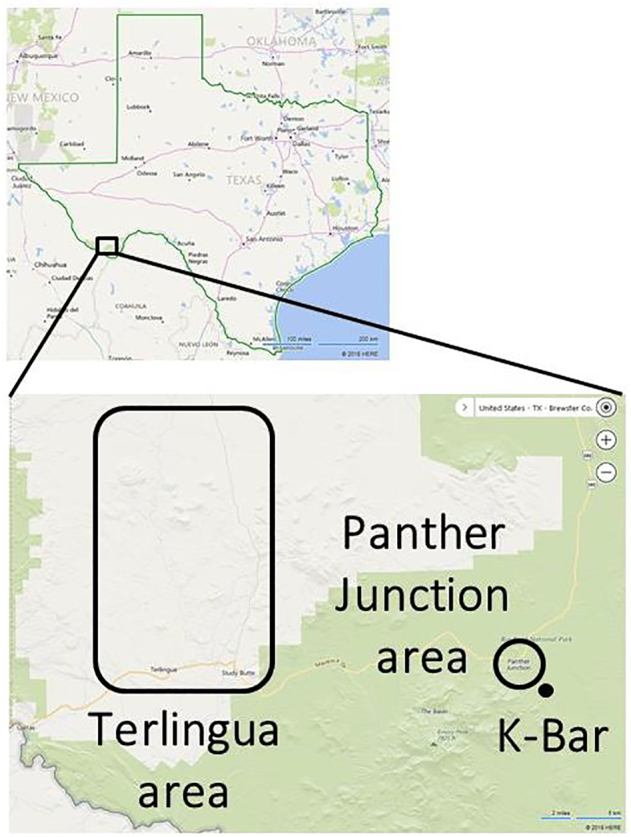
Geographic locations of human resident surveillance and triatomine collections.
References
-
- Anderson R.G. Ecological observations on three species of Pimeliaphilus parasites of Triatominae in the United States (Acarina: Pterygosomidae)(Hemiptera: Reduviidae) J. Med. Entomol. 1968;5(4):459–464. - PubMed
-
- Behrens-Bradley N., Smith S., Beatty N.L., Love M., Ahmad N., Dorn P.L. Kissing Bugs Harboring Trypanosoma cruzi, Frequently Bite Residents of the US Southwest But Do Not Cause Chagas Disease. Am J Med. 2019;133:108–114. Jul 8. - PubMed
-
- Curtis-Robles R., Meyers A.C., Auckland L.D., Zecca I.B., Skiles R., Hamer S.A. Parasitic interactions among Trypanosoma cruzi, triatomine vectors, domestic animals, and wildlife in Big Bend National Park along the Texas-Mexico border. Acta Trop. 2018 Dec;188:225–233. - PubMed
Grants and funding
LinkOut - more resources
Full Text Sources
