


Acetylcysteine for the Treatment of Suspected Remdesivir-Associated Acute Liver Failure in COVID-19: A Case Series
- PMID: 33006138
- PMCID: PMC7537093
- DOI: 10.1002/phar.2464
Acetylcysteine for the Treatment of Suspected Remdesivir-Associated Acute Liver Failure in COVID-19: A Case Series
Abstract
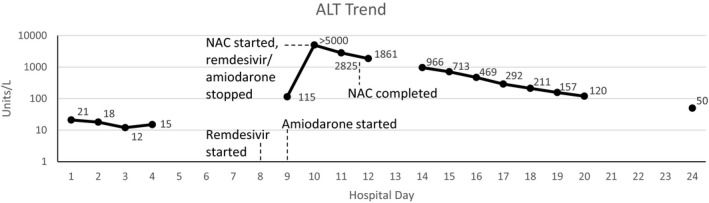
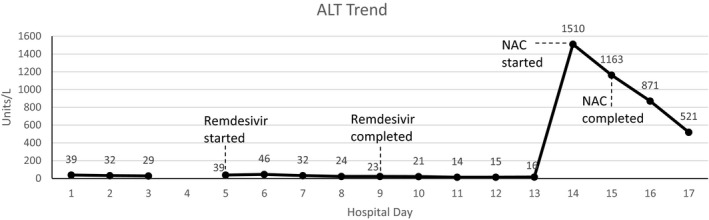
Remdesivir is a direct-acting nucleoside RNA polymerase inhibitor with activity against the novel severe acute respiratory syndrome-coronavirus 2 (SARS-CoV-2) virus used in the treatment of coronavirus disease 2019 (COVID-19) pneumonia. Here, we present two cases of suspected remdesivir-associated acute liver failure (ALF) in which the liver failure improved after continuous infusion acetylcysteine and withdrawal of remdesivir. Both patients had significant increases in transaminases between day 3 and day 10 of remdesivir therapy accompanied by coagulopathy and encephalopathy. After initiation of continuous infusion acetylcysteine, the transaminases of both patients rapidly improved. Ultimately, one patient fully recovered while the other died of suspected septic shock. Due to its novel nature and only recent widespread use, there are very little data on the risk of ALF from remdesivir. Additionally, the data for the use of acetylcysteine to manage non-acetaminophen-induced ALF are limited. It is important to consider the risk of remdesivir-associated ALF when weighing the risk versus benefits of use, and acetylcysteine may have a role in its management.
Keywords: COVID-19; Remdesivir; SARS-CoV-2; acetylcysteine; acute liver failure; adverse drug reactions; coronavirus; toxicology.
© 2020 Pharmacotherapy Publications, Inc.
Figures
References
-
- Wu Z, McGoogan JM. Characteristics of and important lessons from the coronavirus disease 2019 (COVID‐19) outbreak in China. JAMA 2020;323(13):1239. - PubMed
-
- Centers for Disease Control and Prevention . Cases in the U.S. Updated August 28th, 2020. Available from https://www.cdc.gov/coronavirus/2019‐ncov/cases‐updates/cases‐in‐us.html
-
- Bhimraj A, Morgan RL, Shumaker AH, et al. Infectious Diseases Society of America Guidelines on the Treatment and Management of Patients with COVID‐19. Updated June 25 2020. Available from https://www.idsociety.org/COVID19guidelines - PMC - PubMed
-
- COVID‐19 Treatment Guidelines Panel . Coronavirus disease 2019 (COVID‐19) treatment guidelines. National Institutes of Health. Available from https://www.covid19treatmentguidelines.nih.gov/. Accessed September 11, 2020. - PubMed
Publication types
MeSH terms
Substances
LinkOut - more resources
Full Text Sources
Miscellaneous
