


Capturing respiratory syncytial virus season in Belgium using the influenza severe acute respiratory infection surveillance network, season 2018/19
- PMID: 33006303
- PMCID: PMC7531071
- DOI: 10.2807/1560-7917.ES.2020.25.39.1900627
Capturing respiratory syncytial virus season in Belgium using the influenza severe acute respiratory infection surveillance network, season 2018/19
Abstract
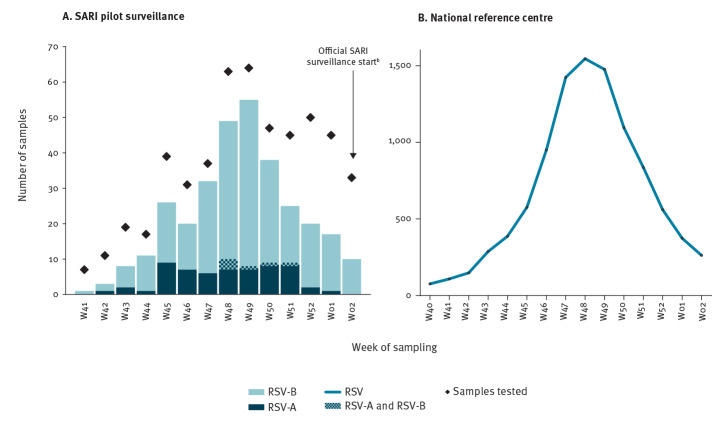
BackgroundRespiratory syncytial virus (RSV) is a common cause of severe respiratory illness in young children (< 5 years old) and older adults (≥ 65 years old) leading the World Health Organization (WHO) to recommend the implementation of a dedicated surveillance in countries.AimWe tested the capacity of the severe acute respiratory infection (SARI) hospital network to contribute to RSV surveillance in Belgium.MethodsDuring the 2018/19 influenza season, we started the SARI surveillance for influenza in Belgium in week 40, earlier than in the past, to follow RSV activity, which usually precedes influenza virus circulation. While the WHO SARI case definition for influenza normally used by the SARI hospital network was employed, flexibility over the fever criterion was allowed, so patients without fever but meeting the other case definition criteria could be included in the surveillance.ResultsBetween weeks 40 2018 and 2 2019, we received 508 samples from SARI patients. We found an overall RSV detection rate of 62.4% (317/508), with rates varying depending on the age group: 77.6% in children aged < 5 years (253/326) and 34.4% in adults aged ≥ 65 years (44/128). Over 90% of the RSV-positive samples also positive for another tested respiratory virus (80/85) were from children aged < 5 years. Differences were also noted between age groups for symptoms, comorbidities and complications.ConclusionWith only marginal modifications in the case definition and the period of surveillance, the Belgian SARI network would be able to substantially contribute to RSV surveillance and burden evaluation in children and older adults, the two groups of particular interest for WHO.
Keywords: influenza virus; respiratory syncytial virus; severe acute respiratory infection; surveillance.
Conflict of interest statement
Figures



References
-
- Shi T, McAllister DA, O’Brien KL, Simoes EAF, Madhi SA, Gessner BD, et al. RSV Global Epidemiology Network Global, regional, and national disease burden estimates of acute lower respiratory infections due to respiratory syncytial virus in young children in 2015: a systematic review and modelling study. Lancet. 2017;390(10098):946-58. 10.1016/S0140-6736(17)30938-8 - DOI - PMC - PubMed
-
- Shi T, Denouel A, Tietjen AK, Campbell I, Moran E, Li X, et al. RESCEU Investigators Global Disease Burden Estimates of Respiratory Syncytial Virus-Associated Acute Respiratory Infection in Older Adults in 2015: A Systematic Review and Meta-Analysis. J Infect Dis. 2019;352(17):jiz059. 10.1093/infdis/jiz059 - DOI - PubMed
Publication types
MeSH terms
LinkOut - more resources
Full Text Sources
Medical
Miscellaneous