A comparison of peer and faculty narrative feedback on medical student oral research presentations
- PMID: 33006959
- PMCID: PMC7882133
- DOI: 10.5116/ijme.5f64.690b
A comparison of peer and faculty narrative feedback on medical student oral research presentations
Abstract
Objectives: The purpose of this project was to evaluate and improve the oral presentation assessment component of a required research training curriculum at an undergraduate medical school by analyzing the quantity, quality, and variety of peer and faculty feedback on medical student oral research presentations.
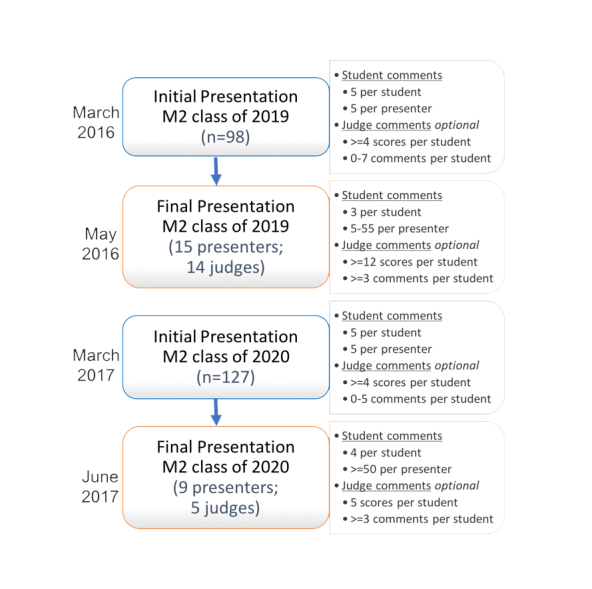
Methods: We conducted a program evaluation of oral presentation assessments during the 2016 and 2017 academic years. Second-year medical students (n=225) provided oral presentations of their research and received narrative feedback from peers and faculty. All comments were inductively coded for themes and Chi-square testing compared faculty and peer feedback differences in quantity, quality, and variety, as well as changes in feedback between the initial and final presentations. Comparative analysis of student PowerPoint presentation files before and after receiving feedback was also conducted.
Results: Over two years, 2,617 peer and 498 faculty comments were collected and categorized into ten themes, with the top three being: presentation skills, visual presentation, and content. Both peers and judges favored providing positive over improvement comments, with peers tending to give richer feedback, but judges more diverse feedback. Nearly all presenters made some change from the initial to final presentations based on feedback.
Conclusions: Data from this analysis was used to restructure the oral presentation requirement for the students. Both peer and faculty formative feedback can contribute to developing medical student competence in providing feedback and delivering oral presentations. Future studies could assess student perceptions of this assessment to determine its value in developing communication skills.
Keywords: formative feedback; medical students; oral presentations; research training curricula; undergraduate medical education.
Figures
References
-
- Accreditation Council for Education in Nutrition and Dietetics. Accreditation standards for nutrition and dietetics coordinated programs, 2017. [Cited 21 Jan 2020]; Available from: https://www.eatrightpro.org/acend/accreditation-standards-fees-and-polic....
-
- Accreditation Council for Occupational Therapy Education. Accreditation Council for Occupational Therapy Education standards and interpretive guide, 2018. [Cited 21 Jan 2020]; Available from: https://acoteonline.org/accreditation-explained/standards/. - PubMed
-
- American Association of Colleges of Nursing. The essentials of baccalaureate education for professional nursing practice, 2008. [Cited 21 Jan 2020]; Available from: https://www.aacnnursing.org/Education-Resources/AACN-Essentials. - PubMed
-
- Commission on Accreditation in Physical Therapy Education. Standards and required elements for accreditation of physical therapist education programs, 2016. [Cited 21 Jan 2020]; Available from: http://www.capteonline.org/accreditationhandbook/.
-
- Liaison Committee on Medical Education. Functions and structure of a medical school: standards for accreditation of medical education programs leading to the MD degree, 2020. [Cited 21 Jan 2020]; Available from: http://lcme.org/publications/.
MeSH terms
LinkOut - more resources
Full Text Sources