


Ground-dwelling invertebrate diversity in domestic gardens along a rural-urban gradient: Landscape characteristics are more important than garden characteristics
- PMID: 33007013
- PMCID: PMC7531831
- DOI: 10.1371/journal.pone.0240061
Ground-dwelling invertebrate diversity in domestic gardens along a rural-urban gradient: Landscape characteristics are more important than garden characteristics
Abstract
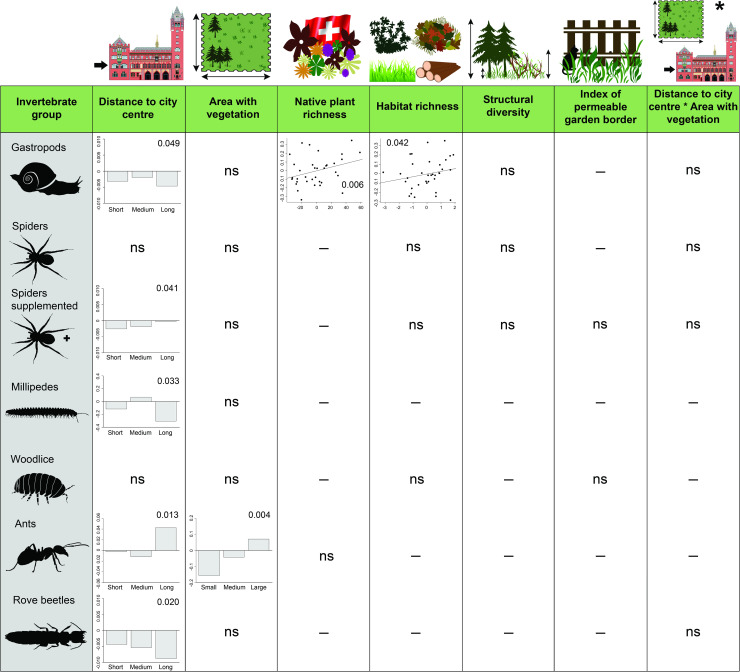
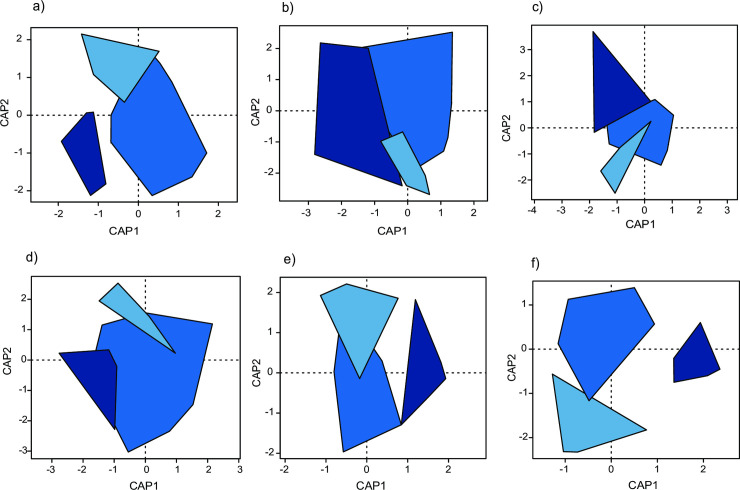
Urbanisation is increasing worldwide and is regarded a major driver of environmental change altering local species assemblages. Private domestic gardens contribute a significant share of total green area in cities, but their biodiversity has received relatively little attention. Previous studies mainly considered plants, flying invertebrates such as bees and butterflies, and birds. By using a multi-taxa approach focused on less mobile, ground-dwelling invertebrates, we examined the influence of local garden characteristics and landscape characteristics on species richness and abundance of gastropods, spiders, millipedes, woodlice, ants, ground beetles and rove beetles. We assume that most of the species of these groups are able to complete their entire life cycle within a single garden. We conducted field surveys in thirty-five domestic gardens along a rural-urban gradient in Basel, Switzerland. Considered together, the gardens examined harboured an impressive species richness, with a mean share of species of the corresponding groups known for Switzerland of 13.9%, ranging from 4.7% in ground beetles to 23.3% in woodlice. The overall high biodiversity is a result of complementary contributions of gardens harbouring distinct species assemblages. Indeed, at the garden level, species richness of different taxonomical groups were typically not inter-correlated. The exception was ant species richness, which was correlated with those of gastropods and spiders. Generalised linear models revealed that distance to the city centre is an important driver of species richness, abundance and composition of several groups, resulting in an altered species composition in gardens in the centre of the city. Local garden characteristics were important drivers of gastropod and ant species richness, and the abundance of spiders, millipedes and rove beetles. Our study shows that domestic gardens make a valuable contribution to regional biodiversity. Thus, domestic urban gardens constitute an important part of green infrastructure, which should be considered by urban planners.
Conflict of interest statement
The authors have declared that no competing interests exist.
Figures
References
-
- United Nations General Assembly. The New Urban Agenda. New York: United Nations. 2016. Available from: habitat3.org/the-new-urban-agenda/
-
- Pauchard A, Barbosa O. Regional assessment of Latin America: rapid urban development and social economic inequity threaten biodiversity hotspots In: Elmqvist T. et al., editors. Urbanization, biodiversity and ecosystem services: challenges and opportunities. Dordrecht Heidelberg New York London: Springer; 2013. pp 589–608.
-
- Piano E, Souffreau C, Merckx T, Baardsen LF, Backeljau T, Bonte D et al. Urbanization drives cross-taxon declines in abundance and diversity at multiple spatial scales. Global Change Biol. 2020; 26:1196–1211. - PubMed
-
- Tzoulas K, Korpela K, Venn S, Yli-Pelkonen V, Kazimiercak A, Nielelä J et al. Promoting ecosystem and human health in urban areas using green infrastructure: a literature review. Landsc Urban Plan. 2007; 81:167–178.
-
- van den Berg AE, Custers MHG. Gardening promotes neuroendocrine and affective restoration from stress. J Health Psych. 2011; 16:3–11. - PubMed
Publication types
MeSH terms
LinkOut - more resources
Full Text Sources
Medical
