


Natural product derived phytochemicals in managing acute lung injury by multiple mechanisms
- PMID: 33007416
- PMCID: PMC7522693
- DOI: 10.1016/j.phrs.2020.105224
Natural product derived phytochemicals in managing acute lung injury by multiple mechanisms
Abstract
Acute lung injury (ALI) and its more severe form, acute respiratory distress syndrome (ARDS) as common life-threatening lung diseases with high mortality rates are mostly associated with acute and severe inflammation in lungs. With increasing in-depth studies of ALI/ARDS, significant breakthroughs have been made, however, there are still no effective pharmacological therapies for treatment of ALI/ARDS. Especially, the novel coronavirus pneumonia (COVID-19) is ravaging the globe, and causes severe respiratory distress syndrome. Therefore, developing new drugs for therapy of ALI/ARDS is in great demand, which might also be helpful for treatment of COVID-19. Natural compounds have always inspired drug development, and numerous natural products have shown potential therapeutic effects on ALI/ARDS. Therefore, this review focuses on the potential therapeutic effects of natural compounds on ALI and the underlying mechanisms. Overall, the review discusses 159 compounds and summarizes more than 400 references to present the protective effects of natural compounds against ALI and the underlying mechanism.
Keywords: Acute lung injury; Acute respiratory distress syndrome; Baicalin (PubChem CID: 64982); Chemical structures; Curcumin (PubChem CID: 969516); Emodin (PubChem CID: 3220); Hydroxysafflor yellow A (PubChem CID: 6443665); Kaempferol (PubChem CID: 5280863); Luteolin (PubChem CID: 5280445); Mechanisms; Natural compounds; Osthole (PubChem CID: 10228); Quercetin (PubChem CID: 5280343); Resveratrol (PubChem CID: 445154); Tanshinone IIA (PubChem CID: 164676).
Copyright © 2020 Elsevier Ltd. All rights reserved.
Conflict of interest statement
The authors report no declarations of interest.
Figures
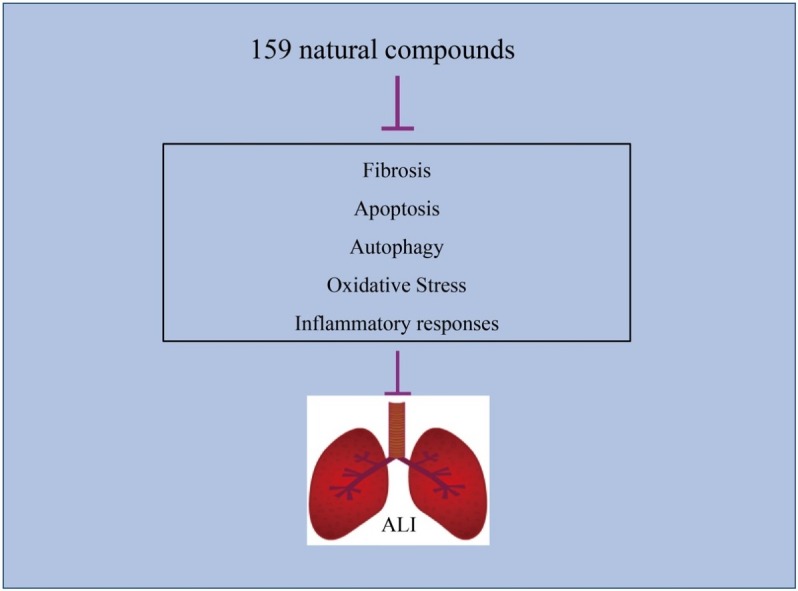
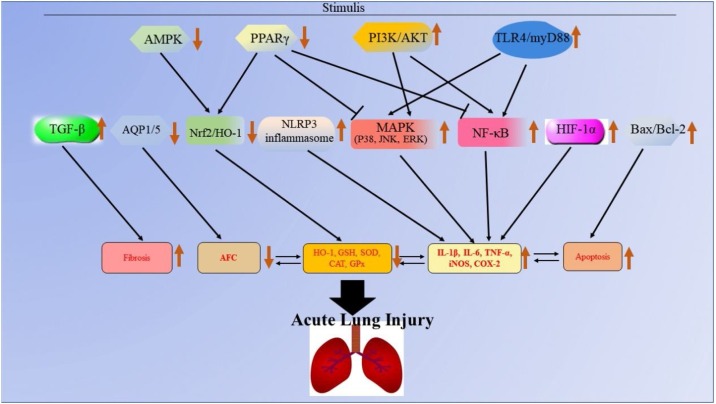
 ” refers to the role of inhibition, the symbol “
 ” refers to down-regulation, and the symbol “
 ” refers to up-regulation.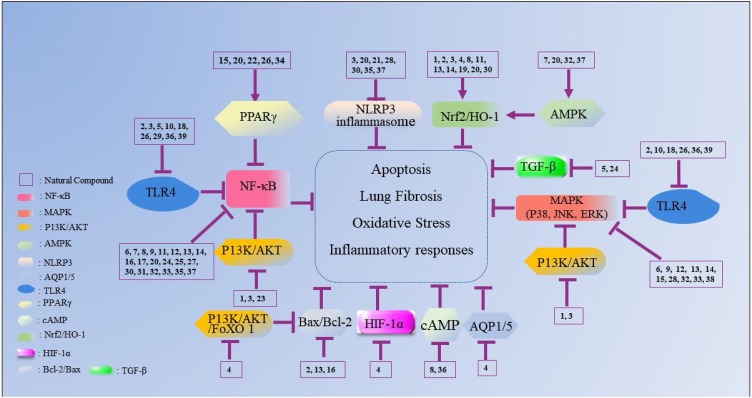
 ” refers to the role of inhibition.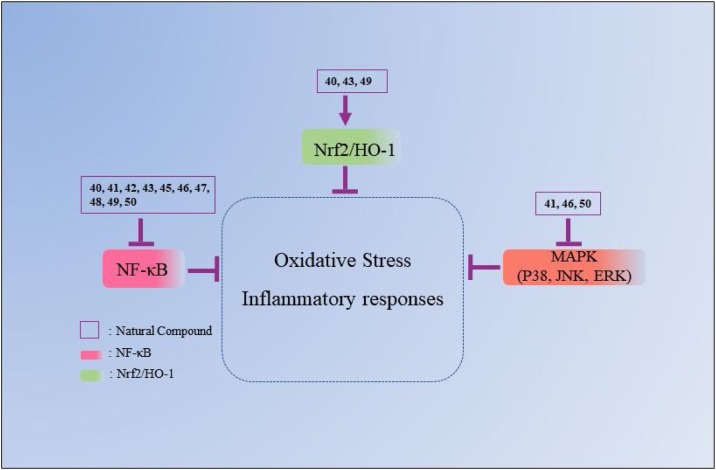
 ” refers to the role of inhibition.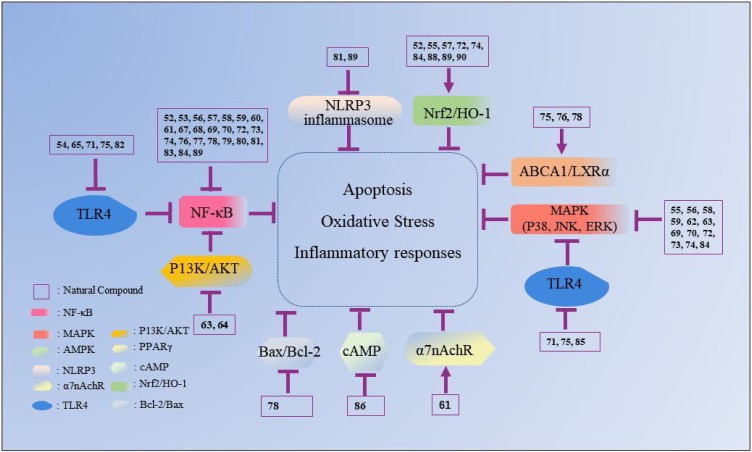
 ” refers to the role of inhibition.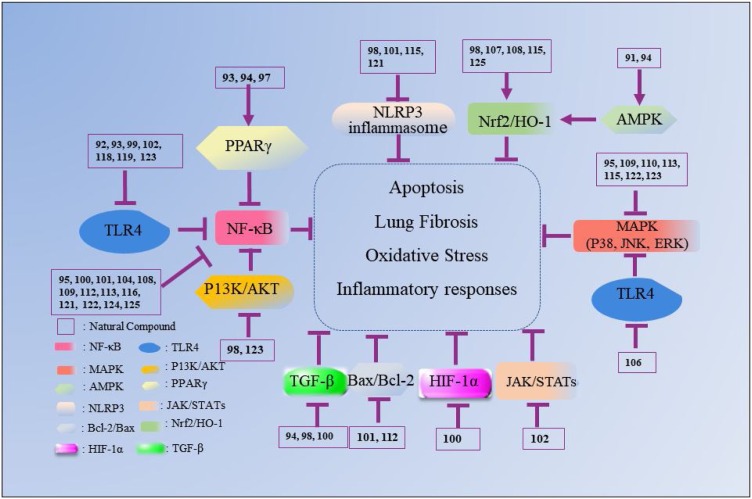
 ” refers to the role of inhibition.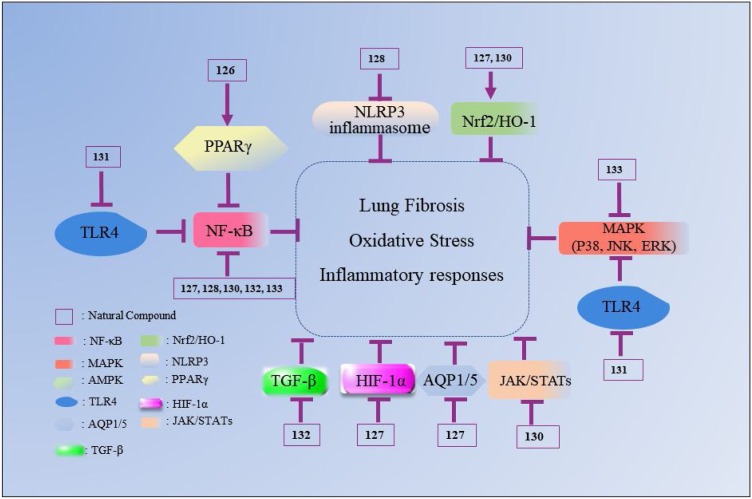
 ” refers to the role of inhibition.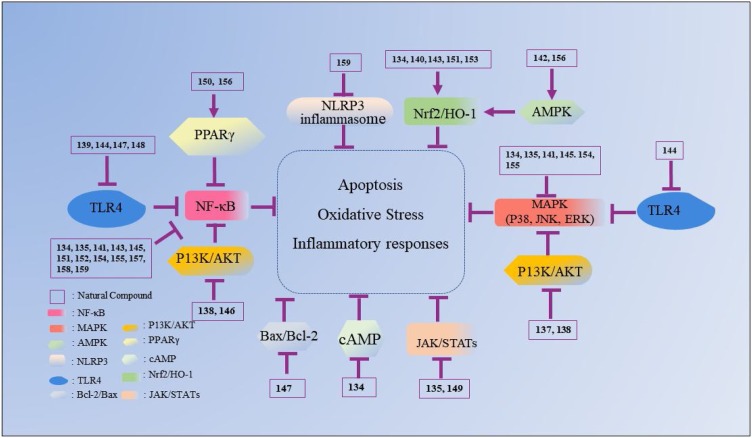
 ” refers to the role of inhibition.
References
-
- Shaw T.D., McAuley D.F., O’Kane C.M. Emerging drugs for treating the acute respiratory distress syndrome. Expert Opin. Emerg. Drugs. 2019;24(1):29–41. - PubMed
-
- Suresh R., Kupfer Y., Tessler S. Acute respiratory distress syndrome. N. Engl. J. Med. 2000;343(9):660–661. - PubMed
-
- Lu Y., Song Z., Zhou X., Huang S., Zhu D., Yang C.B.X., Sun B., Spragg R., Shanghai A.S.G. A 12-month clinical survey of incidence and outcome of acute respiratory distress syndrome in Shanghai intensive care units. Intensive Care Med. 2004;30(12):2197–2203. - PubMed
-
- Prasertsan P., Anuntaseree W., Ruangnapa K., Saelim K., Geater A. Severity and mortality predictors of pediatric acute respiratory distress syndrome according to the pediatric acute lung injury consensus conference definition. Pediatr. Crit. Care Med. 2019;20(10):e464–e472. - PubMed
Publication types
MeSH terms
Substances
LinkOut - more resources
Full Text Sources
Other Literature Sources
