


Neurocognitive and functional heterogeneity in depressed youth
- PMID: 33007777
- PMCID: PMC8027806
- DOI: 10.1038/s41386-020-00871-w
Neurocognitive and functional heterogeneity in depressed youth
Abstract
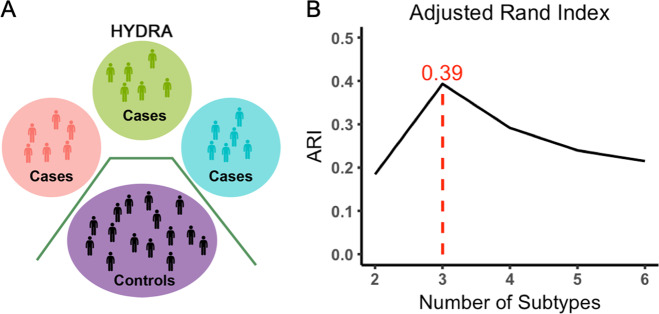
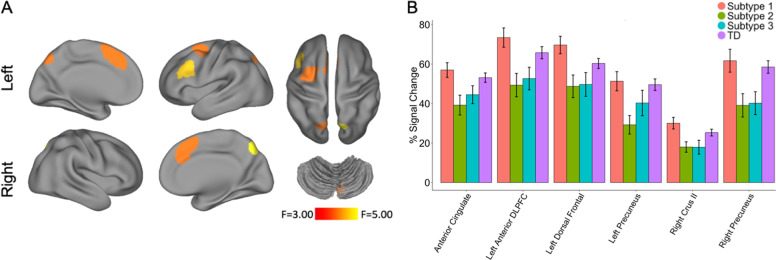
Depression is a common psychiatric illness that often begins in youth, and is sometimes associated with cognitive deficits. However, there is significant variability in cognitive dysfunction, likely reflecting biological heterogeneity. We sought to identify neurocognitive subtypes and their neurofunctional signatures in a large cross-sectional sample of depressed youth. Participants were drawn from the Philadelphia Neurodevelopmental Cohort, including 712 youth with a lifetime history of a major depressive episode and 712 typically developing (TD) youth matched on age and sex. A subset (MDD n = 368, TD n = 200) also completed neuroimaging. Cognition was assessed with the Penn Computerized Neurocognitive Battery. A recently developed semi-supervised machine learning algorithm was used to delineate neurocognitive subtypes. Subtypes were evaluated for differences in both clinical psychopathology and brain activation during an n-back working memory fMRI task. We identified three neurocognitive subtypes in the depressed group. Subtype 1 was high-performing (high accuracy, moderate speed), Subtype 2 was cognitively impaired (low accuracy, slow speed), and Subtype 3 was impulsive (low accuracy, fast speed). While subtypes did not differ in clinical psychopathology, they diverged in their activation profiles in regions critical for executive function, which mirrored differences in cognition. Taken together, these data suggest disparate mechanisms of cognitive vulnerability and resilience in depressed youth, which may inform the identification of biomarkers for prognosis and treatment response.
Figures

References
-
- GBD 2016 Disease and Injury Incidence and Prevalence Collaborators. Global, regional, and national incidence, prevalence, and years lived with disability for 328 diseases and injuries for 195 countries, 1990–2016: a systematic analysis for the Global Burden of Disease Study 2016. Lancet Lond Engl. 2017;390:1211–59. - PMC - PubMed
-
- Friedrich MJ. Depression is the leading cause of disability around the world. JAMA. 2017;317:1517–1517. - PubMed
-
- Sinyor M, Schaffer A, Levitt A. The sequenced treatment alternatives to relieve depression (STAR*D) trial: a review. Can J Psychiatry Rev Can Psychiatr. 2010;55:126–35. - PubMed
-
- McLachlan G. Treatment resistant depression: what are the options? BMJ. 2018;363:k5354. https://www.bmj.com/content/363/bmj.k5354. - PubMed
-
- Kessler RC, Berglund P, Demler O, Jin R, Merikangas KR, Walters EE. Lifetime prevalence and age-of-onset distributions of DSM-IV disorders in the National Comorbidity Survey Replication. Arch Gen Psychiatry. 2005;62:593–602. - PubMed
Publication types
MeSH terms
Grants and funding
- R01 NS099348/NS/NINDS NIH HHS/United States
- R01 MH107235/MH/NIMH NIH HHS/United States
- R01 MH113550/MH/NIMH NIH HHS/United States
- R00 MH117274/MH/NIMH NIH HHS/United States
- K12 HD085848/HD/NICHD NIH HHS/United States
- R01 MH119185/MH/NIMH NIH HHS/United States
- R01 MH107703/MH/NIMH NIH HHS/United States
- T32 MH019112/MH/NIMH NIH HHS/United States
- R01 MH112847/MH/NIMH NIH HHS/United States
- R01 MH120482/MH/NIMH NIH HHS/United States
- K99 MH117274/MH/NIMH NIH HHS/United States
- R01 MH120174/MH/NIMH NIH HHS/United States
- S10 OD023495/OD/NIH HHS/United States
LinkOut - more resources
Full Text Sources
