


Customized Massive Parallel Sequencing Panel for Diagnosis of Pulmonary Arterial Hypertension
- PMID: 33007923
- PMCID: PMC7650688
- DOI: 10.3390/genes11101158
Customized Massive Parallel Sequencing Panel for Diagnosis of Pulmonary Arterial Hypertension
Abstract
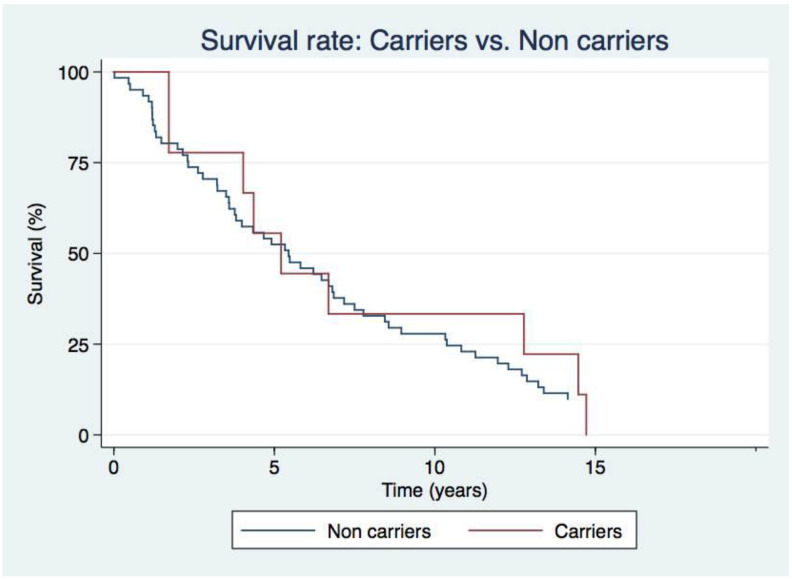
Pulmonary arterial hypertension is a very infrequent disease, with a variable etiology and clinical expressivity, making sometimes the clinical diagnosis a challenge. Current classification based on clinical features does not reflect the underlying molecular profiling of these groups. The advance in massive parallel sequencing in PAH has allowed for the describing of several new causative and susceptibility genes related to PAH, improving overall patient diagnosis. In order to address the molecular diagnosis of patients with PAH we designed, validated, and routinely applied a custom panel including 21 genes. Three hundred patients from the National Spanish PAH Registry (REHAP) were included in the analysis. A custom script was developed to annotate and filter the variants. Variant classification was performed according to the ACMG guidelines. Pathogenic and likely pathogenic variants have been found in 15% of the patients with 12% of variants of unknown significance (VUS). We have found variants in patients with connective tissue disease (CTD) and congenital heart disease (CHD). In addition, in a small proportion of patients (1.75%), we observed a possible digenic mode of inheritance. These results stand out the importance of the genetic testing of patients with associated forms of PAH (i.e., CHD and CTD) additionally to the classical IPAH and HPAH forms. Molecular confirmation of the clinical presumptive diagnosis is required in cases with a high clinical overlapping to carry out proper management and follow up of the individuals with the disease.
Keywords: NGS; and genetics; digenic inheritance; massive parallel sequencing; pulmonary arterial hypertension.
Conflict of interest statement
The authors declare that there is no conflict of interest regarding the publication of this article. IHG and NG contributed equally to this work.
Figures
References
-
- Escribano-Subias P., Blanco I., Lopez-Meseguer M., Lopez-Guarch C.J., Roman A., Morales P., Castillo-Palma M.J., Segovia J., Gomez-Sanchez M.A., Barbera J.A., et al. Survival in pulmonary hypertension in Spain: Insights from the Spanish registry. Eur. Respir. J. 2012;40:596–603. doi: 10.1183/09031936.00101211. - DOI - PubMed
-
- Galie N., Humbert M., Vachiery J.L., Gibbs S., Lang I., Torbicki A., Simonneau G., Peacock A., Vonk Noordegraaf A., Beghetti M., et al. 2015 ESC/ERS guidelines for the diagnosis and treatment of pulmonary hypertension. Rev. Esp. Cardiol. 2016;69:177. doi: 10.1016/j.recesp.2016.01.002. - DOI - PubMed
-
- Thomson J.R., Machado R.D., Pauciulo M.W., Morgan N.V., Humbert M., Elliott G.C., Ward K., Yacoub M., Mikhail G., Rogers P., et al. Sporadic primary pulmonary hypertension is associated with germline mutations of the gene encoding BMPR-II, a receptor member of the TGF-beta family. J. Med. Genet. 2000;37:741–745. doi: 10.1136/jmg.37.10.741. - DOI - PMC - PubMed
-
- Navas P., Tenorio J., Quezada C.A., Barrios E., Gordo G., Arias P., Lopez Meseguer M., Santos-Lozano A., Palomino Doza J., Lapunzina P., et al. Molecular analysis of BMPR2, TBX4, and KCNK3 and genotype-phenotype correlations in Spanish patients and families with idiopathic and hereditary pulmonary arterial hypertension. Rev. Esp. Cardiol. 2016;69:1011–1019. doi: 10.1016/j.recesp.2016.03.031. - DOI - PubMed
Publication types
MeSH terms
LinkOut - more resources
Full Text Sources
Molecular Biology Databases
