


Bioactive Properties of Marine Phenolics
- PMID: 33007997
- PMCID: PMC7601137
- DOI: 10.3390/md18100501
Bioactive Properties of Marine Phenolics
Abstract
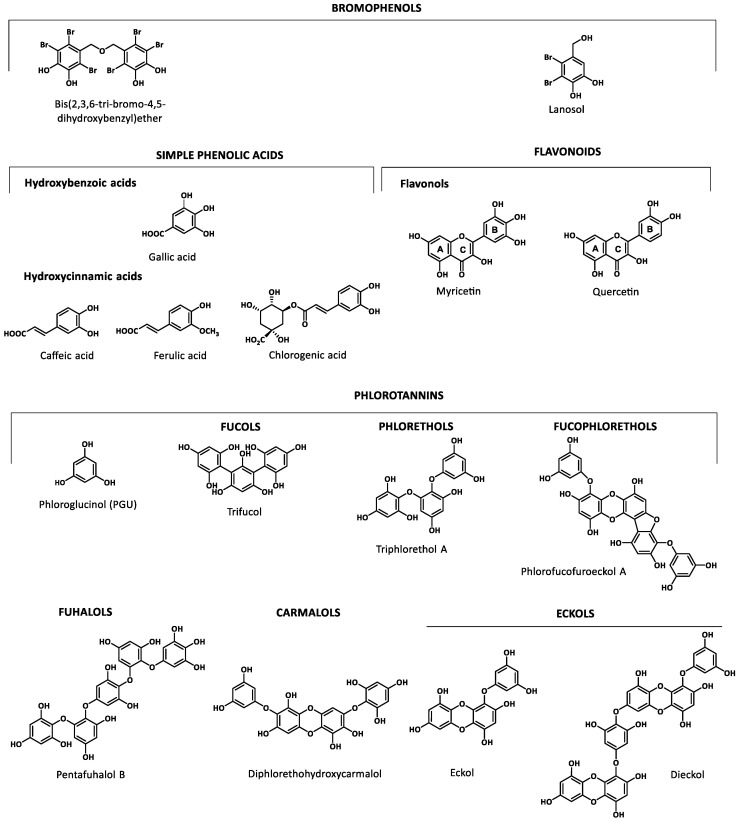
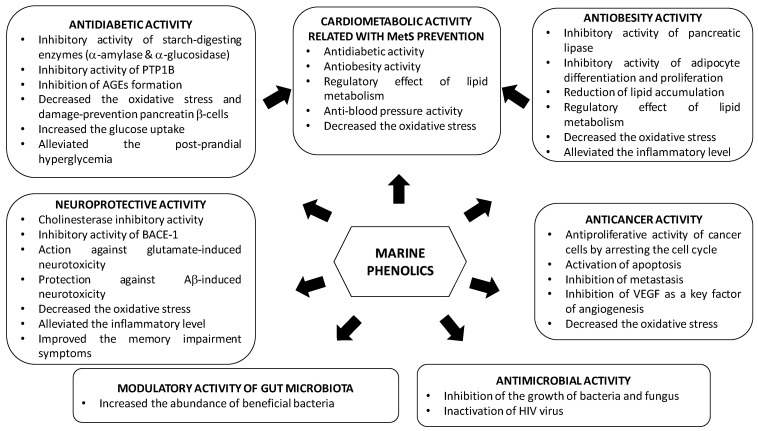
Phenolic compounds from marine organisms are far less studied than those from terrestrial sources since their structural diversity and variability require powerful analytical tools. However, both their biological relevance and potential properties make them an attractive group deserving increasing scientific interest. The use of efficient extraction and, in some cases, purification techniques can provide novel bioactives useful for food, nutraceutical, cosmeceutical and pharmaceutical applications. The bioactivity of marine phenolics is the consequence of their enzyme inhibitory effect and antimicrobial, antiviral, anticancer, antidiabetic, antioxidant, or anti-inflammatory activities. This review presents a survey of the major types of phenolic compounds found in marine sources, as well as their reputed effect in relation to the occurrence of dietary and lifestyle-related diseases, notably type 2 diabetes mellitus, obesity, metabolic syndrome, cancer and Alzheimer's disease. In addition, the influence of marine phenolics on gut microbiota and other pathologies is also addressed.
Keywords: Keywords: bromophenols; algae; biological activity; flavonoids; health benefits; phlorotannins; seagrass; seawater; simple phenolics.
Conflict of interest statement
The authors declare no conflict of interest. The funders had no role in the writing of the manuscript, or in the decision to publish the results.
Figures
References
-
- Shannon E., Abu-Ghannam N. Seaweeds as nutraceuticals for health and nutrition. Phycologia. 2019;58:563–577. doi: 10.1080/00318884.2019.1640533. - DOI
-
- Kirke D.A., Rai D.K., Smyth T.J., Stengel D.B. An assessment of temporal variation in the low molecular weight phlorotannin profiles in four intertidal brown macroalgae. Algal Res. 2019;41:101550. doi: 10.1016/j.algal.2019.101550. - DOI
Publication types
MeSH terms
Substances
Grants and funding
LinkOut - more resources
Full Text Sources
