


Controlled human exposures to wood smoke: a synthesis of the evidence
- PMID: 33008417
- PMCID: PMC7530963
- DOI: 10.1186/s12989-020-00375-x
Controlled human exposures to wood smoke: a synthesis of the evidence
Abstract
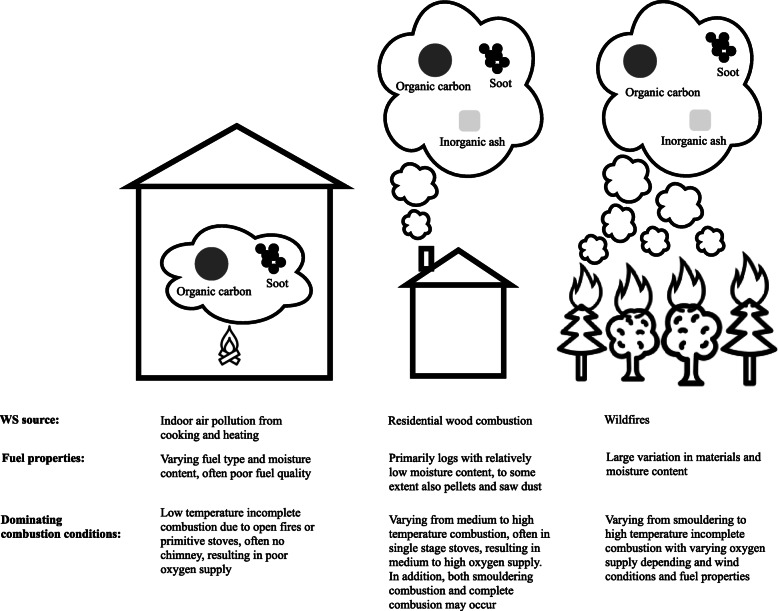
Background: Exposure to particulate matter (PM) from wood combustion represents a global health risk, encompassing diverse exposure sources; indoor exposures due to cooking in developing countries, ambient PM exposures from residential wood combustion in developed countries, and the predicted increasing number of wildfires due to global warming. Although physicochemical properties of the PM, as well as the exposure levels vary considerably between these sources, controlled human exposure studies may provide valuable insight to the harmful effects of wood smoke (WS) exposures in general. However, no previous review has focused specifically on controlled human exposure studies to WS.
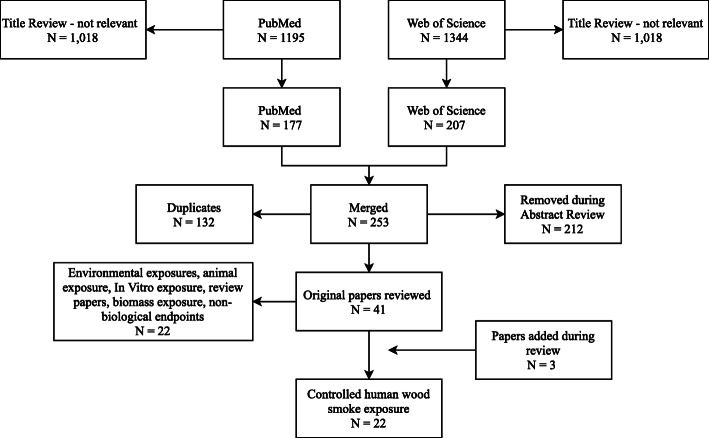
Results: The 22 publications identified, resulting from 12 controlled human studies, applied a range of combustion conditions, exposure levels and durations, and exercise components in their WS exposure. A range of airway, cardiovascular and systemic endpoints were assessed, including lung function and heart rate measures, inflammation and oxidative stress. However, the possibility for drawing general conclusions was precluded by the large variation in study design, resulting in differences in physicochemical properties of WS, effective dose, as well as included endpoints and time-points for analysis. Overall, there was most consistency in reported effects for airways, while oxidative stress, systemic inflammation and cardiovascular physiology did not show any clear patterns.
Conclusion: Based on the reviewed controlled human exposure studies, conclusions regarding effects of acute WS exposure on human health are premature. Thus, more carefully conducted human studies are needed. Future studies should pay particular attention to the applied WS exposure, to assure that both exposure levels and PM properties reflect the research question.
Keywords: Airway; Controlled human exposure; Inflammation; Review; Systemic; Wood smoke.
Conflict of interest statement
The authors declare that they have no competing interests.
Figures
References
-
- WHO . Household air pollution and health. Geneva: World Health Organization; 2018.
-
- Barry C. Increase in wood as main source of household heating most notable in the northeast. Washington (DC): U.S. Energy Information Administration; 2014.
-
- National Annual Emissions Trend . Environmental Protection Agency. 2020.
Publication types
MeSH terms
Substances
LinkOut - more resources
Full Text Sources
Medical
