Ion Channels and Their Role in the Pathophysiology of Gliomas
- PMID: 33008831
- PMCID: PMC7577395
- DOI: 10.1158/1535-7163.MCT-19-0929
Ion Channels and Their Role in the Pathophysiology of Gliomas
Abstract
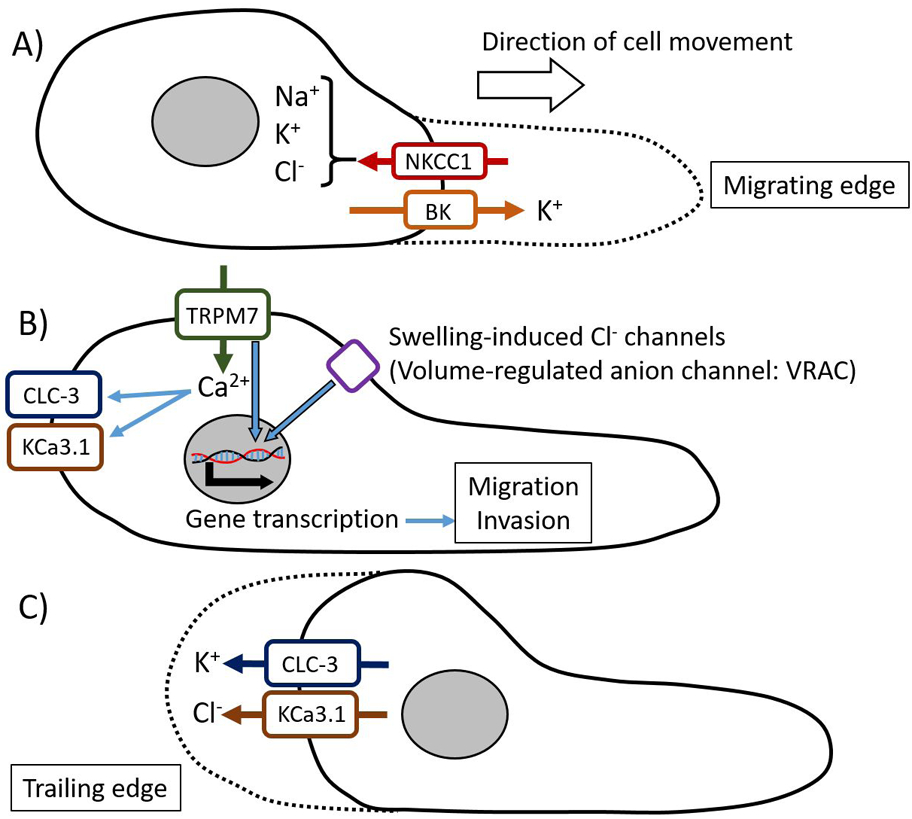
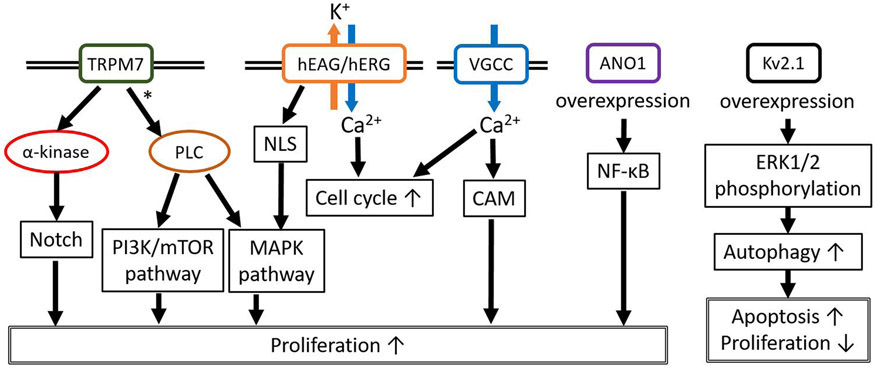
Malignant gliomas are the most common primary central nervous system tumors and their prognosis is very poor. In recent years, ion channels have been demonstrated to play important roles in tumor pathophysiology such as regulation of gene expression, cell migration, and cell proliferation. In this review, we summarize the current knowledge on the role of ion channels on the development and progression of gliomas. Cell volume changes through the regulation of ion flux, accompanied by water flux, are essential for migration and invasion. Signaling pathways affected by ion channel activity play roles in cell survival and cell proliferation. Moreover, ion channels are involved in glioma-related seizures, sensitivity to chemotherapy, and tumor metabolism. Ion channels are potential targets for the treatment of these lethal tumors. Despite our increased understanding of the contributions of ion channels to glioma biology, this field remains poorly studied. This review summarizes the current literature on this important topic.
©2020 American Association for Cancer Research.
Conflict of interest statement
Figures
References
-
- Louis DN, Perry A, Reifenberger G, von Deimling A, Figarella-Branger D, Cavenee WK, et al. The 2016 World Health Organization classification of tumors of the central nervous system: a summary. Acta Neuropathol 2016;131:803–20. - PubMed
-
- Roger S, Mason WP, van den Bent MJ, Weller M, Fisher B, Taphoorn MJB, et al. Radiotherapy plus concomitant and adjuvant temozolomide for glioblastoma. N Engl J Med 2005;352:987–96. - PubMed
-
- Simon OJ, Müntefering T, Grauer OM, Meuth SG. The role of ion channels in malignant brain tumors. J Neurooncol 2015;125:225–35. - PubMed
-
- Liu J, Qu C, Wu J, An L-J, Zou W. Potassium Channel and Glioma. Biomed J Sci Tech Res 2019;16:12179–84.
Publication types
MeSH terms
Substances
Grants and funding
LinkOut - more resources
Full Text Sources