


Tight sorption of arsenic, cadmium, mercury, and lead by edible activated carbon and acid-processed montmorillonite clay
- PMID: 33009611
- PMCID: PMC7855320
- DOI: 10.1007/s11356-020-10973-z
Tight sorption of arsenic, cadmium, mercury, and lead by edible activated carbon and acid-processed montmorillonite clay
Abstract
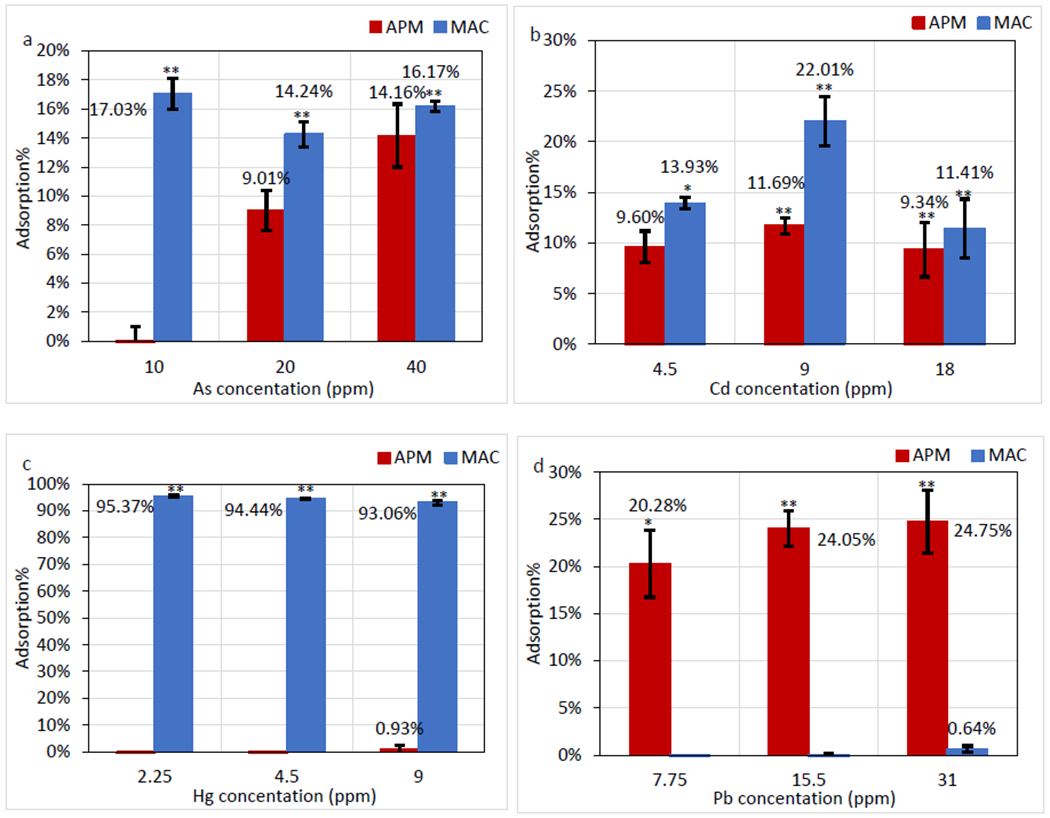
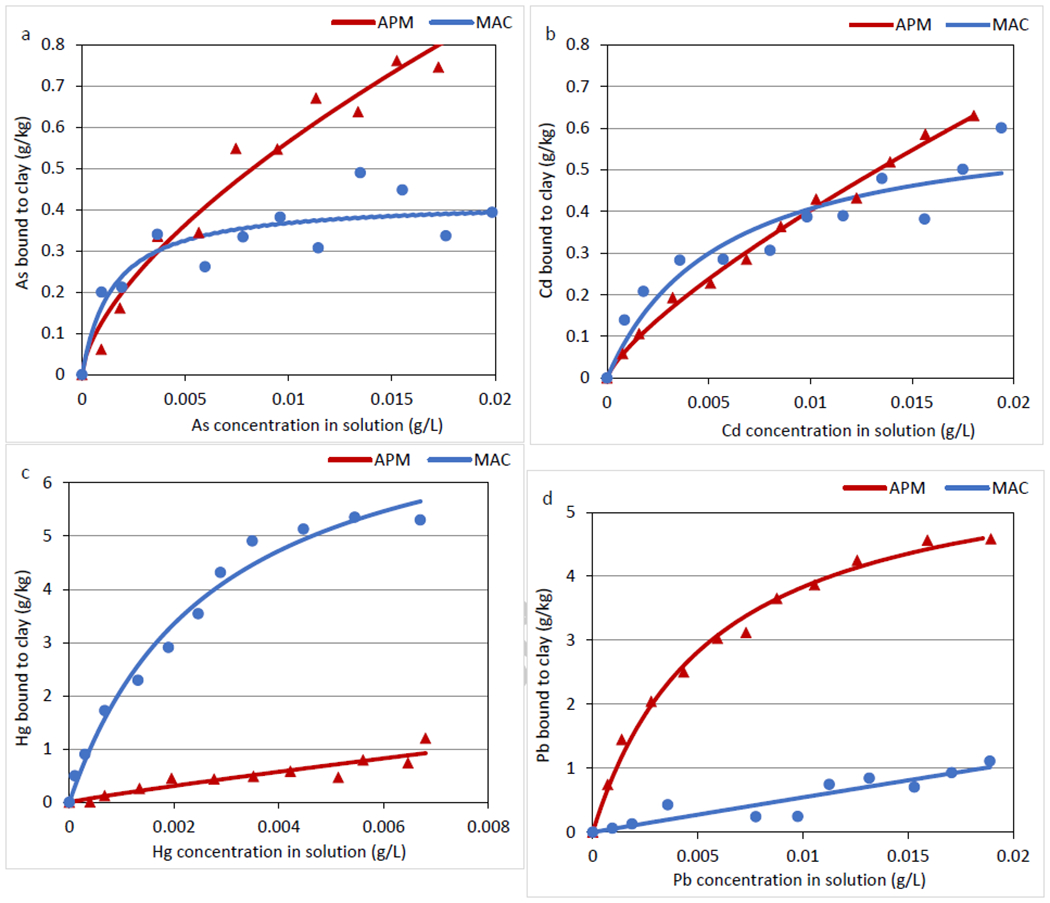
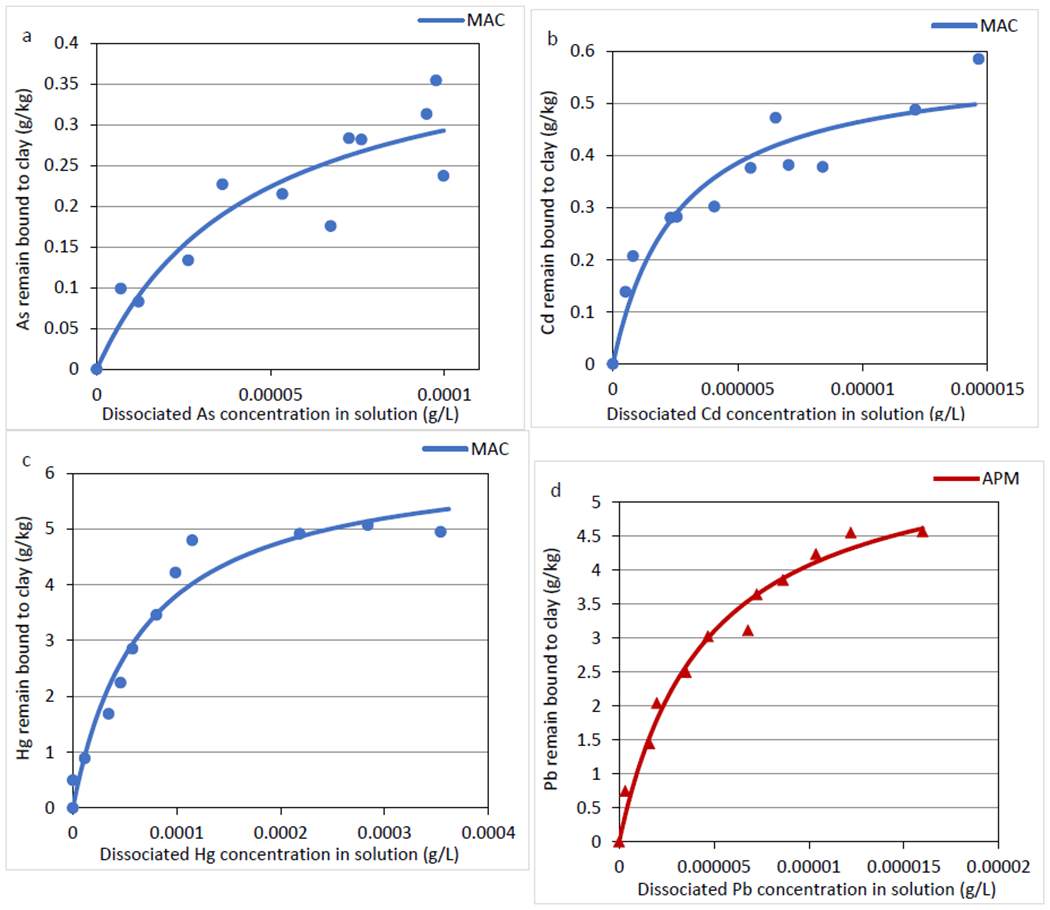
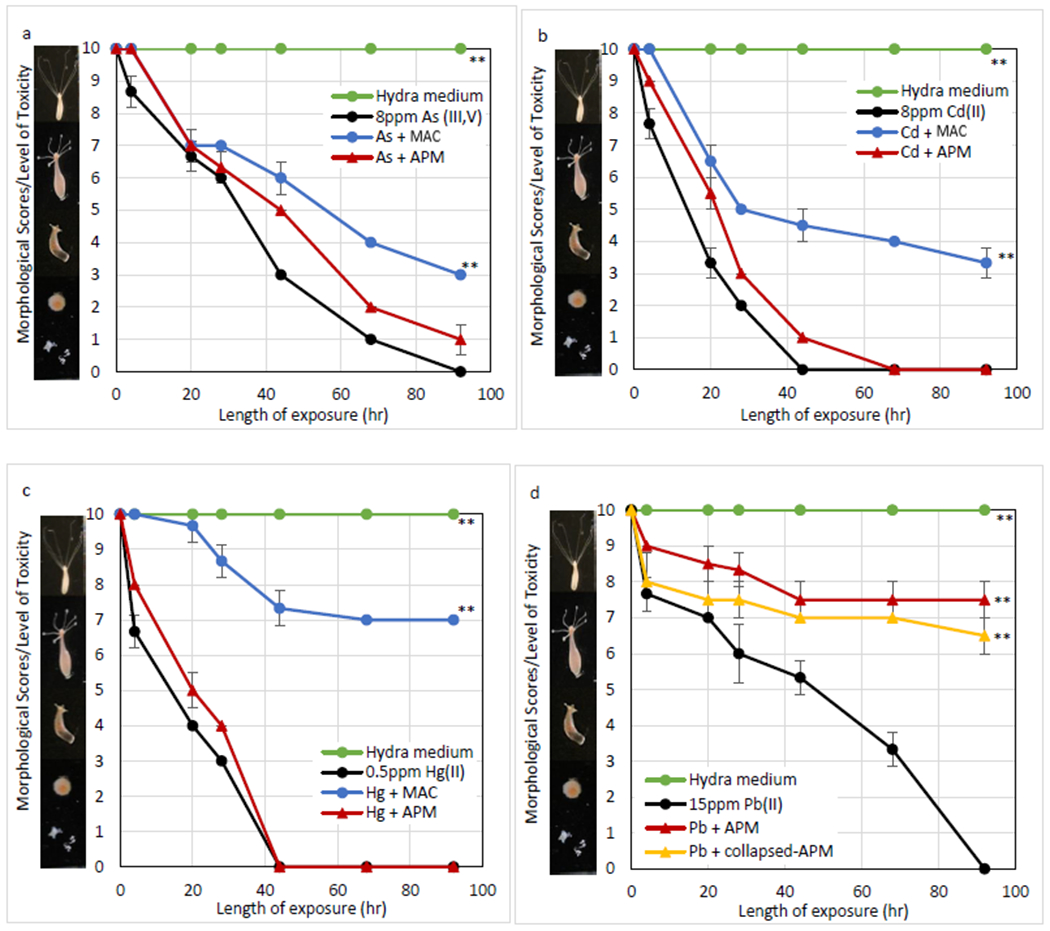
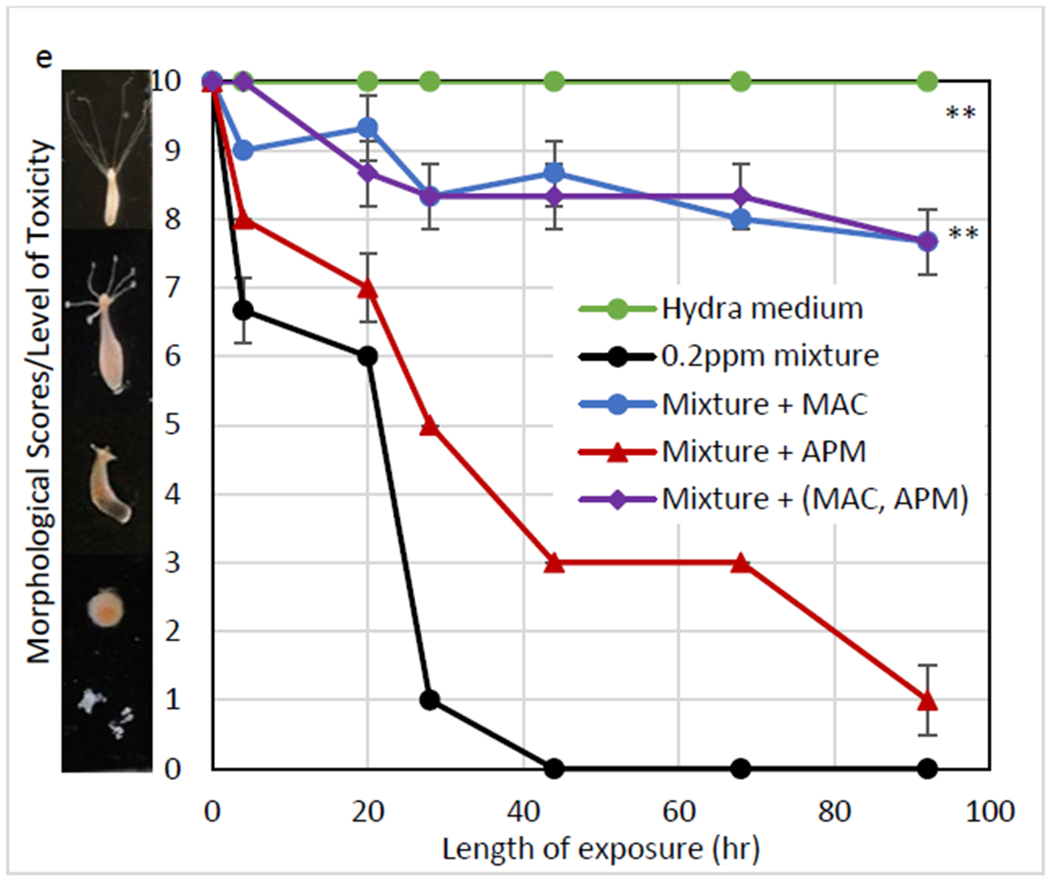
Heavy metal exposure in humans and animals commonly occurs through the consumption of metal-contaminated drinking water and food. Although many studies have focused on the remediation of metals by purification of water using sorbents, limited therapeutic sorbent strategies have been developed to minimize human and animal exposures to contaminated water and food. To address this need, a medical grade activated carbon (MAC) and an acid processed montmorillonite clay (APM) were characterized for their ability to bind heavy metals and mixtures. Results of screening and adsorption/desorption isotherms showed that binding plots for arsenic, cadmium, and mercury sorption on surfaces of MAC (and lead on APM) fit the Langmuir model. The highest binding percentage, capacity, and affinity were shown in a simulated stomach model, and the lowest percentage desorption (< 18%) was shown in a simulated intestine model. The safety and protective ability of MAC and APM were confirmed in a living organism (Hydra vulgaris) where 0.1% MAC significantly protected the hydra against As, Cd, Hg, and a mixture of metals by 30-70%. In other studies, APM showed significant reduction (75%) of Pd toxicity, compared with MAC and heat-collapsed APM, suggesting that the interlayer of APM was important for Pb sorption. This is the first report showing that edible sorbents can bind mixtures of heavy metals in a simulated gastrointestinal tract and prevent their toxicity in a living organism. Graphical abstract.
Keywords: Acid activation; Activated carbon; Adsorption/desorption isotherms; Heavy metals; Hydra; Montmorillonite clay.
Conflict of interest statement
Competing interests
The authors declare that they have no competing interests.
Figures
References
-
- Afriyie-Gyawu E, Wiles MC, Huebner HJ, Richardson MB, Fickey C, Phillips TD (2005) Prevention of zearalenone-induced hyperestrogenism in prepubertal mice. Toxicol Environ Health A 68(5):353–368 - PubMed
-
- Agency for Toxic Sbstances and Disease Registry (2019) ATSDR’s Substance Priority List. https://www.atsdr.cdc.gov/spl/index.html#2019spl. Accessed 9 May 2020
-
- Akpomie KG, Dawodu FA, Adebowale KO (2015) Mechanism on the sorption of heavy metals from binary-solution by a low cost montmorillonite and its desorption potential. Alex Eng J 54(3):757–767
-
- Alexander JA, Zaini MA, Surajudeen A, Aliyu EU, Omeiza AU (2018) Insight into kinetics and thermodynamics properties of multicomponent lead(II), cadmium(II) and manganese(II) adsorption onto Dijah-Monkin bentonite clay. Particul Sci Technol 36(5):569–577
MeSH terms
Substances
Grants and funding
LinkOut - more resources
Full Text Sources
Medical
