


Targeting mitochondrial respiration for the treatment of acute myeloid leukemia
- PMID: 33011159
- PMCID: PMC8073742
- DOI: 10.1016/j.bcp.2020.114253
Targeting mitochondrial respiration for the treatment of acute myeloid leukemia
Abstract
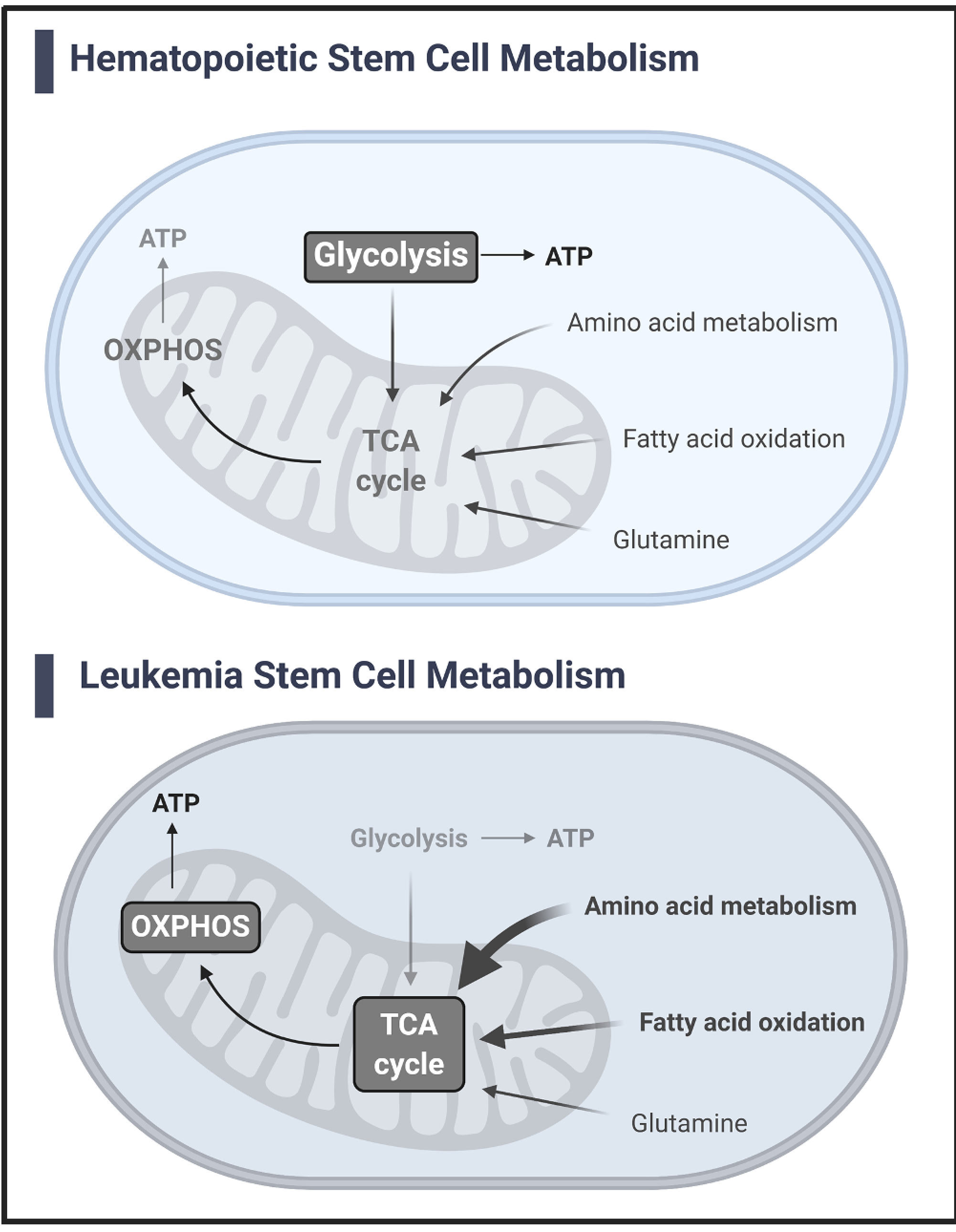
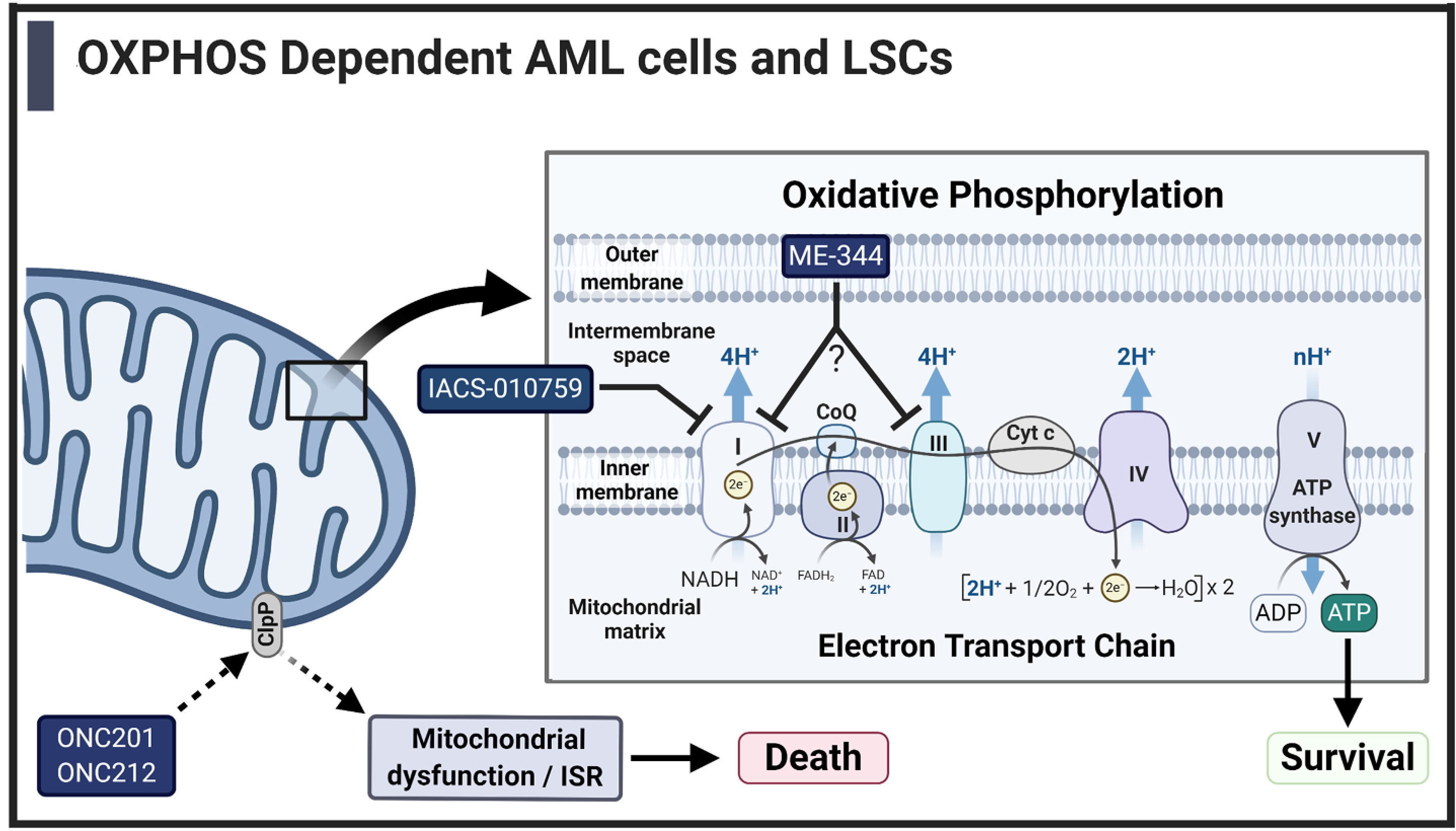
Acute myeloid leukemia (AML) is a heterogeneous disease with variable presentation, molecular phenotype, and cytogenetic abnormalities and has seen very little improvement in patient survival over the last few decades. This heterogeneity supports poor prognosis partially through the variability in response to the standard chemotherapy. Further understanding of molecular heterogeneity has promoted the development of novel treatments, some of which target mitochondrial metabolism and function. This review discusses the relative dependency that AML cells have on mitochondrial function, and the ability to pivot this reliance to target important subsets of AML cells, including leukemia stem cells (LSCs). LSCs are tumor-initiating cells that are resistant to standard chemotherapy and promote the persistence and relapse of AML. Historically, LSCs have been targeted based on immunophenotype, but recent developments in the understanding of LSC metabolism has demonstrated unique abilities to target LSCs while sparing normal hematopoietic stem cells (HSCs) through inhibition of mitochondrial function. Here we highlight the use of small molecules that have been demonstrated to effectively target mitochondrial function. IACS-010759 and ME-344 target the electron transport chain (ETC) to inhibit oxidative phosphorylation (OXPHOS). The imipridone family (ONC201, ONC206, ONC212) of inhibitors target mitochondria through activation of ClpP mitochondrial protease and reduce function of essential pathways. These molecules offer a new mechanism for developing clinical therapies in AML and support novel strategies to target LSCs in parallel with conventional therapies.
Keywords: Acute myeloid leukemia; IACS-010759; ME-344; Mitochondria; ONC201; Oxidative phosphorylation.
Copyright © 2020 Elsevier Inc. All rights reserved.
Conflict of interest statement
Declaration of Competing Interest
The authors declare that they have no known competing financial interests or personal relationships that could have appeared to influence the work reported in this paper.
Figures
References
-
- Longo DL, Dohner HDJ. Weisdorf CD. Bloomfield, Acute myeloid leukemia, N. Engl. J. Med. 373 (12) (2015) 1136–1152. - PubMed
-
- Zeidan AM, Podoltsev NA, Wang X, Zhang C, Bewersdorf JP, Shallis RM, Huntington SF, Neparidze N, Giri S, Gore SD, Davidoff AJ, Ma X, Wang R, Patterns of care and clinical outcomes with cytarabine-anthracycline induction chemotherapy for AML patients in the United States, Blood Adv. 4 (2020) 1615–1623, doi: 10.1182/bloodadvances.2020001728. - DOI - PMC - PubMed
-
- Basak NP, Banerjee S, Mitochondrial dependency in progression of acute myeloid leukemia, Mitochondrion 21 (2015) 41–48. - PubMed
Publication types
MeSH terms
Substances
Grants and funding
LinkOut - more resources
Full Text Sources
Medical
